The Short List
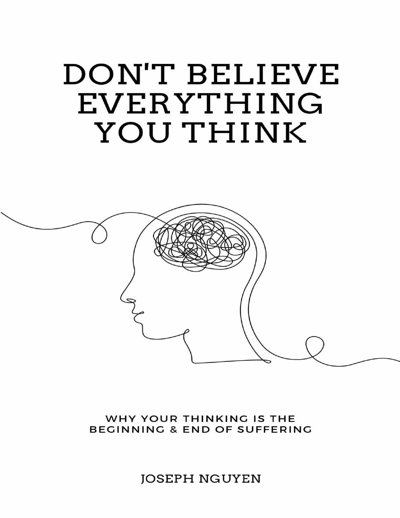
Today’s question: what should you read after Don’t Believe Everything You Think by Joseph Nguyen? I’ve picked seven books for overthinkers, from gentle spiritual reads to books written by therapists. This video is spoiler free.
If you want the quick version, start with The Power of Now for the closest match, The Untethered Soul for a deeper dive, and The Happiness Trap if you want something grounded in psychology. Stay for the details, because the right pick depends on what you liked.
What Makes This Book Special
First, let’s name what you might be looking for. Nguyen’s book is short and conversational. It claims that suffering comes from thinking about your thoughts, mixes in Zen stories and spiritual language, and ends with practical exercises. Some readers love the comfort, and others want the science.
So I’ve sorted the picks into two groups. Spiritual books that share his sense of peace in the present, and psychology books that teach similar skills with research behind them. Each pick has a note on how it differs. I’ve included only books I’m sure exist, with their real authors.
Spiritual or Psychological
Here’s the difference that matters. Spiritual books like Tolle and Singer ask you to trust a deeper awareness behind your thoughts. Psychology books like Harris and Burns ask you to test what works through exercises and, in many cases, studies. Neither is wrong, but they offer different kinds of comfort.
Nguyen’s book sits in the first camp, with a few practical exercises borrowed from the second. So if you loved the mood, choose from the first group. If you loved the exercises, choose from the second. And if you loved both, you can happily read one of each.
One: The Power of Now
The Power of Now by Eckhart Tolle came out in nineteen ninety-seven, and it is the book most often compared with this one. Tolle argues that much of our misery comes from living in thought, in the past or the future, and that real peace lives in present moment awareness.
If you liked Nguyen’s talk about the ego and the present, this is the source of a lot of that language. It is longer and more serious in tone, and it’s also spiritual rather than scientific. Read it if you want more depth, and expect to go slowly.
Two: The Untethered Soul
The Untethered Soul by Michael A. Singer was published in two thousand seven. Singer describes the voice in your head as a constant roommate, and he teaches you to step back and watch it instead of obeying it. That is very close to the idea of watching your thoughts without thinking about them.
It goes further into letting go of stored emotional pain and into spiritual awakening. The style is calm and clear, with good metaphors. If you want the inner observer idea explained patiently, this is probably the best next book.
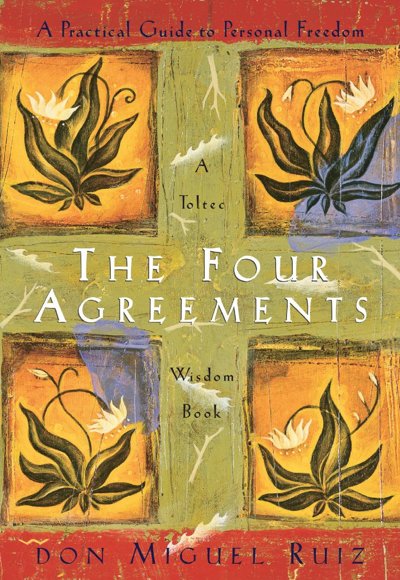
Three: The Four Agreements
The Four Agreements by Don Miguel Ruiz, from nineteen ninety-seven, is much shorter and built around four simple rules. Be impeccable with your word, don’t take anything personally, don’t make assumptions, and always do your best. It is presented as Toltec wisdom from Mexico.
It overlaps with Nguyen’s themes. Not taking things personally and not making assumptions are both ways of not believing every thought. It’s quick and easy, but like Nguyen’s book, it’s a belief system and not a research report.
Four: The Courage to Be Disliked
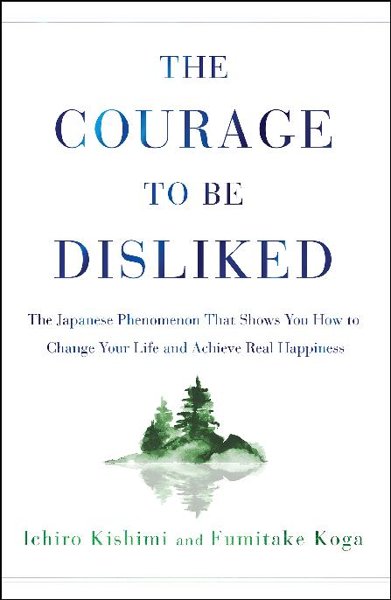
The Courage to Be Disliked by Ichiro Kishimi and Fumitake Koga was first published in Japan in twenty thirteen, with an English edition in twenty eighteen. It’s a dialogue between a philosopher and a young man, built on the ideas of the psychologist Alfred Adler.
It is not about thoughts as such. It argues that your past does not determine you, and that you can choose how to act. If the part of Nguyen’s book about freedom and about ignoring other people’s opinions appealed to you, this is a lively, challenging way to explore it.
Five: The Happiness Trap
The Happiness Trap by Russ Harris, from two thousand seven, is where I’d send readers who want the practical skill with evidence behind it. It teaches acceptance and commitment therapy in plain language, including cognitive defusion, which means seeing thoughts as thoughts.
Where Nguyen says thoughts come from the universe, Harris just teaches you how to unhook from them, with exercises. It has research support, though it is not a replacement for therapy. If you read Nguyen and thought, this is useful, but where is the evidence, start here.
Six: Feeling Good
Feeling Good by David D. Burns, first published in nineteen eighty, takes the opposite approach on one key point. It is a classic of cognitive behavioral therapy, and it teaches you to list your distorted thoughts and challenge them, rather than just letting them settle.
It’s longer and more work, with worksheets. But it is among the best known self help books with research behind it, especially for low mood. If you like Nguyen’s thought questioning exercises, Burns will give you a full toolkit.
Seven: Wherever You Go, There You Are
Wherever You Go, There You Are by Jon Kabat-Zinn, from nineteen ninety-four, is a gentle introduction to mindfulness by the founder of a well known mindfulness stress reduction program. It is made of short pieces on paying attention, on purpose, without judgment.
It shares Nguyen’s invitation to be present and stop fighting your experience, but it stays closer to practice than to cosmic claims. It’s a good pick if you want to start meditating and don’t want the metaphysics.
What About Atomic Habits
People often ask about Atomic Habits by James Clear, and a line from Clear opens Nguyen’s chapter on flow. I wouldn’t call it a similar book, though. It’s about building habits and systems, not about thoughts and peace.
But it pairs well. Nguyen offers a way to calm the mind, and Clear offers a way to build routines you can actually keep. If you want your morning ritual to stick, Atomic Habits is a practical companion.
Joseph Nguyen’s Other Books
You also asked about Joseph Nguyen’s books. After the first one, he released titles in a series called Beyond Suffering, including beyond thoughts and Boundaries Equals Freedom. He has also written The Art of Creating, a journal and workbook on anxiety and overthinking, and The Overthinker’s Guide to Making Decisions, which came out in November twenty twenty-five.
I haven’t read those, so I can’t review them. Listings describe the decisions book as a companion to the first. If you liked the style, they may be worth a look, but check your library first.
A Reading Order for Overthinkers
If you’re not sure where to begin, here’s an order I’d suggest. Start with something short and light, like The Four Agreements, so you build momentum. Then move to The Happiness Trap for skills you can practice that same week.
After that, pick one deeper book, either The Power of Now or The Untethered Soul, and read it slowly, a few pages a day. Overthinkers tend to rush through advice and collect it. Reading less, and trying one idea at a time, tends to work better than finishing a stack.
Honest Cautions
A few honest notes before you buy. The Power of Now and The Untethered Soul are long, abstract and spiritual, and some readers find them hard going. The Courage to Be Disliked is written as a debate, which some people love and others find slow. Feeling Good is a workbook style read, so you’ll get the most from it with a pen.
None of these promise miracles, and I’d be wary of any that do. Nguyen’s book itself mentions big results from coaching, and I’d treat those as stories. A good rule: if a book tells you it can fix everything, borrow it from the library first.
Also, if reading about thoughts makes you more anxious, that’s useful information. Put the book down, take a walk, and consider talking to a professional. These books are good company, but they can’t see you the way a person can.
Which One Should You Pick
Here’s a simple way to choose. Want more spiritual depth? The Power of Now or The Untethered Soul. Want short and punchy? The Four Agreements. Want philosophy and a story? The Courage to Be Disliked. Want evidence based skills? The Happiness Trap or Feeling Good. Want to start a practice? Wherever You Go, There You Are.
One caution applies to all of them. Books can help, but if your worry is heavy, a therapist can tailor help to you. Use these as companions, not replacements.
Before You Go
That’s my list. Did I miss your favorite book for overthinkers? Tell me in the comments, and I’ll read every suggestion. If this helped, subscribe for more recommendations, and I’ll see you in the next video.