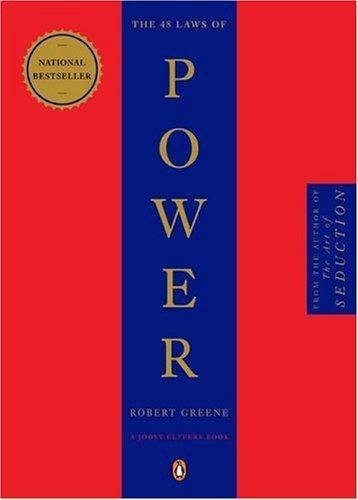
The 48 Laws of Power by Robert Greene book cover
Strategy / Self-help

The 48 Laws of Power

by Robert Greene

Forty-eight chapters, three thousand years of kings, generals and con men, and one question: how much of this would you actually do?

★★★½☆ 3.5 / 5

Gripping history in a villain's costume: some laws are genuinely wise, some are ugly, and the evidence is thinner than the confidence. Three and a half out of five.

The 48 Laws of Power: review and ranked

Every guide comes as a video and a full written article. Pick the one you need: the review is spoiler-free, the ending explained is not.

What is The 48 Laws of Power about?

The 48 Laws of Power (1998) is Robert Greene’s guide to how power works. Each of the forty-eight laws gets its own chapter: a judgment, a story of someone who broke the law and one who followed it, and the keys to power. It has reportedly sold over 1.2 million copies in the United States (as of October 2026).

Below you’ll find a spoiler-free review that picks the best and worst laws, asks whether the history holds up as evidence, and weighs the ethics of the whole project.

The 48 Laws of Power came out in nineteen ninety eight. Each of the forty eight laws gets its own chapter, and the whole thing runs well past four hundred pages.

Greene says the laws are distilled from three thousand years of writing by strategists, courtiers, seducers and con artists, from Sun Tzu to Talleyrand. His big idea in the preface is that we all live in a modern court. Everything has to look decent, fair and democratic, but underneath, the old scheming game is still going.

So he calls the book a handbook of indirection. Keep an iron hand inside a velvet glove, and never let anyone see you reaching for power.

Read it if
  • You love history told as stories
  • You want to recognize manipulation and office politics
  • You like a book you can open at random
Skip it if
  • You want evidence-based psychology
  • Cynicism wears you down
  • You plan to use it as a rulebook for your friendships

The 48 Laws of Power review scorecard

Ideas
4
Storytelling
4.5
Practical use
3
Evidence and ethics
2.5
Readability
3.5
Average3.5 / 5

The 48 Laws of Power: questions people ask

What is The 48 Laws of Power about?

The 48 Laws of Power came out in nineteen ninety eight. Each of the forty eight laws gets its own chapter, and the whole thing runs well past four hundred pages.

Is The 48 Laws of Power worth reading?

Gripping history in a villain's costume: some laws are genuinely wise, some are ugly, and the evidence is thinner than the confidence. Three and a half out of five. Read it if: you love history told as stories; you want to recognize manipulation and office politics; you like a book you can open at random. Skip it if: you want evidence-based psychology; cynicism wears you down; you plan to use it as a rulebook for your friendships. Review: The 48 Laws of Power →

What books are like The 48 Laws of Power?

The Prince by Niccolo Machiavelli, The Art of War by Sun Tzu, Influence by Robert Cialdini.

What is The 48 Laws of Power about?

Robert Greene's 1998 book gives 48 laws about gaining and keeping power, each with its own chapter. Every chapter has a short judgment, historical stories of someone who broke the law and someone who followed it, and a discussion of how to apply it. Examples range from Louis XIV's court to Cesare Borgia and the con man Count Victor Lustig.

Is The 48 Laws of Power worth reading?

Yes, with caveats. The historical stories are gripping and some laws, like Always Say Less Than Necessary, hold up. But the examples are cherry-picked, some laws contradict each other, and several are cold or manipulative. My score is three and a half out of five.

How many copies has The 48 Laws of Power sold?

It has reportedly sold over 1.2 million copies in the United States and has been translated into 24 languages (reported on Wikipedia, as of October 2026). No official worldwide figure is published.

Who wrote The 48 Laws of Power and when?

Robert Greene wrote it, and Viking Press published it in 1998. Greene later wrote The Art of Seduction, The 33 Strategies of War, Mastery and The Laws of Human Nature.

Books mentioned in these videos

The Prince
Niccolo Machiavelli
The Prince book · The Prince audiobook
Influence
Robert Cialdini
Influence book · Influence audiobook
The Art of Seduction
Robert Greene
The Art of Seduction book · The Art of Seduction audiobook

Amazon links. We may earn a commission if you buy through them.

Related books explained