The Board
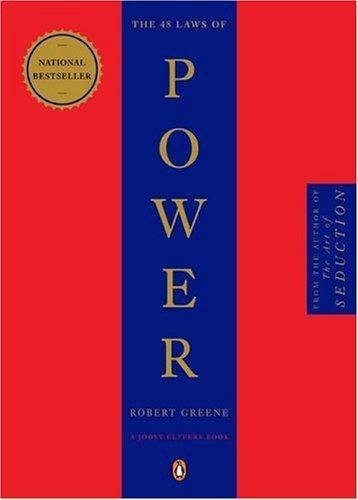
Here is the question. Out of the forty eight laws in The 48 Laws of Power, by Robert Greene, how many would you actually use at work on Monday morning? My answer, and it is only my opinion, is six. And there are five laws I would steer you away from completely.
To get there, I read the judgment that opens every law, plus the start of its reversal where the book gives one, and I sorted all forty eight onto one tier list. First, every law in one line. Then the ranking, from S down to F.
How I Ranked
Two questions decided every placement. How usable is this law in a normal job, with a boss, a team and a calendar? And how much damage does it do when someone misapplies it? A law rises when it is usable and hard to turn into harm. It sinks when it is easy to use against people.
All of this is opinion, so treat the board as a draft and argue with it. Greene wrote for courts, kings and con artists, and most of us have an office. Where a law has a reversal, the note on when it flips, I weigh that too.
Laws One To Sixteen
The book has forty eight laws, one chapter each. I counted the headings, and they run from one to forty eight with no gaps. Here is every law in one line. Law one, never outshine the master. Law two, don’t trust friends too much, and learn to use enemies.
Law three, conceal your intentions. Law four, always say less than necessary. Law five, guard your reputation. Law six, court attention at all cost. Law seven, get others to do the work, but take the credit. Law eight, make people come to you, using bait if necessary.
Law nine, win through your actions, never through argument. Law ten, avoid the unhappy and the unlucky. Law eleven, keep people dependent on you. Law twelve, use selective honesty and generosity to disarm your victim. Law thirteen, ask for help by appealing to self-interest, not mercy. Law fourteen, pose as a friend, work as a spy. Law fifteen, crush your enemy totally. Law sixteen, use absence to increase respect.
Laws Seventeen To Thirty Two
Law seventeen, keep others in suspended terror by being unpredictable. Law eighteen, don’t build fortresses, because isolation is dangerous. Law nineteen, know who you’re dealing with, and don’t offend the wrong person. Law twenty, do not commit to anyone. Law twenty one, play a sucker to catch a sucker, and seem dumber than your mark.
Law twenty two, use the surrender tactic. Law twenty three, concentrate your forces. Law twenty four, play the perfect courtier. Law twenty five, re-create yourself. Law twenty six, keep your hands clean. Law twenty seven, play on people’s need to believe, to create a cultlike following. Law twenty eight, enter action with boldness.
Law twenty nine, plan all the way to the end. Law thirty, make your accomplishments seem effortless. Law thirty one, control the options, so others play with the cards you deal. Law thirty two, play to people’s fantasies.
Laws Thirty Three To Forty Eight
Law thirty three, discover each man’s thumbscrew. Law thirty four, be royal in your own fashion, and act like a king to be treated like one. Law thirty five, master the art of timing. Law thirty six, disdain things you cannot have. Law thirty seven, create compelling spectacles. Law thirty eight, think as you like, but behave like others. Law thirty nine, stir up waters to catch fish. Law forty, despise the free lunch.
Law forty one, avoid stepping into a great man’s shoes. Law forty two, strike the shepherd and the sheep will scatter. Law forty three, work on the hearts and minds of others. Law forty four, disarm and infuriate with the mirror effect. Law forty five, preach change, but never reform too much at once. Law forty six, never appear too perfect. Law forty seven, in victory, learn when to stop. Law forty eight, assume formlessness.
S Tier
S tier first, the short list. Say less, law four. Win by action, law nine. Appeal to self-interest, law thirteen. Know who you’re dealing with, law nineteen. Plan to the end, law twenty nine. And stop when you win, law forty seven. Six laws, and in my view you could use all six at work.
Why these six? Law four, because the book says the more you say, the more likely you are to say something foolish, and that holds in any meeting. Law thirteen, because showing what is in it for the other person is simply good communication. And law nineteen, because the book says it has no reversal, and I agree. Learn who you are dealing with.
Two honest notes. Law nine’s reversal says to argue loudly to cover a lie, and law forty seven’s says to crush a beaten enemy. I keep the main idea of each and leave those parts off the board.
A Tier
A tier is for laws that work if you handle them with care. Law one, outshine. Law five, reputation. Law sixteen, absence. Law eighteen, no fortresses. Law twenty three, concentrate your forces. Law twenty eight, boldness. Law thirty five, timing. Law forty, the free lunch. Law forty six, never too perfect. And law forty eight, formlessness.
So why A and not S? Each one comes with a catch the book admits. Law one’s reversal says to be selectively cruel to a weak boss, and I would not follow that. Law sixteen’s reversal says absence only works once you have power, or you are simply forgotten. And law twenty eight’s reversal says boldness should never be the strategy behind all of your actions.
My favorite in this tier is law forty six. The book says only gods and the dead can seem perfect with impunity. Let people see a harmless flaw, and envy has less to feed on.
B Tier
B tier is the it depends pile, and it is the biggest one. Law six, attention. Law eight, bait. Law fourteen, spy. Law twenty, commitment. Law twenty five, re-creating yourself. Law thirty, effortless. Law thirty four, royal. Law thirty six, disdain. Law thirty eight, blend in. Law forty one, great shoes. And law forty five, slow reform.
Take law twenty, do not commit to anyone. Its reversal warns that if you play too many parties against one another, they will see through it and gang up on you. Law fourteen, pose as a friend, work as a spy, really means spying, and its reversal suggests feeding out false information. And law thirty eight, blend in, is sound until it turns into hiding your best ideas. Eleven laws in B, the most of any tier.
C Tier
C tier is where I would not build my week around the law. Law two, friends. Law three, intentions. Law seven, credit. Law ten, the unhappy. Law eleven, dependence. Law twenty two, surrender. Law twenty four, the courtier. Law thirty seven, spectacles. Law thirty nine, stirring waters.
Law eleven bothers me most. The book says never teach people enough so that they can do without you. That is the opposite of how a good team works, and it is the clearest case of a law I would flip.
Law seven, take the credit, comes with its own warning. If your position is not firm, you look like you are pushing others out of the limelight. Law ten says emotional states are as infectious as diseases, but a teammate’s bad month is not a contagion.
D Tier
D tier is where strategy turns into manipulation. Law twelve, selective honesty. Law seventeen, suspended terror. Law twenty one, seem dumber than your mark. Law thirty one, control the options. Law thirty two, fantasies. Law forty three, hearts and minds. And law forty four, the mirror effect.
Look at the wording. Law twelve says to use honesty to disarm your victim. Law thirty one says your victims feel in control but are actually your puppets. And law forty three says a person you have seduced becomes your loyal pawn. Victim, puppet, pawn. At work, that is how you lose people’s trust.
Law forty three is one the book says has no reversal. I disagree. Working on people’s weaknesses to win them over is still a trick.
F Tier
The bottom row, F tier. Five laws I would never use on another person. Law fifteen, crush your enemy totally. Law twenty six, keep your hands clean, by using scapegoats. Law twenty seven, a cultlike following. Law thirty three, the thumbscrew. And law forty two, strike the shepherd.
Law thirty three calls a person’s weakness a thumbscrew you can turn to your advantage. It tells you to find the helpless child, an unmet need from childhood, and treat it as the key to their weakness. Law twenty seven even has a section titled how to create a cult in five easy steps.
Law fifteen says an enemy must be crushed in spirit as well as body. Even its own reversal only says that leaving an escape route can sometimes be smarter. Five laws is about one in ten, and that is where I draw the line.
The Whole Board
Here is the whole board, filled in. S holds six laws. A holds ten. B holds eleven. C holds nine. D holds seven. And F holds five. That adds up to forty eight.
Add up S and A and you get sixteen, exactly a third of the book that I would use. Put D and F together and you get twelve, a quarter that I would leave on the page.
What The Reversals Show
One more thing the board shows. Each chapter has a reversal, a note on when the law flips. I checked all forty eight. Seven say outright that there is none. Thirty nine give a real reversal. And two, laws twenty four and forty four, have no reversal section in the text I read.
The seven are laws five, ten, nineteen, twenty five, thirty five, thirty seven and forty three. In my ranking they land in five different tiers. Law nineteen is in S, law twenty five in B, and law forty three in D. So even the laws Greene says have no exceptions are ones I would argue with.
Your Turn
Now it is your turn. Which law would you move up or down, and to which tier? Tell me in the comments.
If you want my full review of the book, or the page with this whole board, they are linked below and on bookexplained.com. Subscribe for more books explained, tap like if you disagreed with a tier, and I’ll see you in the next one.