The Verdict
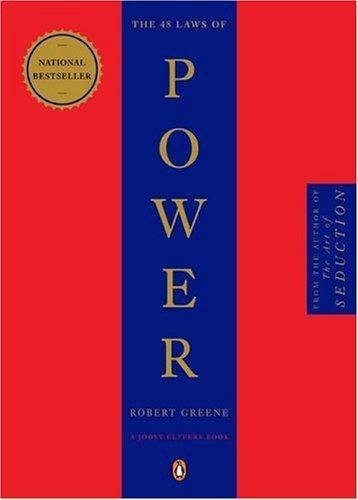
Today I’m taking on The 48 Laws of Power, by Robert Greene, the book that prison libraries, rappers and ambitious interns all seem to keep on the shelf.
My verdict: it’s a gripping history book wearing a villain’s costume. Some laws are genuinely wise, some are ugly, and the evidence is thinner than the confidence. I give it three and a half out of five.
What It’s About
The 48 Laws of Power came out in nineteen ninety eight. Each of the forty eight laws gets its own chapter, and the whole thing runs well past four hundred pages.
Greene says the laws are distilled from three thousand years of writing by strategists, courtiers, seducers and con artists, from Sun Tzu to Talleyrand. His big idea in the preface is that we all live in a modern court. Everything has to look decent, fair and democratic, but underneath, the old scheming game is still going.
So he calls the book a handbook of indirection. Keep an iron hand inside a velvet glove, and never let anyone see you reaching for power.
For this review, I went through the preface, the opening laws, a good sample from the middle, and the final law. Everything I say about the book comes from those chapters.
Why People Keep Buying It
This book has a strange reputation. It’s a New York Times bestseller that has reportedly sold over one point two million copies in the United States, and it’s been translated into twenty four languages, as of October twenty twenty six.
It’s also reportedly one of the most requested books in American prison libraries, and artists from Jay Z to Drake have referenced it. Greene even went on to co write The Fiftieth Law with the rapper Fifty Cent.
How Each Law Works
Every chapter follows the same recipe. A short judgment up front. Then a story of someone who broke the law and paid for it, and a story of someone who followed it and won. Then the keys to power, an image, a quote, and often a reversal that tells you when the law flips.
Take Law one, Never Outshine the Master. Nicolas Fouquet threw King Louis the Fourteenth the most spectacular party in France. The next day he was arrested, and he spent his last twenty years in prison. Galileo, meanwhile, tied his discovery of the moons of Jupiter to the glory of the Medici family, and he got a salary and a court job.
What Works
First, the stories. Greene is a terrific storyteller. In Law two, a Byzantine emperor promotes his best friend, a stable boy, and that friend ends up taking his crown. In Law twelve, the con man Count Victor Lustig pays a visit to Al Capone with a pitch about doubling his money. Even if you hate the advice, the stories are hard to put down. They are short, strange and often shocking, and they stick in your head much longer than any tip.
Second, the format. Every law stands alone, so you can open the book anywhere. The preface even says it’s built for browsing, and it works as a reference for one bad week at work.
Third, the sharp observations about people. Envy, insecurity, vanity. Greene is very good at explaining why other people behave the way they do. Law one’s warning is simple. Your boss wants to feel brilliant, and if you outshine them, they will find a reason to get rid of you.
Fourth, the ending. The final law, Assume Formlessness, tells you not to cling to any rule, and to adapt to every situation. It’s a surprisingly thoughtful way to close a book of rules.
The Best Laws
Here are the laws I think hold up. These are opinion, so argue with me.
Law four, Always Say Less Than Necessary. Silence makes people nervous, and nervous people fill the gap and reveal what they want. Greene points to Andy Warhol, who found he had more power when he stopped talking.
Law nine, Win Through Your Actions, Never Through Argument. The architect Christopher Wren built the extra columns a nervous mayor demanded, even though he knew they were pointless, rather than fight him. Demonstrate, don’t explain.
And Law forty six, Never Appear Too Perfect. Envy creates silent enemies, so let people see a harmless flaw. That one is just good manners with a strategy label.
An honorable mention goes to Law forty seven, In Victory, Learn When to Stop. The book argues that good luck is more dangerous than bad luck, because it tells you your brilliance will carry you through. I have seen that happen in real life, and it is wise.
The Worst Laws
Now the ones that made me wince.
Law fifteen, Crush Your Enemy Totally. The reversal admits that leaving an enemy an escape route can sometimes be smarter. But it still ends by saying, if they plot revenge years later, crush them again.
Law thirty three, Discover Each Man’s Thumbscrew. It tells you to find the helpless child inside someone, the old childhood need, and use it as a lever.
And Law twenty seven, Play on People’s Need to Believe to Create a Cultlike Following. One heading is literally called how to create a cult in five easy steps. That is not a metaphor.
Does It Hold Up
The historical stories are vivid, but is this evidence? Not really. Kirkus Reviews reportedly called the book nonsense, with no supporting evidence. Stanford’s Jeffrey Pfeffer has reportedly said it rests on isolated examples, not basic principles, and I agree.
Almost every example is a king, a general or a courtier, and we only hear about the cases that fit the law. Laws also pull in opposite directions. Law sixteen says use absence to gain respect. Law eighteen says isolation is dangerous.
In fairness, Law forty eight admits that no law is fixed, and tells you to throw out the rulebook when circumstances change. So the book is more of a collection of cautionary tales than a science. That’s a fair way to enjoy it, but it isn’t a fair way to run your life.
And there is a limit to the lesson. Most of these courtiers risked their heads. In a modern job, a bad week costs you a promotion, so be careful with advice built for deadlier stakes.
The Ethics Question
This is the big one. Greene says that anyone who claims to opt out of power games is usually playing them in disguise. It’s clever, because it turns every objection into proof that you’re part of the game.
The book also tells you never to trust anyone completely, friends and loved ones included. Reportedly, Greene has said that only a few laws are overtly manipulative, and that readers cherry pick the worst chapters. Fair, but a lot of chapters are pretty ugly.
My take: don’t treat it as a to do list. Treat it as a field guide to what other people might be doing to you. The book itself warns that you should study everyone, so use that to spot the moves before they land. Knowing the tricks is useful. Using them on everyone you meet will leave you very lonely.
Writing and Pacing
The prose is clear, confident and a little grand. It sounds like a general giving orders. The chapters run from about two thousand words to almost nine thousand, so some laws zip by and some drag.
The final law is a good example of the style. It opens with the Spartans, a society built around one rigid form, and then argues you should be fluid like water. It’s vivid, but it’s also the same recipe again.
Do not read it straight through. The recipe repeats forty eight times, and around the middle it starts to feel like a loop. Pick a law, enjoy the story, and put it down.
What Doesn’t Work
Let me pull the complaints together. The structure is repetitive. The examples are cherry picked, and almost all of them come from kings and wars, so your office is not the Byzantine court.
The laws contradict each other. Greene presents each law as definitive, even though the book later says no law is fixed. And the tone is cold. After a while, every person in the book is a piece on a board, and that gets exhausting.
The Scorecard
My scores. Ideas, four out of five. Storytelling, four and a half. Practical use, three. Evidence and ethics, two and a half. Readability, three and a half. That averages out to three and a half.
Who It’s For
Read it if you love history told as stories, if you want to recognize manipulation and office politics, or if you like a book you can open at random.
Skip it if you want evidence based psychology, or if cynicism wears you down. And skip it if you plan to use it as a rulebook for your friendships.
If you like this, try The Prince by Machiavelli, The Art of War by Sun Tzu, and Influence by Robert Cialdini. Greene’s own The Laws of Human Nature is a more thoughtful follow up.
Where To Get It
The links are in the description. Now tell me in the comments: which law would you never follow? Thanks for watching, and subscribe for more books explained.