The Verdict
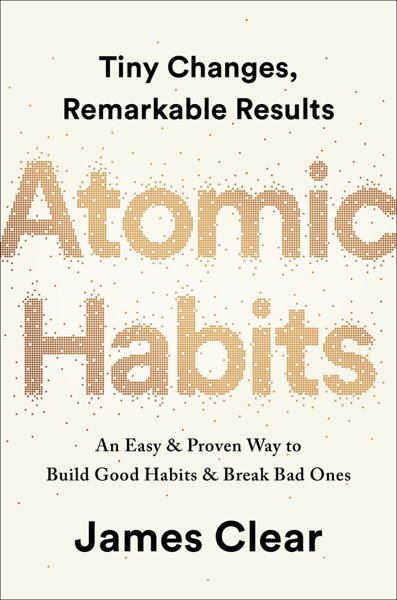
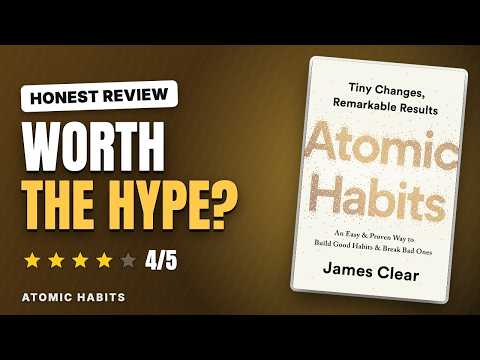
Today’s question is simple: is Atomic Habits by James Clear actually worth reading, or is it a blog post stretched into a book?
My answer: it’s worth it, especially if you’ve never read a habit book before. It’s clear, practical, and full of tools you can use the same day. But it repeats itself, it leans hard on tidy anecdotes, and if you’ve read The Power of Habit you’ll recognize a lot. I give it four out of five.
What Kind Of Book It Is
Atomic Habits came out in twenty eighteen. It’s about three hundred pages in twenty chapters, plus an introduction, a conclusion and some bonus sections on business and parenting.
It’s built like a manual. After the setup chapters, there’s a section for each of Clear’s Four Laws: make it obvious, make it attractive, make it easy, make it satisfying. Every chapter ends with a bullet-point summary, and there’s a cheat sheet you’ll keep coming back to.
The Big Promise
The book promises that you don’t need dramatic change, just small improvements that compound. Get one percent better each day and you’re about thirty seven times better after a year.
It also promises that you don’t need willpower. You need a better system and a better environment. That’s a hopeful message, and I think it’s the main reason this book has reportedly sold more than twenty five million copies.
What Works
First, the framework. Cue, craving, response, reward, and the Four Laws that come from it, are genuinely easy to remember. When a habit isn’t working, you can ask which law you broke. That’s useful.
Second, the tools. The Habits Scorecard, implementation intentions, habit stacking, temptation bundling, the Two-Minute Rule, habit trackers, and “never miss twice.” Each one is small enough to try tonight.
Third, the identity idea. Clear argues that every action is a vote for the person you want to become. “I’m a runner” lasts longer than “I want to run a marathon.” For me, this was the chapter that stuck.
And fourth, the writing. It’s short sentences, bold summaries, and lots of stories. You can read a chapter in fifteen minutes.
The Best Chapters
If you only have an hour, read chapter two on identity, chapter five on implementation intentions and habit stacking, chapter twelve on the law of least effort, and chapter thirteen on the Two-Minute Rule.
Chapter eighteen, on talent and genes, is underrated too. Clear uses Michael Phelps and the runner Hicham El Guerrouj to show that you should pick habits and games that fit your nature. It’s a more honest chapter than most self-help books allow.
The Stories
Clear is a great storyteller. British Cycling’s marginal gains. Soldiers returning from Vietnam who mostly didn’t relapse into heroin when their environment changed. A photography class where the students told to shoot as many photos as possible produced the best work.
These stories make the ideas memorable. But they’re also chosen to fit the point. Real life is messier, and some of the stories have complications the book doesn’t mention.
The Four Laws In Practice
If you try the tools, start with the Two-Minute Rule. It’s the easiest win in the book. “Write one sentence” sounds silly, but once you start, you usually keep going, and that’s exactly Clear’s point.
Habit stacking is a close second, because it borrows the cue from something you already do every day. Habit trackers are powerful but can turn into a chore, and Clear himself warns that just because you can measure something doesn’t mean it’s the most important thing.
What Doesn’t Work
Now the honest part. First, repetition. The chapter summaries, the cheat sheets and the recurring examples mean you hear the same ideas many times. A tighter edit could cut fifty pages.
Second, the anecdotes do heavy lifting. British Cycling is the opening example, but the same program later faced controversy. A UK parliamentary committee report in twenty eighteen said Team Sky, which shared leadership with British Cycling, crossed an ethical line with a rider’s medication, which the team disputed. It doesn’t undo the idea of marginal gains, but it’s a reminder that success stories are rarely that simple.
Third, it’s very individual. The book has a little on environment and culture, but it doesn’t say much about money, time, health or other limits that make habits harder for some people than others.
And fourth, it’s not very new. Clear openly credits Charles Duhigg’s The Power of Habit and other researchers. His contribution is packaging, and it’s great packaging, but packaging all the same.
How It Compares
Compared with The Power of Habit, Atomic Habits is more practical and less about storytelling and big companies. Compared with Tiny Habits by BJ Fogg, it’s broader but less detailed on any single technique.
And compared with older classics like The Seven Habits of Highly Effective People, it’s much shorter, more modern, and focused on small actions instead of principles. If you only read one habit book, I’d still pick this one.
Who Wrote It
James Clear built his audience through a free newsletter and blog before the book, and you can feel it. The chapters read like polished essays. That’s a strength for readability and a weakness for depth.
He’s also careful to say where ideas come from. The notes section is long, and he credits researchers and other writers throughout. That honesty earned my trust.
Who It’s For
Read it if you’re new to habit books, if you like practical tools over theory, or if you want a single book to restart a routine.
Skip it, or skim it, if you’ve already read The Power of Habit or Tiny Habits, if you want deep science, or if bullet-point self-help makes you roll your eyes.
How To Read It
My tip: don’t read it in one go. Read one Law at a time, try one tool for a week, then move on. The book works best as a workbook, not a novel. And keep the cheat sheet near your desk.
The audiobook is narrated by James Clear himself and works well on a commute, but the print or e-book is better for the summaries and diagrams.
The Scorecard
My scores. Usefulness, five out of five. Clarity, five. Originality, three. Evidence, three and a half. Readability, four and a half. That’s an average of about four point two, so four out of five overall.
Where To Go Next
If you want the ideas without reading the book, watch my ten minute summary. If you’ve read it and want to actually use it, I made a practical thirty day plan. And if you want more books like it, that list is linked too. Tell me in the comments: did Atomic Habits change one of your habits?