The Short Version
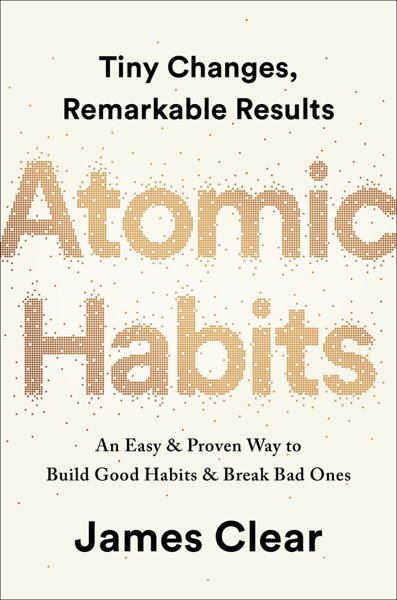
Today I’m summarizing one of the best-selling self-help books of the last decade: Atomic Habits by James Clear, which has reportedly sold more than twenty five million copies.
Here’s the whole book in one sentence. Tiny habits, repeated every day, compound into huge results, and the way to build them is to make good habits obvious, attractive, easy, and satisfying. Let’s unpack that, chapter by chapter.
Where It Comes From
Clear opens with his own story. On the last day of his sophomore year of high school, a classmate’s baseball bat hit him in the face. He had seizures, was put into a medically induced coma, and had to relearn basic things.
Six years later, he was named the top male athlete at his college and made the ESPN Academic All-America team. He says there was no single turning point. There were many small habits, like going to bed early and keeping his room tidy, that added up. That’s the seed of the whole book.
The Power Of One Percent
The first big idea is compounding. If you get one percent better every day for a year, you end up about thirty seven times better. If you get one percent worse every day, you decline nearly to zero.
Clear’s favorite example is British Cycling. In two thousand three, the team hired Dave Brailsford, who went looking for one percent improvements everywhere: alcohol on the tires for grip, the best pillow for each rider, even teaching riders how to wash their hands to avoid getting sick. Five years later, at the Beijing Olympics, British cyclists won sixty percent of the available gold medals. Between two thousand twelve and two thousand seventeen, British riders won the Tour de France five times.
The Plateau Of Latent Potential
Here’s why most people quit. Results from habits are delayed. Clear compares it to an ice cube in a cold room. You warm the room from twenty five degrees, to twenty six, to thirty one, and nothing happens. Then at thirty two degrees, it starts to melt.
He calls this flat stretch the Plateau of Latent Potential. The work isn’t wasted. It’s being stored. And when results finally appear, people call it an overnight success.
Systems Over Goals
The second big idea: forget goals, focus on systems. Winners and losers often have the same goal. What separates them is the system, the daily process.
Goals can also make you unhappy, because you postpone happiness until you reach them. And once you reach a goal, you often stop. In Clear’s most quoted line, you do not rise to the level of your goals, you fall to the level of your systems.
Identity Change
The third idea is the deepest one. There are three layers of change: outcomes, processes, and identity. Most people start with outcomes, like “I want to lose ten pounds.” Clear says start with identity: “I’m the kind of person who moves every day.”
Every action is a vote for the type of person you want to become. You don’t need a unanimous vote, just a majority. A smoker who is offered a cigarette and says “no thanks, I’m trying to quit” still sees himself as a smoker. The one who says “no thanks, I’m not a smoker” has changed his identity.
The Habit Loop
Every habit, Clear says, has four steps: cue, craving, response, and reward. You notice something, you want something, you do something, and you get something. Then your brain remembers the loop and repeats it.
From those four steps come his Four Laws of Behavior Change. To build a good habit: make it obvious, make it attractive, make it easy, and make it satisfying. To break a bad one, invert them: make it invisible, unattractive, difficult, and unsatisfying.
Law One: Make It Obvious
Start with awareness. Clear suggests a Habits Scorecard: list everything you do in a day and mark each habit good, bad, or neutral.
Then use an implementation intention: I will do this behavior, at this time, in this location. In one British study, ninety one percent of people who wrote down exactly when and where they would exercise did it at least once a week, more than double the normal rate.
Or use habit stacking: after I pour my coffee, I will meditate for one minute. And design your environment. If you want to drink more water, put water bottles everywhere. The cue for a bad habit? Hide it.
Why Willpower Fails
Clear has a striking chapter on self-control. During the Vietnam War, researchers found that around twenty percent of American soldiers there were addicted to heroin. But when they came home, only about five percent relapsed within a year.
The researcher, Lee Robins, concluded that the environment had changed. The cues for the habit were gone. Clear’s lesson: people with great self-control aren’t resisting temptation all day. They’re spending less time around it.
Law Two: Make It Attractive
Habits run on dopamine, and it spikes when we anticipate a reward, not only when we get it. So make good habits something to look forward to.
One trick is temptation bundling. An engineering student in Dublin, Ronan Byrne, hacked his exercise bike so Netflix would only play while he was pedaling fast enough. Another is to join a group where your desired behavior is normal. We copy the close, the many, and the powerful.
Culture Shapes Habits
Clear also argues that we absorb habits from the people around us. His example is Laszlo Polgar, a Hungarian who believed geniuses are made, not born. He raised his three daughters in a home that celebrated chess above everything, and all three became chess stars. Judit became one of the strongest players in history.
The point isn’t that you should raise chess prodigies. It’s that it’s easier to keep a habit when your group already treats it as normal.
Law Three: Make It Easy
This is the law I find most useful. Clear says habits form through repetition, not time. The question isn’t how many days, but how many reps.
So reduce friction. Prepare your gym bag the night before. And use the Two-Minute Rule: scale any new habit down to something that takes less than two minutes. “Read before bed” becomes “read one page.” “Run three miles” becomes “put on my running shoes.” Standardize before you optimize. You can’t improve a habit that doesn’t exist.
Law Four: Make It Satisfying
Our brains favor immediate rewards. So give your good habits an immediate payoff. Clear’s cardinal rule: what is immediately rewarded is repeated, and what is immediately punished is avoided.
His favorite tool is a habit tracker. Mark an X on a calendar each day and try not to break the chain. And if you do miss a day, follow his rule: never miss twice. Missing once is an accident. Missing twice is the start of a new habit.
Advanced Tactics
The last chapters go further. Pick habits that fit your nature. Michael Phelps and the runner Hicham El Guerrouj are seven inches apart in height but wear the same length trousers, because their bodies suit different sports.
Stay in the Goldilocks zone, with tasks just at the edge of your ability, because the greatest threat to success is boredom, not failure.
The Downside Of Habits
The final chapter is a warning. Habits let you do things without thinking, but that also means you stop noticing small mistakes.
Clear’s example is the nineteen eighties Lakers. Coach Pat Riley tracked each player’s “career best effort” and asked them to improve it by at least one percent a season. The next year, the Lakers won back-to-back championships. Habits plus deliberate practice equals mastery, and review keeps the habits honest.
The Takeaway
So that’s Atomic Habits. Small changes, a focus on identity, and four simple laws: obvious, attractive, easy, satisfying. The results are delayed, so trust the process.
If you want my honest opinion on what the book gets right and wrong, watch my review next, and I also made a practical thirty day plan for putting these ideas to work. Which law do you struggle with most? Tell me in the comments.