The Verdict
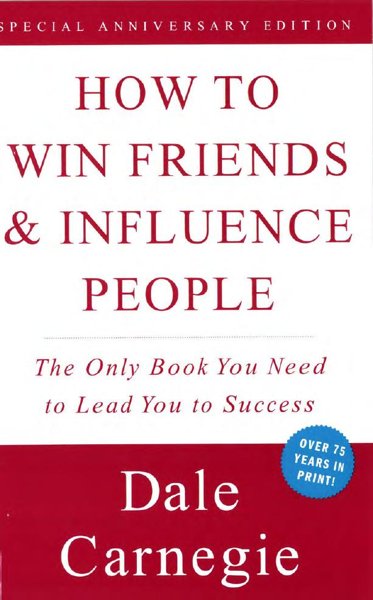
Today I’m reviewing How to Win Friends and Influence People, by Dale Carnegie, one of the most famous self help books ever written.
Does a book from the nineteen thirties still work today? Yes, mostly. The advice is simple, sometimes obvious, and surprisingly hard to practice. I give it four out of five. And this review has no spoilers, because there is no plot to spoil.
What It’s About
Dale Carnegie taught public speaking and human relations classes long before he wrote this book. He collected stories from those classes, from famous people, and from ordinary students, and turned them into a set of principles for getting along with others.
The book is divided into four parts. The first covers the basics of handling people. The second gives six ways to make people like you. The third gives twelve ways to win people to your way of thinking. The fourth gives nine ways to be a leader without causing resentment.
It opens with a famous story about a killer named Two Gun Crowley, who thought of himself as a good person, to show that almost nobody sees themselves as the villain.
What Works
My first favorite thing is how clear the principles are. Each one is a single sentence you can remember, like, become genuinely interested in other people, or, let the other person save face.
My second favorite thing is the stories. Carnegie packs the book with short, vivid examples, from Abraham Lincoln to sales managers, and they make the advice feel real.
My third favorite thing is the honest core idea. People want to feel important, and most of the trouble in our lives comes from ignoring that. Once you notice it, you see it everywhere.
The Ideas That Stick
The idea that will stay with me longest is that criticism rarely works. Carnegie says that criticizing someone puts them on the defensive, and makes them justify themselves instead of change.
The second idea is that listening is a skill. Being a good listener means asking questions and letting other people talk about themselves, and it is one of the cheapest ways to make someone like you.
Writing And Style
The style is plain, direct, and very American. Chapters are short, the tone is friendly, and there are summaries at the end of each part. It is a very easy book to skim.
What Doesn’t
My first criticism is that it can feel dated. Many examples are from the early twentieth century, and some of the language about men and women has not aged well.
My second criticism is the repetition. After the first few chapters, you can guess the structure. A story, a principle, another story, the same principle again.
My third criticism is the manipulation worry. Some techniques, like smiling and remembering names, can look like tricks. Carnegie insists that they must be sincere, but the book does not do much to help you tell the difference.
The Scorecard
Ideas: four out of five. Practicality: four and a half. Writing: three and a half. Evidence: three. Timelessness: four. That gives an average of three point eight out of five.
Who It’s For
Read How to Win Friends and Influence People if you want practical, easy habits for work and relationships, or if you have ever lost an argument by winning it.
Skip it if you want rigorous research, or if you dislike self help.
If you enjoyed it, try Influence by Robert Cialdini, Crucial Conversations by Kerry Patterson and his co authors, or Getting to Yes by Roger Fisher and William Ury.
Where To Get It
Links to the book are in the description below. Tell me in the comments: what is one principle you already use? Thanks for watching, and I’ll see you next time.