The Short Version
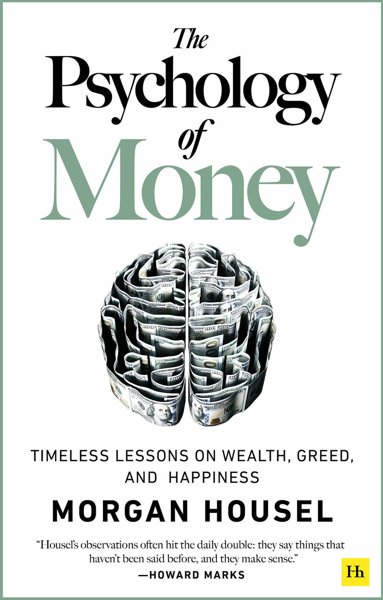
The Psychology of Money, Morgan Housel’s 2020 book, suits a book club because everyone has a story about money, and its argument is that behavior matters more than intelligence. It opens with a janitor who left millions and a Harvard educated banker who lost his mansion, then makes its case through twenty short chapters on luck, compounding, saving, room for error, bubbles and more, plus a postscript on the American consumer.
The chapters stand alone, so a group can discuss them in any order. The book scores four and a half out of five in our review, with top marks for readability. This guide is not personal financial advice, and the book itself says it cannot tell you what to do with your money.
Discussion Questions
- The book opens with Ronald Read, who fixed cars and swept floors and left millions, and Richard Fuscone, a Harvard educated Merrill Lynch executive who went bankrupt. What did patience beat in that comparison?
- Housel’s chapter “no one’s crazy” says stocks rose almost tenfold after inflation if you were born in 1970, but went nowhere if you were born in 1950. How have your own experiences shaped what feels sensible to you?
- Bill Gates attended one of the very few high schools in the world with a computer in 1968, while his friend Kent Evans died in a mountaineering accident before graduating. How should luck change whom we admire and whom we look down on?
- Housel notes that nearly all of Warren Buffett’s fortune arrived after his fiftieth birthday, and says Buffett’s secret is time. Which part of compounding did you find hardest to feel?
- Jim Simons earned far higher yearly returns than Buffett but is less rich because he found his stride only at fifty. What does that say about aiming for returns you can keep for decades?
- The chapter on enough contrasts a novelist’s one-word answer with Rajat Gupta and Bernie Madoff. Where is the goalpost for you, and when has it moved?
- Housel watched people pull up in Ferraris as a valet, and a young man’s Porsche was repossessed. Why is wealth what you don’t see?
- The book says saving is the gap between your ego and your income. Did that change how you think about saving without a specific goal?
- Housel calls volatility a fee, like a theme park ticket, not a fine. Can you pay it? What would a 30 percent drop feel like for you?
- The book says to be reasonable, not rational, and notes that Harry Markowitz split his own money half and half to minimize regret. Is a plan you can live with better than a perfect one?
- The confessions chapter admits Housel owns his house outright and keeps about a fifth of his assets in cash, and he says both look indefensible on paper. Did that honesty win you over or seem smug?
- Our review says the evidence is mostly stories and the book is very American. Did that limit what you took from it?
- Our review says the book is not a how-to. What would you want a second book to add?
Applying It
- Write what enough looks like for you in plain words. Compare answers in the group.
- The book suggests assuming future investment returns will be a third lower than the historical average. Stress test your own plan: would it hold if your income dropped?
- Housel imagines three investors who each save a dollar a month from 1900 to 2019: Sue keeps investing, Jim sells in recessions, and Tom reacts six months late. Sue ends with about 435,000 dollars. What rule would you write down now for a panic?
- Ask of each big purchase whether it buys time or takes it away. Share one example from your own life.
- If you try only one habit, our lessons page suggests an automatic transfer to savings on payday. Which habit will you try first?
What To Know About The Author
Morgan Housel is a financial writer who started covering money in 2008, in the middle of the financial crisis, and who paid his way through college working as a valet at a Los Angeles hotel. The book grew out of a 2018 report with the same title, which the book says over a million people read. It runs to about fifty thousand words, and reportedly sold more than three million copies, though figures vary by source.
What To Read Next
Our books-like-it list covers seven more reads on money and behavior. Read our review first if you want to know what to expect, and use the summary page for a chapter by chapter recap, and the lessons page for eleven practical habits. This is a book channel, not a financial advisor: talk to a licensed professional about real decisions.