Intro
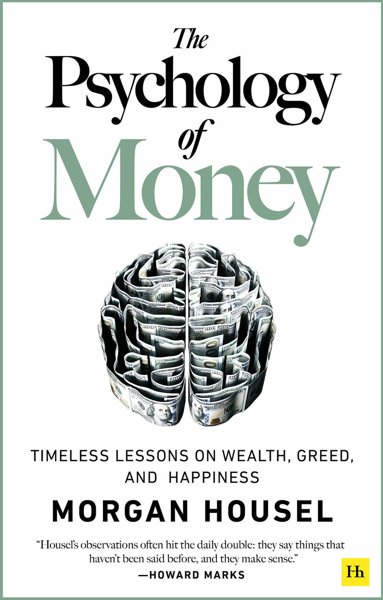
Today I’m summarizing The Psychology of Money, by Morgan Housel, one short chapter at a time, so you can see how twenty separate stories add up to one argument.
You don’t need any finance background, and nothing here is personal financial advice. It is a summary of what the book says. If you want my opinion first, my review is on the channel too.
The Setup
The book opens with two men. Ronald Read was a gas station mechanic and janitor who died in twenty fourteen with a fortune of more than eight million dollars, built from ordinary savings and patient investing. Richard Fuscone was a Harvard educated banker who borrowed for a giant mansion and went bankrupt in the financial crisis.
Housel’s thesis follows. Money success is a soft skill. How you behave matters more than what you know, because finance is guided by people, not by physics. He argues that money is taught like a math problem when it should be taught more like psychology, with emotions and nuance.
No One’s Crazy
Chapter one says everyone’s money decisions make sense to them, because everyone has lived a different slice of history. Your own experience is perhaps a tiny fraction of what has happened in the world, yet it shapes most of how you think the world works.
The proof is a study the book cites: people’s lifetime investing habits stay anchored to what happened in their early adult years. Born in a high inflation era, you hold fewer bonds. Born during strong stocks, you hold more. The chapter also notes how new modern saving is. The four oh one k did not exist until nineteen seventy-eight.
Luck, Risk And Enough
Chapter two is luck and risk, which Housel calls siblings. Bill Gates had a one in a million head start at his school, while his friend Kent Evans met a one in a million misfortune. The lesson is that nothing is as good or as bad as it seems, so study broad patterns, not extreme individuals.
Chapter three is about never enough. Rajat Gupta and Bernie Madoff already had wealth and risked it for more. The book’s advice is to keep your goalpost from moving, resist social comparison, and never risk what you have and need for what you do not need.
Compounding And Staying Wealthy
Chapter four is about compounding. Warren Buffett’s fortune is mostly a product of time, because he has invested since childhood. Our minds think in straight lines, so exponential growth keeps surprising us. Housel borrows ice ages to show it: a thin layer of snow that survives one summer can grow into a continental ice sheet.
Chapter five separates getting wealthy from staying wealthy. Jesse Livermore made a fortune betting against the market in twenty-nine, then lost it all later. The book calls the key skill survival. That means frugality, paranoia about what could wipe you out, and room in your plans, paired with long term optimism.
Tails And Freedom
Chapter six is tails you win. A few outcomes drive most results. Snow White earned Disney more in six months than anything before it, after hundreds of cartoons that mostly lost money. Art dealers, venture capitalists and even the broad stock index all work this way: many things fail, and a small number carry the whole result. You can be wrong half the time and still do very well.
Chapter seven is freedom. The most reliable ingredient of happiness, the book says, is control over your own time, and money’s greatest value is buying that control. Derek Sivers saved a small cushion at twenty-two and quit his day job. Housel calls controlling your time the highest dividend money pays.
Cars, Hidden Wealth And Saving
Chapter eight is the man in the car. People buy fancy cars to be admired, but onlookers imagine themselves in the driver’s seat and barely notice the driver. Housel learned this as a valet. His conclusion is that humility, kindness and empathy win more respect than horsepower.
Chapter nine says wealth is what you don’t see. Rich is current income; wealth is income not spent. Chapter ten says to save, with or without a goal. Savings equal the gap between your ego and your income, and they buy flexibility, which is an unseen return.
Reasonable And Surprising
Chapter eleven says to aim to be reasonable, not coldly rational. The Nobel winning economist Harry Markowitz split his own money fifty-fifty between stocks and bonds to minimize future regret. The best plan is the one you can actually stick with, and that helps you sleep at night.
Chapter twelve is surprise. Things that have never happened before happen all the time, so history is a guide to behavior, not a map of the future. Even Benjamin Graham kept replacing his own formulas, because the world kept changing.
Room For Error And Changing Selves
Chapter thirteen is room for error. Housel compares investing to blackjack card counting: even with an edge, never bet so much that one bad run ends the game. Margin of safety means plans that survive being wrong. Avoid leverage and single points of failure.
Chapter fourteen is you’ll change. Psychologists call it the end of history illusion: we expect to stay the people we are now. So avoid extreme plans, aim for moderation, and drop old goals without guilt, because sunk costs hold your future self prisoner.
Fees, Not Fines
Chapter fifteen says nothing is free. Market returns come with a price, and the price is volatility, doubt and regret. Housel’s reframing is that volatility is a fee, not a fine. A fee buys you something, like a Disneyland ticket. A fine means you did something wrong.
Chapter sixteen is you and me. Bubbles form when long term investors take cues from short term traders playing a different game. Before copying anyone, work out what game you are playing and what your time horizon is.
Pessimism And Stories
Chapter seventeen explains why pessimism sounds smarter than optimism. Bad news is fast and loud, while progress is slow and quiet. A bankruptcy can happen overnight, but a seventy percent drop in heart disease deaths since nineteen sixty-five happened too slowly to make headlines. The book’s example is the Wright brothers, whose first flights barely drew attention for years.
Chapter eighteen says stories drive the economy. Between two thousand seven and two thousand nine, an alien visitor would have seen the same cities and factories, yet people were trillions poorer. What changed was the story. Housel adds that the more you want something to be true, the more easily you believe it.
Putting It Together
Chapter nineteen is all together now. Housel opens with a dentist who operated on a man without his clear consent, to show why he will not tell you what to do. Then he lists short lessons: be humble when things go right, save, keep your time horizon long, accept that a lot will go wrong, and be nicer and less flashy.
Chapter twenty is his confessions. His family aims for independence, owns its house outright, keeps a large share of its savings in cash and invests in low cost index funds. He stresses that parts of this look indefensible on paper, and that it is what works for him, not advice for you.
The Postscript
The postscript is a history of the American consumer since the end of World War Two. After the war, low interest rates, the GI Bill and cheap credit created a boom in homes, cars and appliances, and the gains were spread more evenly than ever.
Later, incomes grew unevenly, yet lifestyle expectations, and debt, kept rising, because people still measured themselves against neighbors who were now living very differently. The book’s claim is that expectations move slower than reality, which helps explain today’s anger and debt. Housel calls it his own simplified story.
The One Idea
If I had to compress the whole book into one sentence, it would be this: manage your money so you can stay in the game for a very long time. Save, leave room for error, avoid ruin, stay humble about luck, and let compounding do the work.
That is the thread through every chapter. Nothing in the book is a trick. It is an argument that behavior, not brilliance, decides most outcomes, and that is why it has resonated with so many readers.
Where To Get It
That’s The Psychology of Money in about ten minutes. The book and audiobook are linked in the description, along with the books I mentioned. I also have a lessons video on how to put these ideas to work, and a video on books like it.
Tell me in the comments: which of the twenty chapters spoke to you most, and why? Thanks for watching, and subscribe for more book breakdowns.