The Short Version
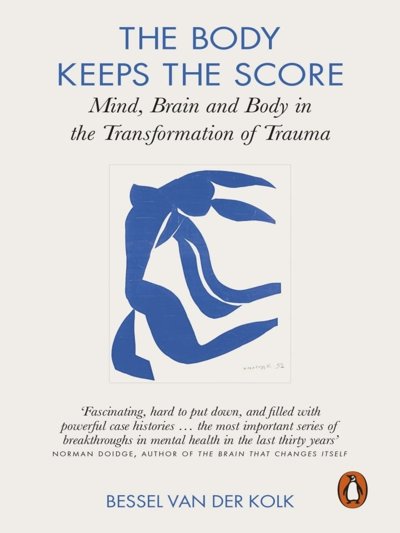
Today I’m summarizing one of the best-selling psychology books of our time: The Body Keeps the Score, by psychiatrist Bessel van der Kolk. A quick note before we start: this video talks about trauma and abuse. If you’re struggling, please reach out to a professional or someone you trust.
Here’s the book in one sentence. Trauma doesn’t only live in our memories; it changes how the brain and body respond to the world, and healing often needs to involve the body, not just talk. Let’s go through the big ideas.
Who Wrote It
Van der Kolk is a Dutch-born psychiatrist who has worked on trauma since the nineteen seventies. The book opens on his first day at the Boston Veterans Administration Clinic in nineteen seventy eight, with a Vietnam veteran named Tom.
Tom was a valedictorian and a leader, but after the war he couldn’t feel affection for his wife, had nightmares, and felt disconnected from everything. Van der Kolk realized that the usual approach, focusing on the nightmares, missed the bigger picture. That’s where the book begins.
How Common Trauma Is
The prologue makes a striking claim. Citing research from the Centers for Disease Control, van der Kolk writes that one in five Americans was sexually molested as a child, one in four was beaten by a parent hard enough to leave a mark, and one in three couples engages in physical violence.
His point is that trauma isn’t rare, and isn’t just about war. It happens in ordinary homes, to ordinary people.
The Smoke Detector And The Watchtower
This is the book’s most famous metaphor. Van der Kolk calls the amygdala the brain’s smoke detector. It decides, very quickly, whether something is dangerous.
The medial prefrontal cortex, just above your eyes, is the watchtower. It looks down on the scene calmly and decides whether the alarm is real. In trauma, he argues, the balance shifts. The smoke detector becomes oversensitive, and the watchtower loses control. So a car backfiring can feel like gunfire, years later.
Speechless Terror
In one brain-scan study, van der Kolk’s team had people listen to scripts of their traumatic memories. During flashbacks, a speech area called Broca’s area went quiet.
That’s why, he argues, trauma is so hard to talk about. It isn’t just painful. In the moment, the brain struggles to put the experience into words. Flashbacks feel less like remembering and more like living it again.
Losing Touch With The Body
Many traumatized people, he writes, feel numb or cut off from their bodies. Some can’t tell when they’re hungry, tired or upset. Van der Kolk uses the word interoception, the sense of what’s happening inside your own body.
His central claim is that you can’t fully recover until you feel safe in your own body again. That’s the meaning of the title. The body keeps the score.
The Polyvagal Idea
Van der Kolk leans on the work of Stephen Porges and his Polyvagal Theory. In simple terms: when we feel threatened, we first look to other people for safety, then we fight or flee, and if that fails, we freeze or collapse.
The takeaway is that relationships and feeling safe with others are central to healing. It’s an influential idea, though, as I explain in my science video, it’s also debated.
Childhood Trauma And The ACE Study
One of the strongest parts of the book is about childhood. Van der Kolk describes the Adverse Childhood Experiences study, run by Kaiser Permanente and the CDC, which asked more than seventeen thousand patients about ten kinds of childhood adversity.
The results were stark. Adverse childhood experiences were common, they clustered together, and higher scores were linked to far higher risks of alcoholism, depression, and serious illness decades later. One in six people in the study had a score of four or more.
Developmental Trauma
Van der Kolk argues that children who grow up with chronic abuse or neglect develop differently, and that diagnoses like ADHD or bipolar disorder are sometimes given when the underlying problem is trauma.
He spent years campaigning for a new diagnosis, called developmental trauma disorder, to be added to the psychiatric manual. It wasn’t adopted, and the book is frank about his frustration.
Memory
A section of the book covers traumatic memory, which van der Kolk says can be stored as fragments of sensations and images rather than a clear story. He also discusses cases where people forget traumatic events and recall them later.
This is the most controversial part of the book scientifically, and I’ll come back to it in my science check.
Paths To Healing
The second half is about treatment. Van der Kolk describes approaches that work from the top down, like talking and mindfulness, and from the bottom up, through breathing, movement and touch.
He covers EMDR, eye movement desensitization and reprocessing. He covers trauma-sensitive yoga, internal family systems therapy, a body-based method called psychomotor therapy, neurofeedback, and theater programs for teenagers. Medication, he says, can help, but isn’t enough on its own.
EMDR And Yoga
Two of his own studies stand out. In one, his team compared EMDR with Prozac and a placebo. After eight sessions, about one in four EMDR patients no longer had significant symptoms, compared with one in ten on Prozac, and the EMDR group kept improving afterwards.
In his yoga research, women with long histories of trauma who practiced for twenty weeks showed changes in brain areas linked to self-awareness. These are real studies, but they’re small, and I’ll talk about how they’ve held up.
The Takeaway
So that’s The Body Keeps the Score. Trauma is common. It changes how the brain detects danger and how we experience our bodies. And recovery, van der Kolk argues, means feeling safe in your body and with other people again.
My honest review and a science check of what holds up are linked below. Thanks for watching, and take care of yourself.