The Short Version
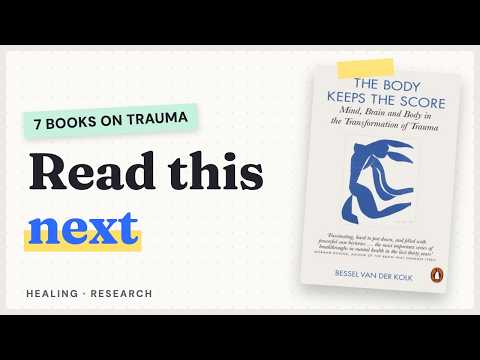
If The Body Keeps the Score helped you understand trauma and you want to keep learning, this list is for you. I picked seven books: a classic, some gentler reads, some practical ones, and one skeptical counterpoint, so you get a balanced view. As always, books are a great start, but they aren’t a substitute for professional help.
Trauma And Recovery
First, the classic: Trauma and Recovery by Judith Herman, from nineteen ninety two. Herman, a Harvard psychiatrist, connected the trauma of war veterans with the trauma of domestic and sexual violence, and described recovery in stages: safety, remembrance and mourning, and reconnection.
It’s more academic than van der Kolk, but many clinicians consider it the foundation of the field. If you want the deepest background, start here.
What Happened To You?
Second, What Happened to You? by psychiatrist Bruce Perry and Oprah Winfrey, from twenty twenty one. It’s written as a conversation, and it explains how childhood experiences shape the developing brain.
It’s the most approachable book on this list, and a gentle place to start if The Body Keeps the Score felt overwhelming.
The Myth Of Normal
Third, The Myth of Normal by physician Gabor Maté, written with his son Daniel Maté, from twenty twenty two. It widens the lens from individual trauma to culture, arguing that modern society itself creates stress and illness.
It’s ambitious and thought-provoking, and like van der Kolk, it sometimes reaches beyond the evidence, so read it with a curious but critical eye.
Complex PTSD
Fourth, Complex PTSD: From Surviving to Thriving by therapist Pete Walker, from twenty thirteen. Walker writes about childhood trauma from his own experience and his clinical work, with very practical tools for managing emotional flashbacks.
It’s the most hands-on book on this list, and many readers say it gave them words for experiences they’d never been able to describe.
My Grandmother’s Hands
Fifth, My Grandmother’s Hands by therapist Resmaa Menakem, from twenty seventeen. It explores racialized trauma in America, and how it lives in bodies and communities, with body-based practices throughout.
It’s a powerful extension of van der Kolk’s ideas into race and history.
Waking The Tiger
Sixth, Waking the Tiger by Peter Levine, from nineteen ninety seven. Levine developed Somatic Experiencing, a body-focused approach, and he draws on how animals in the wild recover from threat.
It’s one of the books that inspired the body-based ideas in The Body Keeps the Score. Keep in mind the evidence for this approach is still limited.
The Trouble With Trauma
And seventh, a counterpoint: The Trouble with Trauma by psychiatrist Michael Scheeringa, from twenty twenty one, along with his later writing on van der Kolk’s book. He argues that popular ideas about trauma, including some in The Body Keeps the Score, go beyond the evidence.
You don’t have to agree with him, but reading a skeptic alongside the bestsellers will make you a much sharper reader.
How To Choose
Quick guide. Want the foundation? Trauma and Recovery. Want something gentle? What Happened to You? Want the big picture? The Myth of Normal. Want practical tools? Complex PTSD. Want to understand racialized trauma? My Grandmother’s Hands. Want the body-based roots? Waking the Tiger. Want a skeptic? The Trouble with Trauma.
Your Turn
Which of these have you read, and what would you add? Tell me in the comments. My summary, review and science check are linked below. Thanks for watching, and take care of yourself.