The Verdict
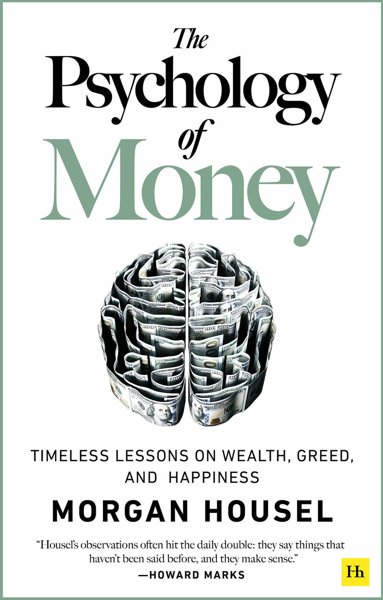
Today I’m giving you my honest take on The Psychology of Money, by Morgan Housel, the book that argues your money life depends far more on how you behave than on how smart you are.
So, is it worth reading? Yes. It is short, warm and full of stories you will repeat at dinner. But it is a book of ideas, not a plan, and some of its evidence is just a good anecdote. I give it four and a half out of five. This review is spoiler free, and nothing here is personal financial advice.
What It’s About
The Psychology of Money came out in twenty twenty. Morgan Housel is a financial writer who started covering money in two thousand eight, in the middle of the financial crisis. He also explains that he paid his way through college working as a valet at a Los Angeles hotel, which turns out to matter later.
His big claim is simple. Doing well with money has a little to do with intelligence and a lot to do with behavior. He calls that soft skill the psychology of money, and the book is twenty short chapters about it. Reportedly it has sold more than three million copies, though figures vary by source.
The Janitor And The Banker
The opening is the best argument for the whole book. Ronald Read fixed cars at a gas station, swept floors at a department store for years, and bought a small house at thirty-eight, where he lived for the rest of his life. When he died in twenty fourteen, at ninety-two, he left millions to his stepchildren, a hospital and a library.
Next to him, the book sets Richard Fuscone, a Harvard educated Merrill Lynch executive who borrowed heavily for an enormous mansion and went bankrupt in the financial crisis. There was no lottery win and no inheritance. Read saved what he could, bought blue chip stocks and waited for decades. Housel’s point is that patience beat education here, and that investing may be one of the only fields where that can happen.
The Shape Of The Book
The book is an introduction, twenty short chapters and a long closing postscript, about fifty thousand words in all. Each chapter makes one point through a story: luck and risk, compounding, saving, room for error, why bubbles form. They stand alone, so you can read them in any order. Housel says he would rather write twenty short points you finish than one long one you abandon.
It grew out of a twenty eighteen report with the same title, which the book says over a million people read. You can feel that origin. It reads like a very good series of essays, and the stories come from finance, medicine, ice ages and even Las Vegas card counters.
What Works: Behavior Beats Math
The first strength is the core idea. Finance is usually taught as math: put numbers in a formula and do what it says. Housel replies that knowing what to do tells you nothing about what happens in your head when you try. That is true, and almost nobody says it this plainly.
My favorite example is the chapter called no one’s crazy. If you were born in nineteen seventy, the book says, stocks rose almost tenfold after inflation during your teens and twenties. If you were born in nineteen fifty, they went nowhere. Two people, opposite instincts, and neither is crazy.
What Works: Luck And Risk
The second strength is how honestly the book treats luck. Bill Gates attended one of the very few high schools in the world with a computer, in nineteen sixty-eight. The book counts it out: about three hundred million teenagers on Earth, and only about three hundred at that school.
Then comes Gates’s friend Kent Evans, just as gifted, who died in a mountaineering accident before graduating. Same force, opposite direction. Housel’s advice is to be careful whom you admire and whom you look down on, because success is never quite as good, or failure as bad, as it seems. I think that is the best chapter in the book.
What Works: Time Does The Work
The third strength is compounding, and the book explains it better than most. At the time Housel wrote, nearly all of Warren Buffett’s fortune had arrived after his fiftieth birthday. Buffett began investing seriously around age ten. The book estimates that if he had started at thirty and quit at sixty, he would have roughly twelve million dollars, not billions.
Housel’s line is that Buffett’s skill is investing, but his secret is time. Jim Simons, the book says, earned far higher yearly returns, yet is less rich, because he found his stride only at fifty. The takeaway is to aim for good returns you can keep for decades, not heroic ones you cannot hold. I have rarely seen compounding made this memorable.
Enough
One of the most striking chapters is about enough. Housel opens with a story told by John Bogle. A novelist is told that a billionaire made more in a day than his bestseller earned in years, and his answer is a single word. Enough.
Then the book gives you Rajat Gupta, a former McKinsey chief already worth around one hundred million dollars, and Bernie Madoff, who had a legitimate, profitable business before his fraud. Both threw it all away for more. Housel calls the hardest financial skill getting the goalpost to stop moving.
He also warns that comparison has no ceiling. A Las Vegas dealer once told a friend of his that the only way to win in a casino is to leave as soon as you walk in. Chasing other people’s wealth works the same way. That chapter is worth the price of the book.
Wealth Is What You Don’t See
Then there is the valet. Housel watched people pull up in Ferraris and noticed that he looked at the cars, never at the drivers. One young man he knew drove a Porsche, and then one day showed up in an old Honda. The Porsche had been repossessed.
From that he draws a sharp distinction. Rich is current income. Wealth is the income you do not spend, the nice cars not bought. It is hidden by definition, which is why it is so hard to copy. This short section changed how I notice other people’s spending, and my own.
Writing And Pacing
The writing is a big reason the book works. Housel sounds like a friend explaining something over coffee. Sentences are short, jargon is rare, and most chapters open with a story and then widen into the lesson. It is easy to finish in a weekend, and hard not to underline.
The tone is warm, a little wry, and never preachy. One content note: a few stories mention suicide after financial ruin, including a man who vanished during the crash of twenty-nine, and one chapter covers the death of a teenager. They are brief, but they are there.
What Doesn’t Work
Now the criticisms. First, it is not a how-to book. How much should you save? What should you buy? Housel says outright that he cannot tell you what to do with your money, because he does not know you. That is honest, but if you want a plan, you will need a second book.
Second, the evidence is mostly stories. The book warns against learning from extreme cases like billionaires, then fills many chapters with them. And third, it is very American. Retirement accounts, student loans, mortgages and the postwar economy are all explained for a United States reader, so everyone else has to translate.
Where It Wears Thin
By the later chapters the lessons start to repeat: be humble, leave room for error, save without a reason. The chapter called all together now is a handy list, but it mostly restates what you just read. Some stories are also tidy. The story of the trader Jesse Livermore’s twenty-nine crash comes from one biographer, and the book tells it with more certainty than I would.
The confessions chapter is candid. Housel owns his house outright and keeps about a fifth of his assets in cash, and he admits both look indefensible on paper. I like the honesty. Others may find it a bit smug. And the long postscript on the American consumer is interesting, but it feels like a different book.
The Scorecard
Here’s how I score it. Ideas get four and a half out of five. Readability gets five, because it is a joy to read. Practicality gets three and a half, since there is no plan. Evidence gets four, and impact gets four and a half. That averages out to four point three, and I round it to four and a half, because few finance books get finished by this many people.
Who It’s For
Read The Psychology of Money if money feels confusing or stressful, if you like stories more than spreadsheets, or if you already invest and want to understand your own reactions. It makes a great gift for someone who says they hate finance books.
Skip it if you want budgets, tax tips or specific investing instructions, if you need rigorous studies on every page, or if you want a book that is not centered on the United States. And a reminder: I’m a book reviewer, not a financial advisor. For real decisions, talk to a licensed professional.
Where To Get It
That’s The Psychology of Money, by Morgan Housel. Clear, human and endlessly quotable, and four and a half out of five from me. The book and audiobook are linked in the description, along with every book I mentioned.
Tell me in the comments: what is the best money lesson you learned from experience, not from a book? Thanks for watching, and subscribe if you’d like more honest book reviews.