The Verdict
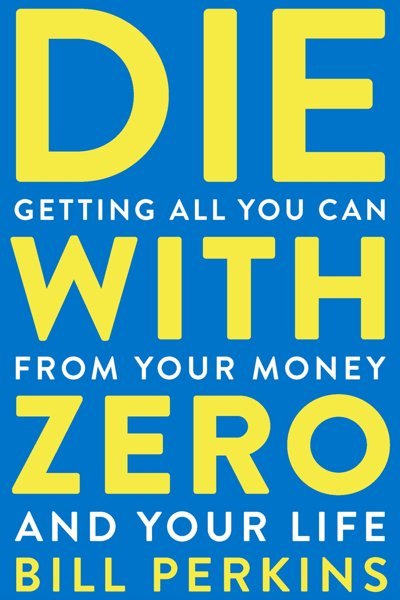
Today I’m reviewing Die With Zero, by Bill Perkins, the money book that tells you to stop hoarding and start living.
Is it good advice? Mostly, yes, with a few important warnings. It is a sharp, readable reframe of what money is actually for, and it is aimed at people who already have enough. I give it four out of five. And one note: I’m not a financial advisor, so this is a book review, not financial advice.
What It’s About
Bill Perkins trained on Wall Street, made his fortune as an energy trader, and now asks a simple question. Why work and save for decades, only to die with a pile of money you never enjoyed?
The book is built on nine rules, one for each chapter. They are about turning your money into memories while you are still young and healthy enough to enjoy them. It opens with the old fable of the ant and the grasshopper, and asks the question the fable skips: when does the ant ever get to play?
It was published in twenty twenty, and it is short, so you can read it in an afternoon or two.
What Works
My first favorite thing is the reframe. Perkins says that your real resource is not money, it is life energy, and money is just a tool for turning that energy into experiences. Once you see it that way, saving for its own sake starts to look strange.
My second favorite thing is the idea of a memory dividend. A good experience keeps paying you back, every time you remember it and every time you talk about it. That is a very useful way to think about a trip, a concert, or a weekend with friends.
My third favorite thing is how practical the timing advice is. He gives actual age ranges for when to spend, when to give, and when to stop growing your wealth.
The Ideas That Stick
The idea that will stay with me longest is time bucketing. Some experiences have a window. A kid stops wanting to watch the same movie. A body stops being able to hike a mountain. If you do not plan for those windows, they close without any warning.
The second idea is giving money to your children earlier, when it can change their lives, instead of leaving it behind at the end. That is a surprising and useful challenge to how most families plan.
Writing And Style
The writing is conversational and full of short stories, from friends, from famous people, and from his own life. It is easy to read, and it never feels like a textbook.
What Doesn’t
My first criticism is who the book is for. The author says it himself: if you are struggling to make ends meet, this book will not help much. It speaks to people who already have choices.
My second criticism is the lifestyle. Perkins is known for expensive poker games and a glamorous life, and some of his examples feel far from most readers’ reality.
My third criticism is the risk. Aiming at zero sounds bold, but in real life you cannot know how long you will live, and the book is a lot more cheerful about that than a careful planner would be.
The Scorecard
Ideas: four and a half out of five. Practicality: three and a half. Evidence: three and a half. Writing: three and a half. Impact: four and a half. That gives an average of three point nine out of five.
Who It’s For
Read Die With Zero if you are a saver who never feels allowed to spend, or if you want a nudge to plan more experiences while you still can.
Skip it if you are living paycheck to paycheck, or if you want a step by step investing guide.
If you enjoyed it, try The Psychology of Money by Morgan Housel, Four Thousand Weeks by Oliver Burkeman, or Your Money or Your Life by Vicki Robin.
Where To Get It
Links to the book are in the description below. Tell me in the comments: what is one experience you would not want to put off? Thanks for watching, and I’ll see you next time.