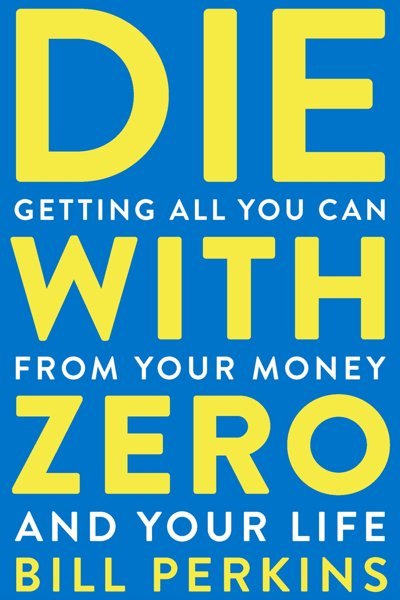
What is Die With Zero about?
Bill Perkins trained on Wall Street, made his fortune as an energy trader, and now asks a simple question. Why work and save for decades, only to die with a pile of money you never enjoyed?
Is Die With Zero worth reading?
A sharp, readable reframe of what money is for, with a useful time-bucket idea, held back by its audience (people who already have enough) and a cheerful view of risk. Four out of five. This is a book review, not financial advice. Read it if: you are a saver who never feels allowed to spend; you want a nudge to plan experiences while you still can; you like short, story-driven nonfiction. Skip it if: you are living paycheck to paycheck; you want a step-by-step investing guide; you want rigorous financial research. Review: Die With Zero →
Is there a summary of Die With Zero?
A summary of Die With Zero by Bill Perkins, one rule at a time: experiences, memory dividends, annuities, giving early, time buckets and when your net worth should peak. Not financial advice. Summary: Die With Zero →
What books are like Die With Zero?
The Psychology of Money by Morgan Housel, Four Thousand Weeks by Oliver Burkeman, Your Money or Your Life by Vicki Robin and Joe Dominguez, The Top Five Regrets of the Dying by Bronnie Ware, The Millionaire Next Door by Thomas J. Stanley and William D. Danko, Die Broke by Stephen Pollan and Mark Levine. Books like it: Die With Zero →
What is the main idea of Die With Zero?
That money is a tool for creating experiences, and that you should aim to spend, give and enjoy it during your life instead of dying with a large unspent fortune. The author says that hitting exactly zero is impossible, and the goal is to push you in the right direction.
What are the nine rules of Die With Zero?
They are: maximize your positive life experiences, start investing in experiences early, aim to die with zero, use all available tools, give money to your children or charity when it has the most impact, do not live on autopilot, think of your life as distinct seasons, know when to stop growing your wealth, and take your biggest risks when you have little to lose.
Is Die With Zero financial advice?
No. The author says he is not a certified financial planner, and this channel is not a financial advisor either. Treat the book as a set of ideas to think about.
What are the criticisms of Die With Zero?
The review names three. It speaks mainly to people who already have choices, the author's glamorous lifestyle makes some examples feel far from most readers' lives, and aiming at zero is cheerful about the risk that you cannot know how long you will live.