Intro
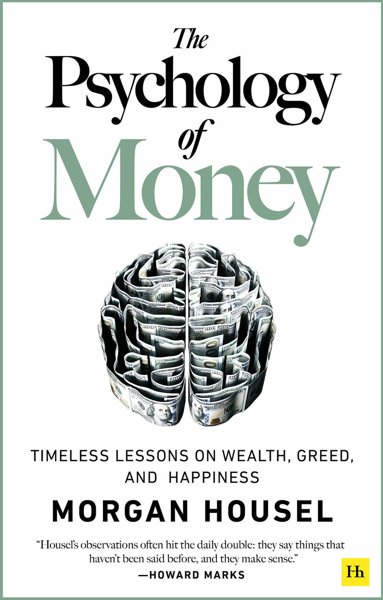
If you’ve read The Psychology of Money, or watched my summary, you’re probably wondering what to actually do on Monday morning. So today is a practical plan, built from the habits Morgan Housel describes, with a small action for each one.
A clear note first. I’m not a financial advisor, and this is not personal financial advice. Housel himself says he can’t tell you what to do with your money, because he does not know you. Treat this as a menu of ideas, and talk to a licensed professional about real decisions.
Name Your Enough
Habit one: decide what enough looks like. Housel calls the hardest financial skill getting the goalpost to stop moving. If your expectations rise every time your income does, extra effort never makes you feel any better, and you are pushed toward bigger and bigger risks.
The action is to write down, in plain words, what a good life costs for you. Housel and his wife kept the lifestyle they had in their twenties, even as incomes grew, and put nearly every raise into savings.
Save Without A Reason
Habit two: save, even with no goal. Housel says saving is the gap between your ego and your income. You can raise it by earning more, but the easier and more controllable way is to need less, and that mostly means caring less about what other people think.
Saving only for a named goal assumes you know your future. You don’t. Savings with no label are a hedge against the surprise that always shows up. The action is to automate a transfer on payday, so the money is gone before your ego can spend it.
Buy Time, Not Things
Habit three: spend toward control of your time. The book cites psychologist Angus Campbell, who found that a sense of controlling your own life predicts happiness better than income, house size or job prestige. Even a small cushion lets you take a sick day, or wait for a better job.
The action is to ask of each big purchase whether it buys time or takes it away. A bigger home with a bigger payment can quietly trade your freedom for square feet. The book’s example is a man who saved a modest sum by twenty-two and quit his day job to play music.
Build Room For Error
Habit four: plan on your plan going wrong. Housel borrows an idea from Benjamin Graham, margin of safety, and from blackjack card counters, who never bet everything even when the odds favor them. His own rule is to assume future investment returns will be a third lower than the historical average.
The action is to stress test your plan. If your income dropped, or markets returned half of what you hope, would you still be fine? If not, widen the gap. And avoid single points of failure, like relying on one paycheck with nothing set aside.
Treat Volatility As A Fee
Habit five: decide ahead of time what you are willing to pay. Every good market return comes with a price, which is volatility, doubt and regret. Housel says to think of it as a fee, like a theme park ticket, not a fine that means you did something wrong.
The action is to write down, in calm times, what a thirty percent drop would feel like and what you will do. The book warns that people who try to avoid the price by jumping in and out of the market often pay twice. The book cites Morningstar data showing the average fund investor earned about half a percent a year less than the funds they held, from buying and selling at the wrong times.
Know Your Game
Habit six: work out which game you are playing. Bubbles, the book says, form when long term investors take cues from short term traders. A price that makes sense to a day trader can be a disaster for someone holding for thirty years.
The action is to write one sentence about your time horizon and strategy. Housel’s own is that he is a passive investor, optimistic that the global economy will grow over three decades. Anything unrelated to that sentence, like this year’s headlines, belongs to a game he is not playing.
Stay Put When Everyone Panics
Habit seven is the one the book says matters most in a crisis: stay put when everyone else is going crazy. Housel imagines three investors who each save one dollar a month from nineteen hundred to twenty nineteen. Sue keeps investing no matter what. Jim sells in every recession and buys back after, and Tom reacts six months late.
Sue ends with about four hundred thirty-five thousand dollars, while Jim and Tom end with somewhere between two hundred thirty and two hundred sixty thousand. The action is a plain rule you write down now: no big decisions during a panic, and wait at least a week before acting on one.
Expect Many Things To Fail
Habit eight: be okay with being wrong often. The book argues that a small number of results drive most outcomes. Warren Buffett, according to Housel, owned hundreds of stocks and made most of his money on about ten of them.
The action is to judge yourself by the whole picture, not each decision. A portfolio with many losers and a few big winners is normal. Also, judge outcomes fairly. A bad result can come from bad luck, and a good one can come from a lucky gamble, so be humble in success and forgiving in failure.
Be Reasonable, Not Rational
Habit nine: choose the plan you can live with. The book says not to aim to be coldly rational, but to be reasonable, and the test is whether it helps you sleep at night. Harry Markowitz, who won a Nobel prize for portfolio theory, split his own money half and half to minimize future regret.
The action is to pick something you can stick with through a bad year, even if it looks imperfect on a spreadsheet. The book suggests that sticking with a strategy during its lean years is among the strongest predictors of results, so a plan you abandon is worth little.
Avoid Extremes
Habit ten: stay balanced, because you will change. The book calls this the end of history illusion: we know how much we changed in the past, but expect to stay the same from here. Extreme plans, like living on almost nothing or working endless hours, often end in regret.
The action is to aim for moderate savings, moderate free time and a moderate commute. And when your goals change, drop the old plan without guilt. Housel quotes the writer Jason Zweig, who recalled Daniel Kahneman telling him that he had no sunk costs.
Be Careful Who You Copy
Habit eleven: choose role models carefully. Wealth is hidden, so the people you see spending are not always wealthy. The book’s valet saw expensive cars and no bank statements, and one driver’s Porsche was repossessed.
The action is to stop using other people’s spending as a benchmark. They may be playing a different game, or borrowing to look rich. Study broad, common patterns, like saving steadily, not the extreme stories of billionaires, which depend heavily on luck.
Two Cautions
Two cautions before the plan. First, this is not a guarantee. Housel says himself that index investing will not always work and is not for everyone, and he calls some of his own choices indefensible on paper.
Second, your starting point matters. The book spends its first chapter explaining that people with very different lives reasonably see money differently, so a habit that is easy with a comfortable income can be hard on a tight one. Take what fits your situation, and leave the rest.
A Simple Plan
Here is how I would turn that into a plan. This week, write your sentence about enough and your time horizon. This month, set up an automatic transfer to savings, and run the stress test. This year, review your plan, and ask what has changed in you, not just in the market.
Housel’s own approach, which he stresses is not advice, is a high savings rate, patience and low cost index funds. The book also notes that eighty-five percent of large company stock fund managers failed to beat the index in the decade ending twenty nineteen. Check any such claim for yourself.
Where To Start
If you try only one habit, make it the automatic transfer, because it turns a good intention into something that happens without willpower. Then come back and add a second habit next month.
Links to the book are in the description below, along with the books I mentioned. Tell me in the comments which habit you’ll try first, and thanks for watching.