Intro
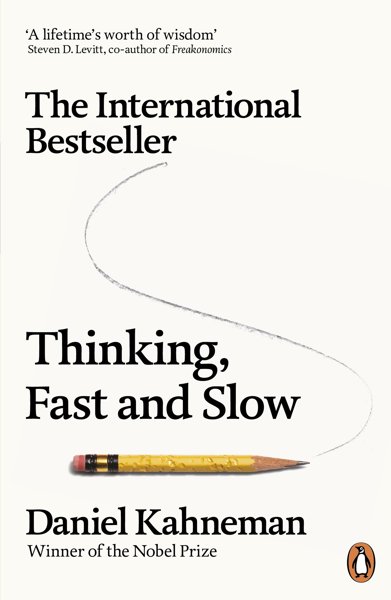
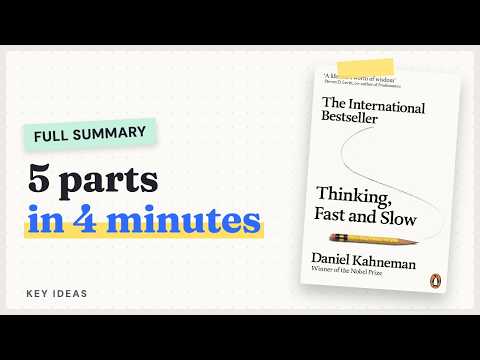
Today I’m summarizing Thinking, Fast and Slow, by Daniel Kahneman, one of the most influential books on how we decide.
It is a long book, so I’ll walk you through its five parts and the big idea in each. Let’s get started.
Part One: Two Systems
Part one introduces the two characters. System one is fast, automatic, and effortless. It recognizes a face, finishes a familiar phrase, and jumps to conclusions. System two is slow and effortful. It does the math, and it takes concentration.
The bat and ball puzzle shows the difference. System one says the ball costs ten cents. System two checks, and finds that it costs five.
A key idea here is that what you see is all there is. Your mind builds the best story it can from the information in front of it, and it does not notice what is missing.
Part Two: Heuristics and Biases
Part two is about mental shortcuts. One is anchoring. In a famous experiment, Kahneman and Amos Tversky rigged a wheel of fortune to stop at ten or sixty five, and then asked people to guess a number. Their guesses were pulled toward whatever number they had just seen.
Another is availability. We judge how common something is by how easily examples come to mind. And a third is the Linda problem, which shows how a vivid story can beat basic probability.
Part Three: Overconfidence
Part three is about overconfidence. We build tidy stories about the past, and then feel that the world is more predictable than it is.
Kahneman tells how his own team planned a school textbook. Everyone expected about two years. When asked about similar projects, an expert said they usually took seven to ten years, and many failed. That is the planning fallacy, and the cure is the outside view: look at how similar cases went.
Part Four: Choices
Part four is about prospect theory, the work behind the Nobel Prize. People do not judge outcomes by total wealth. They judge them as gains and losses from a reference point.
And losses hurt more than gains please. Loss aversion is usually measured at about one and a half to two and a half times. Framing matters too. The same choice can feel different, depending on how it is described.
Part Five: Two Selves
Part five distinguishes the experiencing self from the remembering self. The experiencing self lives each moment. The remembering self keeps the score, and it is the one that makes decisions.
In a study of painful medical procedures, patients remembered the peak and the end more than the length. One memorable line is the focusing illusion: nothing in life is as important as you think it is when you are thinking about it.
The Catch
Now the catch. Since the book came out, some studies in it, especially on priming, have been challenged by replication efforts. The core ideas on heuristics and loss aversion are more solid, but it is wise to read with care.
Where To Go Next
If one idea stuck with you, try this. Before your next big decision, ask what the outside view says: how did similar cases turn out?
Links to the book are in the description below. Tell me in the comments which idea changed your mind, and thanks for watching.