The Verdict
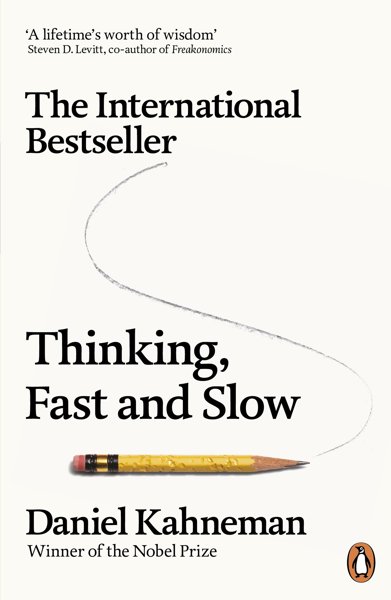
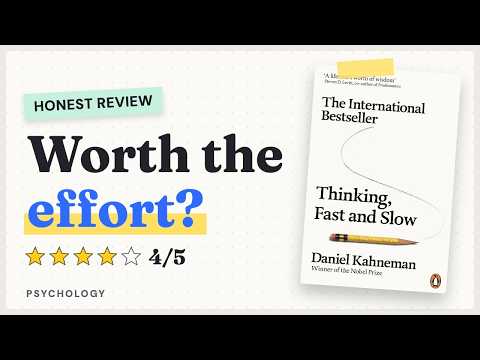
Today I’m reviewing Thinking, Fast and Slow, by Daniel Kahneman, the Nobel winning psychologist’s big book about how our minds really work.
Is it worth the effort? Yes, if you are ready for a long, dense read. It will change how you think about your own decisions. It is also heavy going in places, and some of its research has been questioned since. I give it four out of five. And this review is spoiler free, because the plot is your own brain.
What It’s About
Kahneman won the Nobel Prize in Economics in two thousand two for work he did with his friend Amos Tversky. This book brings together decades of that research into one story.
The central idea is that your mind has two modes. System one is fast, automatic, and intuitive. System two is slow, effortful, and logical. Most of the time, system one runs the show, and it is wrong in predictable ways.
The book has five parts, thirty eight chapters, and almost two hundred thousand words, so it is a long read.
What Works
My first favorite thing is the puzzles. Kahneman starts with a simple one: a bat and a ball cost one dollar and ten cents, and the bat costs a dollar more than the ball. Your gut says the ball costs ten cents. It is actually five. You feel your own mind getting it wrong.
My second favorite thing is the vocabulary. Terms like anchoring, loss aversion, and what you see is all there is give you names for things you have felt but never described.
My third favorite thing is the honesty. Kahneman keeps pointing out that he makes the same mistakes, even after a lifetime of studying them.
The Ideas That Stick
The idea that will stay with me longest is that confidence is not evidence. We feel sure when a story is coherent, not when it is true.
The second idea is the outside view. When you plan a project, look at how similar projects actually went, before you trust your own plan.
Writing And Style
The writing is clear and often funny, with Kahneman’s own stories about his research and his partnership with Tversky. But chapters are packed with experiments and numbers, so it is not a quick read.
What Doesn’t
My first criticism is length. Some chapters repeat the same lesson with more and more examples, and it is easy to lose momentum in the middle.
My second criticism is the research. Since the book came out, some of the findings, especially on priming, have been challenged by replication efforts. It does not undo the central ideas, but it is a reason to read with care.
My third criticism is that knowing about biases does not fix them. Kahneman admits this himself, and the book is stronger on diagnosis than on cures.
The Scorecard
Ideas: five out of five. Readability: three and a half. Practicality: three and a half. Evidence: four. Impact: five. That gives an average of four point two out of five.
Who It’s For
Read Thinking, Fast and Slow if you are curious about decisions, money, or psychology, and you are willing to read slowly.
Skip it if you want a quick, light read, or a step by step self help guide.
If you enjoyed it, try Nudge by Richard Thaler and Cass Sunstein, Predictably Irrational by Dan Ariely, or Noise by Daniel Kahneman and his co authors.
Where To Get It
Links to the book are in the description below. Tell me in the comments: what is one decision you made on gut feeling? Thanks for watching, and I’ll see you next time.