The Verdict
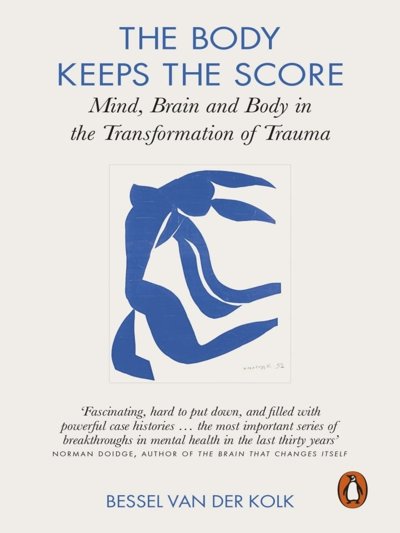
Today I’m reviewing The Body Keeps the Score by Bessel van der Kolk, a book that’s been on bestseller lists for years and gets recommended by therapists, friends and TikTok alike. As always with this topic, if you’re going through something hard right now, please reach out for support.
My verdict: it’s an important, often moving book that changed how millions of people think about trauma. But it’s long, it’s uneven, and some of its science claims go further than the evidence. Read it as one psychiatrist’s influential perspective, not as a final word. I give it four out of five.
What It Is
The book came out in twenty fourteen. It’s about four hundred and fifty pages, in twenty chapters and five parts: the rediscovery of trauma, the brain, the minds of children, the imprint of trauma, and paths to recovery.
It’s part memoir, part science book, part clinical casebook, and part guide to treatments. Van der Kolk weaves in his own career, from treating Vietnam veterans in Boston in the late nineteen seventies, to brain-scan studies, to running a trauma center.
Why It’s So Popular
The book has spent well over a hundred and fifty weeks on the New York Times bestseller list, and its publisher reports more than three million copies sold.
I think it took off because it gave people a language. Many readers say it helped them understand why they feel numb, jumpy or disconnected, and why talking alone didn’t always help. That feeling of being understood is powerful.
What Works
First, the stories. Van der Kolk is a compassionate storyteller. Patients like Tom, the veteran who couldn’t feel love for his family, stay with you, and the stories are told with respect.
Second, the metaphors. The amygdala as a smoke detector and the prefrontal cortex as a watchtower are easy to remember, and they help people make sense of their reactions.
Third, the focus on childhood. The chapters on the Adverse Childhood Experiences study and on children who are misdiagnosed are some of the strongest in the book, and they make a compelling case for early support.
And fourth, the treatment section. It’s a wide survey of options, from EMDR and yoga to theater and neurofeedback, and it encourages people to look beyond one approach.
The Best Parts
If you want to sample it, read the prologue and chapter one about the Vietnam veterans, chapter four on the brain’s alarm system, chapter nine on the ACE study, and chapter thirteen, which is the overview of healing.
Those chapters give you the core of the book in about a hundred and fifty pages.
What Doesn’t Work
Now the honest part. First, it’s long and repetitive. The middle sections circle the same ideas, and the treatment chapters can read like an overview of the author’s favorite methods.
Second, the science. Several claims, especially about traumatic memory, brain changes, and how uniquely body-based treatments work, are stated more confidently than the evidence supports. The book leans on small studies, some by the author himself. I go through this in detail in my science video.
Third, it can be heavy. There are detailed accounts of abuse, including childhood sexual abuse and violence. Some readers find it overwhelming, especially if they’re reading about their own experiences.
And fourth, it’s a book by a doctor, not a self-help workbook. It won’t tell you step by step what to do, and it shouldn’t replace working with a trained professional.
About The Author
There’s context worth knowing. In twenty eighteen, van der Kolk was removed as medical director of the Trauma Center he had founded, after his employer, the Justice Resource Institute, cited allegations that he had created a hostile work environment. He denied the allegations and sued the organization.
That doesn’t change what’s in the book, but it’s part of the conversation around it, and you may want to know it.
Who It’s For
Read it if you want to understand trauma more deeply, if you work in health, education or social work, or if you’re curious about why body-based approaches have become so popular.
Skip it, or go slowly, if you’re in a fragile place right now, if detailed accounts of abuse are too much, or if you want a practical workbook instead.
How To Read It
If you read it, read it slowly, and stop when you need to. Take the treatment chapters as a map of options to discuss with a professional, not as a prescription.
And pair it with something more skeptical, so you get a balanced view. I’ll share some suggestions in my books-like-it video.
The Scorecard
My scores. Impact, five out of five. Compassion, five. Readability, three and a half. Scientific rigor, three. Practical usefulness, three and a half. That’s an average of four.
Where To Go Next
My ten minute summary and my science check are linked below, along with a list of books to read next. Tell me in the comments, respectfully and only what you’re comfortable sharing: did this book change how you think about trauma?