The Verdict
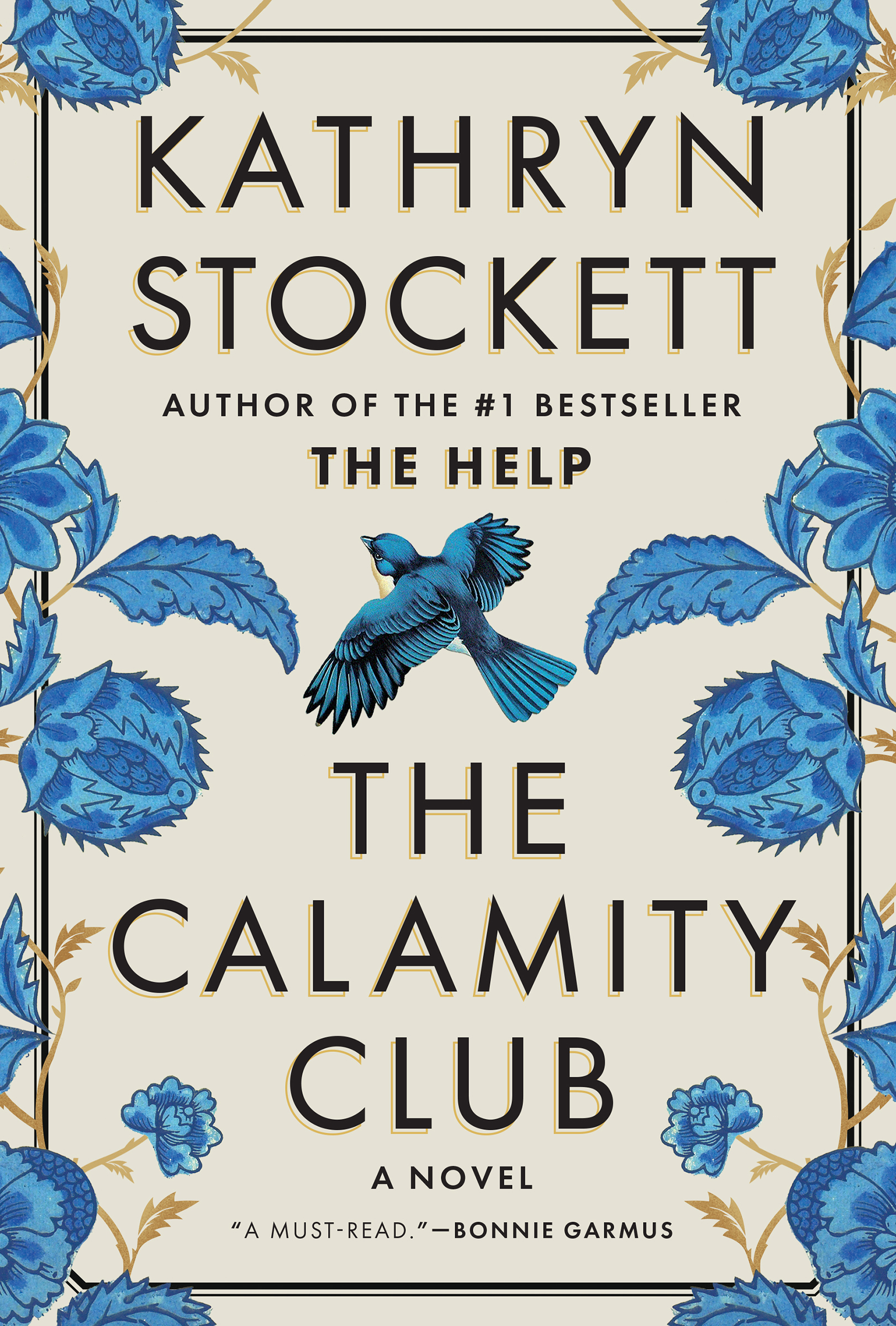
It’s The Calamity Club, the second novel from Kathryn Stockett, the author of The Help.
It’s set in Oxford, Mississippi, in nineteen thirty-three, and it opens with a sign on an orphanage door that lists every child who isn’t welcome inside. So, is it worth your time? Here’s the short answer. If you love big, funny, heartbreaking historical fiction with a voice you won’t forget, yes. Read it. If you want a fast plot or a tidy ending, maybe not. I’d give it four out of five, and I’ll tell you exactly why.
The Setup
The book alternates between two narrators. The first is Meg, an eleven-year-old girl in the Lafayette County Orphan Asylum for Girls. Two years ago, her mother walked out two days before Christmas and never came back. Meg is smart, furious, and funny, and she is being punished for a drawing of Jesus that she should not have drawn.
The second narrator is Birdie Calhoun, twenty-four years old, from a tiny town in the Delta. She works behind the counter of a country store for three dollars a week, and her family is about to lose the house for back taxes. So Birdie takes a train to Oxford to ask her younger sister Frances for money.
Frances has married into a rich family and lives in a huge white house called Idlewilde. But nothing in that house is quite what it seems.
Meg
Meg is the reason to read this book. Her chapters are written in a child’s Southern voice, spelling and grammar and all, and they are some of the funniest pages I’ve read in years.
She names the volunteer ladies after their worst traits. She keeps a list of things to do when she is desperate. She counts the days until she can leave. And under every joke, there is a girl who cannot say the one thing she wants to say out loud.
There is also her mother’s strange education. Before she disappeared, Meg’s mama taught her how to spot a liar, how to tell a lie, and how to set a table with twenty-seven pieces of silverware cut out of a magazine. Those lessons come back at the worst and best moments.
The orphanage itself is the book’s first villain. The chairlady, Miss Garnett, locks Meg alone in a moldy office with a boarded-up window, and says that something inside Meg is dirty and cannot be washed out. The reason for that cruelty is the central mystery of the first half.
Birdie
Birdie is the opposite kind of narrator. She is dry, practical, and quietly funny, a bookkeeper who fixes things and tells jokes to herself. Her chapters read like a letter from a friend who is smarter than she thinks she is.
Her sister Frances is the perfect foil, a snob with a very long neck and a bottomless need to impress. The two of them argue constantly, and their sisterhood is one of the best things in the book.
Then there is Mrs. Tartt, Frances’s mother-in-law, who is nothing like the witch Frances described. Mrs. Tartt is gracious, sad, and surprisingly tough. Together these women get pulled into something much bigger than a visit.
The Supporting Cast
The book is crowded, in a good way. Birdie’s grandmother, Meemaw, is a West Texas firecracker who packs an electric cattle prod in her granddaughter’s suitcase. The two maids, Picador and Polly, are sisters who see everything in the Tartt house and say very little, and every scene they share with Birdie is a small masterclass in what is not being said.
Then there is Mrs. Tartt herself, who plays her records, takes her heart pills, and still keeps a photograph of a dance floor from nineteen seventeen. And the crew Birdie eventually joins is full of women who have been told all their lives that they are worth nothing, and who prove everyone wrong in their own very loud ways.
I loved that nobody in this book is only a type. Even the villain has a reason, and it’s a human one.
The Tone
The tone is the hardest thing to describe. Stockett can make you laugh out loud on one page and cry on the next. Meg’s sarcasm gives way to her fear. Birdie’s jokes cover her loneliness.
That mix is the book’s signature. It keeps the heavy subject matter from feeling like a lecture, and it keeps the jokes from feeling cheap. When it works, it works beautifully.
The Scheme
I won’t tell you what happens, but I will tell you where the title comes from. Around the middle of the book, Birdie and a woman she barely knows make a decision that is illegal, dangerous, and completely absurd. It involves a house, a mortgage, and a very unusual business.
The prologue gives you a hint, in a drugstore scene I loved. And the title is the club’s name, chosen from a list of terrible options.
The second half of the book becomes a kind of caper, with a ragtag crew, close calls, and a cast of secondary characters who steal every scene. If you like found-family stories, you will have a great time.
The History
What gives the book its weight is the history underneath it. In her author’s note, Stockett explains that Mississippi passed a law in nineteen twenty-eight allowing the sterilization of people deemed feebleminded, including women judged promiscuous.
That law sits behind the orphanage, the work program, and Miss Garnett’s speeches about protecting the Christian line. It’s the reason Meg’s mother is feared and what the story is really about.
I’ll cover the real history in a separate video. For now, know that the book never lectures. It lets the facts come out through people.
What Works
First, the voices. Meg and Birdie are so distinct that you could read a page without a name and know who is talking.
Second, the humor. This book is funny in a way that makes the dark parts hit harder, because you’ve been laughing with these people.
Third, the sense of place. Oxford in nineteen thirty-three feels real: the courthouse square, the department store, the college waiting for students to come back, the cars, the heat.
And fourth, the heart. Under the satire is a story about mothers, sisters, and the families we build when the ones we were born into fall apart.
What Doesn’t Work
Now the honest part. It is a long book, over six hundred pages, and the opening is slow. One reviewer suggests giving it at least a hundred pages, and I agree.
The middle is full of detail, and some readers will feel the pacing sag. The second half also goes bigger and more cartoonish than the first, with characters who are broad and plot turns that stretch belief.
And the ending is very abrupt. It satisfies one thread beautifully, but leaves others hanging. I wanted more.
Content Notes
A few warnings. The book deals with child abuse and neglect, forced sterilization, sexual violence told off the page, and the death of a character by suicide. It also includes period racism and offensive language in the mouths of characters, along with a lot of strong profanity, especially from Meg.
The brothel storyline is not graphic. It plays for comedy and character, not for heat. But it is a central part of the plot, so keep that in mind.
How It Compares
If you loved The Help, you’ll recognize the writer. The warmth, the humor, the Southern voices, and the sharp eye for how polite society hurts people are all here.
The difference is that The Help told its story through three narrators in the early nineteen sixties, while this one follows two narrators through a single frantic summer and fall. It is messier, funnier, and more daring.
It also has a different engine. Here, the women rescue each other, and they do it badly, loudly, and together.
The Scorecard
Let me give you numbers. Voice gets a five. Characters get four and a half, and so does humor. Pacing gets a three, and the ending gets a three. That averages out at four, so my overall score is four out of five.
Should You Read It
Read it if you want a long, immersive novel with a voice you’ll quote for weeks. Read it if you loved The Help, or if you like stories about sisters, mothers, and women who refuse to be told who they are.
Skip it if you need a fast plot, a gentle tone, or a neat ending. And skip it if the content notes I mentioned are a dealbreaker.
Where To Get It
If you’ve finished the book, my ending explained video is linked here, along with a video on the real history behind the story. Tell me in the comments: which narrator did you love more, Meg or Birdie?