The Verdict
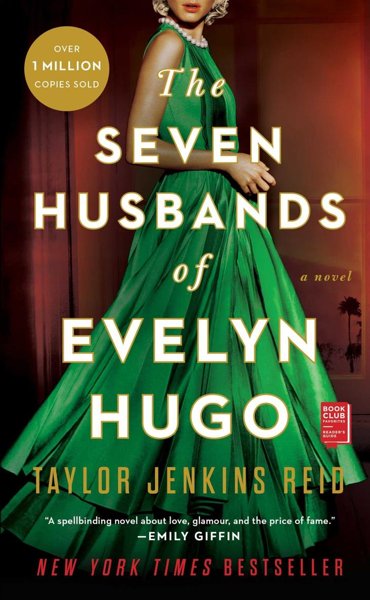
Today I’m reviewing a novel that people keep pressing into each other’s hands: The Seven Husbands of Evelyn Hugo, by Taylor Jenkins Reid. It follows a reclusive Hollywood legend who decides, at the very end of her life, to finally tell the truth.
So is it worth the hype? Mostly, yes. It is a gripping, glamorous, very readable book with a narrator you will argue with for days. The present day story is thinner than the past, and a few moments lean on convenience. I give it four and a half out of five, and this whole review is spoiler free.
Quick content note before we start. The book includes domestic violence, the sexual exploitation of a teenage girl, homophobia, an abortion, and a lot of grief.
What It’s About
It is twenty seventeen, and Monique Grant is a thirty five year old writer at a magazine called Vivant. Her marriage has just fallen apart, and her career is stuck on puff pieces. Then her editor tells her that Evelyn Hugo, one of the most famous movie stars ever, has asked for her by name.
Evelyn is seventy nine and lives on the Upper East Side of Manhattan, and she has not given an interview in decades. But she does not want to talk about the gowns she is auctioning off. She wants Monique to write her life story, the whole truth, and to publish it only after she is dead.
Monique has one big question, and so do we. Why her? Evelyn’s answer is the same every time: next question. She promises that by the end, every question will be answered, but only when she decides.
The Seven Husbands
The structure is the hook. Evelyn takes Monique through her life one marriage at a time, from a girl in New York’s Hell’s Kitchen in the nineteen fifties to a movie star the studios built from scratch.
Each part is named with a nickname for the husband, and the nicknames are great. They set the mood before you read a word, and each section feels like its own little movie, with its own city, its own scandal, and its own bargain. Over everything hangs the question Monique writes in her notebook: which one did she actually love?
Old Hollywood
My favorite thing about the book is how it treats fame as a factory. The studio changes Evelyn’s hair, her weight, her name, and even her backstory. At one point a researcher hands her a fake biography, and it includes a Saint Bernard called Roger.
That is funny and a little sad, and it keeps going. Evelyn is a Cuban American girl who is told to hide half of herself to be marketable, and the book never lets you forget that. Every glamorous photo in this story was staged by someone, and Evelyn knows exactly who and why.
One quiet scene stayed with me. Years later, a new housekeeper speaks Spanish in front of her, assuming she will not understand. Evelyn answers in Spanish, then realizes how long it has been since she used her mother’s language. It is a small moment, and it says more about identity than a whole speech could.
Evelyn Herself
The second reason to read it is Evelyn’s voice. She is witty, blunt, calculating, and not at all interested in being liked. Early on she tells Monique that she can be sorry about something without regretting it, and that line is the key to her.
She will do something hard to forgive, then explain it so well that you nearly agree. That tension is the engine of the whole book. I kept changing my mind about her, sometimes inside a single chapter, and I think that is exactly what the author wants.
The Supporting Cast
The people around Evelyn are sharply drawn. Harry Cameron, the young producer who spots her and shapes her career, is warm and funny and always one step ahead. Don Adler, Hollywood royalty, is charming right up until he is not.
Even the smaller figures, like the stylist who bleaches her hair or the housekeeper she grows to love, feel like people with their own lives. Reid gives them room, and that is why the long middle of the book never feels like a list of marriages.
Five Decades
The story moves from the studio system of the nineteen fifties through the sixties, seventies and eighties, and you feel the business change around Evelyn. Contracts, publicity stunts, and the careful arranging of who is seen with whom all matter, because her career depends on them.
It is not a history lesson, and it does not try to be. The era is a backdrop that keeps raising the stakes. Every choice Evelyn makes has a price, and the price changes with the decade.
The Gossip Columns
Between the chapters, you get news items, gossip columns, and even reader comments. The novel opens with a breathless blog post about the gown auction and a comment thread that is half admiration, half meanness.
I love this device. The columns are almost always a little wrong, and the gap between what the public read and what Evelyn tells Monique is where the book gets its sparkle. It is a smart way to show how a famous life is written by everyone except the person living it.
The Ideas Underneath
Under the glamour, there are real ideas. Who gets to tell your story? What does a woman trade to get power, and what does it cost her later? Can you be a good person and a ruthless one at the same time?
The book does not give tidy answers. It keeps asking whether ambition is a sin or just a skill that women are punished for having. I do not agree with everything Evelyn does, but I was never bored by arguing with her.
There is also a quieter theme about work. Monique wants a byline she is proud of, and Evelyn wants her story told on her own terms. Both of them are negotiating for control, and watching them haggle is half the fun.
Monique’s Story
Monique is the second thread, and I want to be fair to her. She is likable, ambitious, and recovering from a breakup, and her questions are the ones we would ask. Her scenes give the book breathing room between the big set pieces.
She is also where the book is weakest. Her own life is more sketched than lived in, and Evelyn takes over every scene they share. Some readers will not mind that at all. I wanted a little more of her, and a little less of the sense that she is there mostly to listen.
Writing And Pacing
The prose is plain and quick, with short chapters and very few wasted lines. It reads almost like a screenplay, which suits the subject. Scenes end on little hooks, and you will tell yourself just one more chapter at least five times.
The pace is fast for a novel of about one hundred and ten thousand words. The structure helps, because each marriage has its own arc and its own ending. The only drag is that some husbands get a long, rich section and others feel like quick sketches.
What Doesn’t Work
My first criticism is the present day. The answer to why Evelyn picked Monique has to carry a lot of weight, and I think it leans on a stretch that not everyone will buy. I enjoyed it, but I noticed the seams.
My second criticism is the wisdom. Evelyn hands out advice like never let anyone make you feel ordinary, and a few of those lines read like posters. My third is intensity. Some of the content is hard, and a couple of the sexual scenes are explicit, so know what you are getting.
My fourth, smaller one is that the book sometimes explains its feelings out loud. Evelyn and Monique both stop to tell us what a moment means, when the scene was already doing the work. It is a minor complaint, but a tighter hand would have trusted us a little more.
What It Feels Like To Read
This is a book that gets under your skin in a very particular way. The first few chapters are fun, almost bingeable, with big personalities and juicy secrets. Then, somewhere in the middle, the fun starts to carry weight.
You begin to see what each of those glamorous deals really cost, and the jokes land differently. By the time the book turns serious, you are invested in Evelyn whether you wanted to be or not. That shift is the best trick in the whole novel.
The Scorecard
Evelyn’s voice: five out of five. Story and hook: four and a half. Pacing: four. Themes: four. Emotional impact: five. That gives an average of four and a half out of five.
Who It’s For
Read it if you like old Hollywood, glossy drama with real feeling, or flawed women who are not trying to be role models. It is also a great pick for book clubs, because people will disagree about Evelyn.
Skip it if you need a likable narrator, a gentle read, or a slow, literary pace. If you finish it and want more, try Daisy Jones and the Six, Beautiful Ruins, or Last Night at the Telegraph Club.
Where To Get It
Links to the book are in the description below. A Netflix film is in the works, and as of October twenty twenty six, Anna Kendrick is directing, but no cast and no release date have been announced.
Tell me in the comments: if you could ask a movie legend one question, what would it be? Thanks for watching, and I’ll see you next time.