The Verdict
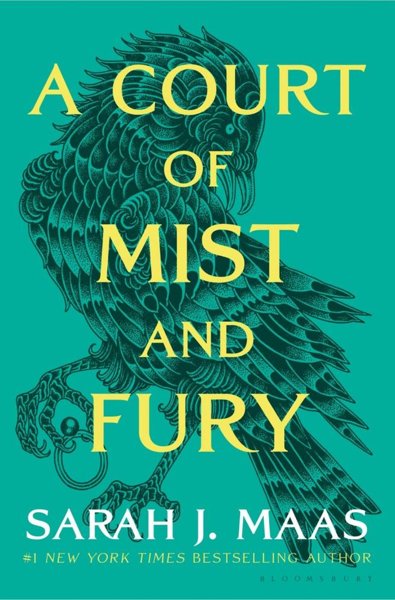
Today I’m reviewing A Court of Mist and Fury, by Sarah J. Maas, the book that turned a fairy tale retelling into a phenomenon, and the one most fans will tell you is the best in the whole series.
Is it worth reading? Yes, and I’ll say why in a minute. It is long, it is explicit, and it has flaws. But it is also the book where this series finds its heart. I give it four and a half out of five. One warning: this review is spoiler free for this book, but it assumes that you have already read A Court of Thorns and Roses.
What It’s About
Three months have passed since the end of book one, and the Winter Solstice has just gone by, with feasting and presents that Feyre hated every minute of. She is human no longer. She is an immortal High Fae, she is engaged to Tamlin, and the wedding is two weeks away.
On paper she has everything. In practice she is not okay. She wakes up sick from nightmares, she cannot paint, and she cannot stand being shut inside a room.
Meanwhile there is the bargain she made with Rhysand, the High Lord of the Night Court. It still binds her, and one week every month belongs to him. When the wedding day finally comes, it does not go the way anyone planned.
The Shape Of The Book
The book came out in twenty sixteen, and it is big. There are sixty nine chapters in three parts, and it runs to roughly one hundred and eighty thousand words. It is far longer than the first book. It is told in first person, almost entirely by Feyre, and the tone shifts a lot along the way: a heavy opening, then a much brighter, fuller middle.
Maas gave readers a lot of time with these people. Whether that is a feature or a flaw depends on you, and I’ll get to that. It also won the Goodreads Choice Award for young adult fantasy in twenty sixteen, which tells you how it was first shelved. Today it is read as adult romantasy.
Feyre Herself
Before the next part, a word on Feyre. In book one she was stubborn and practical. Here she is stubborn, practical and quietly drowning in guilt, convinced that what she did to survive has made her a monster. That guilt drives the whole book.
I liked that she is allowed to be angry, funny, rude and wrong. She throws things, she says cruel things when she is hurt, and she apologizes later. She feels like a person, not a symbol of resilience, and that makes her recovery land.
Why Fans Love It
It helps to know why this book has the reputation it has. Many readers call it the best book in the series, and I think that is because it is the one that gives Feyre a life of her own, rather than a rescue plot.
It is also the book where the series becomes a place you want to live in. The friendships, the jokes and the places feel generous, and a lot of the online excitement about this series started here. That hype can be a lot, but for once it is mostly deserved.
What Works: Feyre’s Recovery
My first favorite thing is how honest the book is about trauma. Book one ended with a victory, and this book asks what that victory cost. Feyre throws up in the night. She counts the exits in every room. She can hardly look at paint. The panic is not a plot device, it is written close and specific, and you feel the walls moving in.
What I love is that healing is not a switch. Feyre gets a little better, then worse, then she learns a small skill, like reading, or shielding her mind. Small wins add up. That patience is the best writing in the book, and it is why so many readers say it helped them.
What Works: The Found Family
My second favorite thing is the cast. Early on we meet the Inner Circle: Cassian, a brash Illyrian warrior with enormous wings; Azriel, a quiet spymaster who lives in shadow; Mor, golden, funny and fiercely loyal; and Amren, a tiny, ancient, frightening creature who drinks blood.
They tease each other, they fight, they look after each other, and every one of them is carrying something heavy. By the end you will have a favorite and a theory about who should end up with whom. This is a big reason the series took off, and it is the reason a lot of readers keep coming back.
What Works: The Romance
My third favorite thing is the slow burn. The chemistry between Feyre and Rhysand is built out of banter, thrown shoes, midnight notes that vanish and reappear, and a lot of restraint. He is cocky, but his best moments are quiet ones, when he lets her choose and then steps back.
It also changes how you see book one. Scenes you thought you understood look different the second time. I won’t say how. I will say that the payoff is earned, and I closed the book smiling, which I did not expect.
Small Moments I Loved
Some of my favorite scenes are tiny. Early on, Feyre is taught to read, and the first sentence she sounds out is a very cheeky line he wrote for her. She copies out the alphabet while swearing at him under her breath.
There are also magical notes that appear on paper and vanish, a hot cup of tea at exactly the right moment, and a character who learns to shield her mind by picturing a wall. These small, funny, tender beats are what make the big emotional moments hit harder.
The World
The setting grows too. Book one lived at a single spring estate. Here we get a mountain palace above the clouds, and then a city by a river that is built to be seen after dark, full of artists, music and lanterns. After the muted Spring Court, it feels like someone opened a window.
There are new courts, new creatures, a big threat gathering across the sea, and a mystery about a legendary object. I did not need to see a map, but I enjoyed having one. It is real worldbuilding, with a lot of history behind each place.
Writing And Pacing
The prose is lush and emotional, with plenty of lines you will want to underline. It leans on certain habits. Characters growl, purr, smirk and snarl a lot, and sentences often start with a dash and a pause.
The pacing is the tricky part. The first section is slow and bleak on purpose. The middle breathes, with training, flying, travel and small adventures. Then the last third accelerates hard, and the final act is as gripping as anything in the genre. It is episodic, so you may feel it drag in places, but each stretch has a purpose.
Content Notes
This is an adult book and you should treat it like one. The sex scenes are frequent and graphic, with direct language, and several run for pages. There are also scenes of heavy sexual tension that stop just short.
Beyond that: panic attacks and vomiting, graphic violence and gore, torture and its aftermath, references to sexual abuse and forced marriage in the characters’ pasts, child abuse in a warrior training camp, a controlling relationship, and constant strong language. If any of that is a hard line for you, skip this one.
What Doesn’t Work
Now the honest part. First, the length. A few sections repeat the same beat, and the banter can feel like a loop. If you want a tight plot, there is flab here.
Second, the romance leans on familiar tropes. The male lead is almost impossibly powerful, rich, handsome and devoted, and a bit of the tension comes from fate rather than choice. It is very enjoyable, but it is also very much a fantasy.
Third, some of the sex scenes feel interchangeable, and they take up a lot of room that the friendships could have used.
Where It Wears Thin
Fourth, the book is unfair to someone from book one. I won’t name them, but a character who was written with warmth in the first book is flattened here so that the new story works. Some fans find that a clever twist, and others find it too convenient.
And fifth, a few threads are set up and then left for later books. If you hate open loops, know that the book ends with the story still in motion, and you will want the next one right away.
The Scorecard
Here are my scores. Characters get five out of five. Romance gets four and a half. Worldbuilding gets four and a half. Pacing gets three and a half. Payoff gets four and a half. That averages to four point four, and I round it to four and a half.
Who It’s For
Read A Court of Mist and Fury if you finished book one and felt there was something better underneath it. Read it if you love slow burn romance, found family, and heroines who heal on the page. Read it if you can handle the spice.
Skip it if you need a tight, fast plot, if explicit scenes bother you, or if you have not read the first book. You will be lost without it.
Where To Go Next
That’s A Court of Mist and Fury, by Sarah J. Maas. Four and a half out of five from me. The book and audiobook are linked below, along with everything I mentioned.
If you want to go deeper, I have a full ending explained, with spoilers, a book club video, a list of books like it, plus my reviews of A Court of Thorns and Roses and A Court of Silver Flames. Tell me in the comments: which member of the Inner Circle is your favorite?