The Verdict
This is my The Correspondent book review, and it is spoiler free.
So, is Virginia Evans’ novel worth your time? Yes, if you can enjoy a story told entirely in letters, emails and postcards. There is no narrator and no scene in the usual sense. There is just a stubborn, funny, retired woman and the mail she sends and receives.
I give it four out of five. The voice is a joy and the heart is real, but the middle takes its time and some of the drama happens off the page. I’ll stay with the early setup, and I’ll tell you what to be careful of before you start. If you’ve seen this book on every shelf and wondered whether the hype is earned, this is for you.
What It Is
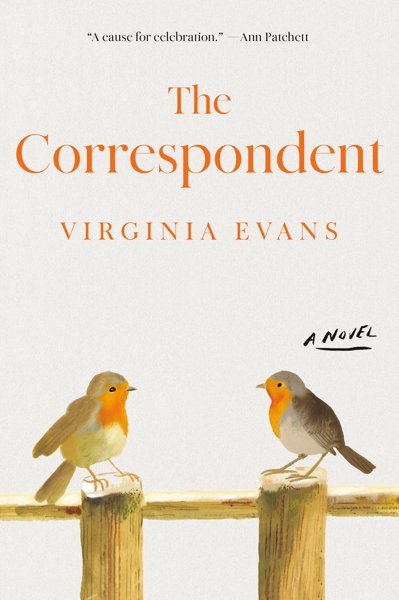
The Correspondent is Virginia Evans’ debut novel, published by Crown in April twenty twenty five. Our heroine is Sybil Van Antwerp, a retired lawyer who lives alone in a small house by the water near Annapolis, Maryland.
When we meet her in twenty twelve she has just turned seventy three. She spent about thirty years as the right hand of a Maryland judge, she is divorced, she is a mother and a grandmother, and she is going blind. She also writes letters. Lots of them.
That is the whole premise, and it is enough. Don’t expect a mystery with a neat hook; expect a portrait that slowly fills in. The book follows Sybil from twenty twelve onward, one piece of mail at a time, and asks what a life looks like when you only see it through what a person chooses to put on paper.
How The Book Is Built
Let me show you how it reads, because the form is the main thing you need to know. There is a short preface, and then roughly one hundred and sixty pieces of correspondence, each with its own date and address at the top.
Most are letters, many are emails, and a few are postcards or official notices. You’ll also meet a handful of unsent pages, torn from a private pile Sybil keeps in a drawer. Those are written to someone, and I won’t say who.
There’s no table of contents of plot points. A letter mentions a doctor’s appointment, a reply arrives two chapters later, and you assemble the picture yourself. It feels a little like reading someone’s desk drawer, and I mean that as a compliment.
Sybil’s Desk
Sybil has a routine, and the book loves it. In the preface she sits down on Monday around ten or half past, carries over a mug of Irish breakfast tea with milk, straightens the paper, and counts her stamps.
Later she explains the system to a teenager. She writes on Mondays, Wednesdays and Fridays for about two hours, with anything unfinished pushed to Saturday. She orders her stationery from England, and she buys only the classic stars and stripes stamps, because the mechanism has to stay in order.
I adore this. In a world of notifications, a character who treats a stamp as a small act of civility is a pleasure to spend a book with. The preface calls the letters her manner of living, and by the end you believe it.
That Voice
The reason this works is Sybil’s voice. She is formal, opinionated and very funny, and she is not remotely nice. She complains to newspaper editors. She fights with her garden club over who may speak about real estate. She is only five foot one, and she reminds people she is tall on the inside.
She is also tender in surprising places. She writes to a troubled boy every month, she mails cakes and cookies and puzzle books, and when she is wrong she can say so, eventually and with great effort.
The humour comes from the gap between her rules and her feelings. A letter that begins with a stiff correction of someone’s grammar can end with a sentence that hits you in the chest. Evans is very good at that turn, and she repeats it with a different flavor for each correspondent, so no two relationships sound alike.
The Cast By Mail
Because everyone arrives by post, the supporting cast gets to speak in their own voices. Her brother Felix is a witty writer living in France. Her oldest friend Rosalie has been her pen pal since they were girls, and the two of them end most letters with the same question: what are you reading?
Her son Bruce and daughter Fiona drift in and out by email, and the relationship with Fiona is thorny. A teenage boy named Harry writes from Washington, and his letters are among the best things in the book. Then there are a neighbor who leaves roses and a lawyer from Texas who will not take no for an answer.
Not everyone is kind. One anonymous correspondent is plainly hostile. I’ll leave it there, but I can tell you the book keeps several threads going, and they weave together better than you would expect from a pile of mail.
Famous Names In The Mailbox
One fun layer is that Sybil writes to authors, and the book puts real writers in the mailbox. She writes to Ann Patchett about State of Wonder, and Joan Didion becomes an ongoing correspondent whose replies are warm and wry.
To be clear, these exchanges are invented by Evans. They are fiction, not archive. But they make a lovely point: readers can write to writers, and sometimes the writers write back.
If you like talking about books, you’ll enjoy this. Sybil is always reading something, and she has strong views. The novel is partly a love letter to the habit of reading, with a long reading list tucked inside it. Her tastes run from Agatha Christie to Lonesome Dove, and I added several titles to my own pile.
Content Notes
Now the content notes, which I want you to have before you decide. I’ll keep them general so I don’t spoil anything. The book deals with grief over a child, and with a teenager’s mental health, including a suicide attempt discussed in letters rather than shown.
You’ll also meet cancer, dementia, infertility and miscarriage, a family’s loss in the Holocaust, and an anonymous, threatening correspondent. There is some strong language, and Sybil can be snobbish and careless about people, which other characters call out.
None of it is gratuitous, and the tone is never grim for long. Sybil’s own sense of humour is always close by, even when the subject is heavy. Still, if any of these are tender for you right now, check in with yourself, and take the pace you need. The book will wait.
What Works
Three strengths. First, the voice, which I’ve already gushed about. A cranky, brilliant woman is a gift to a reader, and the humour never stops being human.
Second, the structure. Letters give Evans a trick that ordinary narration cannot match: the gap between what people say and what they mean. A cheerful postcard and a stiff reply can reveal a rift without a single line of explanation.
Third, the emotional payoff. The book is patient, but it earns its big moments, and the tenderness at the end of the reading lands harder because you have lived with Sybil so long. I closed it with that full, quiet feeling that good novels leave, and I wanted to go and write someone a real letter.
What Doesn’t Work
Now the honest part, and these are my opinions. First, the early stretch is slow. There are many small quarrels with a garden club, a dean and a newspaper, and while they are funny, they delay the story’s real engine.
Second, the form hides drama. Big events often happen off the page and reach us afterward, in a letter, so you sometimes hear about a scene rather than live it. If you want vivid, scene by scene tension, that may frustrate you.
Third, a few storylines resolve very neatly, and some secondary characters exist mostly as Sybil sees them. None of this broke the book for me, but it kept it from a perfect score.
Prizes And The Movie
Some context. The Correspondent won the PEN Hemingway Award for debut novel, and in June twenty twenty six it won the Women’s Prize for Fiction, according to the prize and the publisher. It also spent many weeks on the New York Times hardcover fiction list.
As for the movie, here is what is reported as of October twenty twenty six. Lionsgate is developing a film, announced in March twenty twenty six, with Jane Fonda attached to star and produce. No director and no release date have been announced.
I’m only reviewing the book today, and everything in this video is spoiler free.
The Scorecard
Time for the scorecard, out of five. For voice, five out of five. Heart gets four and a half. Characters get four, plot gets three and a half, and pacing gets three.
That averages to four, which is exactly my score: four out of five. It’s a slow, generous novel, and it rewards the readers who settle in. If you give it fifty pages, you will know whether you belong to Sybil’s world.
Who It’s For
Read it if you love unusual formats and sharp, funny voices. Read it if you enjoy books about reading, writing and friendship, or if you have ever kept an old letter in a drawer. Read it if you like a quiet story that gathers force.
Skip it if you need fast plotting and big scenes. Skip it if grief and mental illness on the page are too much right now. And skip it if a very opinionated narrator makes you tired.
If you read it, tell me in the comments: who would you write a letter to? I’d love to know. For the full guides, the book club questions and the summary, find The Correspondent at bookexplained dot com. Thanks for watching, and happy reading.