Before We Start
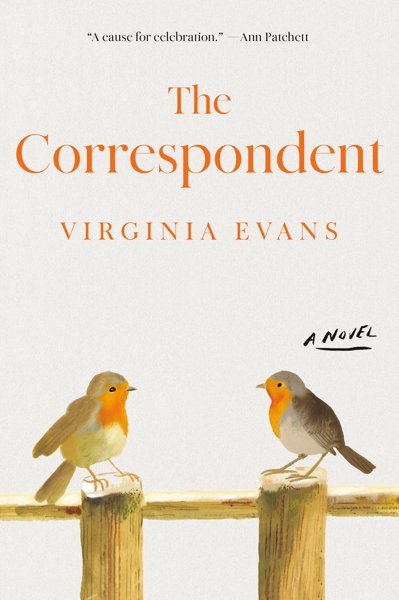
These are The Correspondent book club questions, with the main characters woven in so you can find your way around the cast.
Spoiler warning: this video gives away the whole book, including the ending, and it talks about the death of a child, a teenager’s suicide attempt, cancer and the Holocaust. Pause whenever you need, and come back to the novel when you’re ready.
Here’s the plan. A quick look at who’s who, then ten questions, each tied to a person or a pair, and three bonus questions at the end. Pick the ones that fit your group, and argue happily. There are no wrong answers, only better arguments.
Who’s Who
First, the cast. Sybil Van Antwerp is a retired court clerk who writes to everyone, and she is the center of the book. Rosalie is her lifelong pen pal and Fiona’s godmother. Felix is the adopted brother, a writer in France. Sybil is seventy three when we meet her, and Judge Guy Donnelly, the man she clerked for through nearly thirty years, dies in the first few months, which sets much of the story moving.
Bruce and Fiona are Sybil’s grown children, a lawyer and an architect. Daan is her late ex husband, and Gilbert is the middle child who died long ago. Harry Landy is the teenage genius who writes to her every month. Theodore Lübeck is the neighbor with the roses. Mick Watts is the Texan lawyer who proposes.
Then there are the people from the past and the wires: Hattie Gleason, a sister found through a DNA test, Dezi Martinelli, the angry son of a man Judge Donnelly sentenced, and Basam Mansour, the customer service agent at the DNA company. Keep those names handy.
Question One
Question one is about the form. Sybil says writing is easier than speaking, and Fiona wonders if she can only have real relationships through letters. Late in the book Sybil admits the letters have been a force field.
So ask your group: did the letters bring Sybil closer to people, or did they let her hold everyone at arm’s length? Think about Rosalie, who she has written to for nearly sixty years, and about Fiona, who sends emails and texts.
And a bonus for your own life: which relationship of yours lives mostly on paper or on a screen? Would it survive a phone call?
Question Two
Question two: is Sybil likable, and does it matter? She is rude to a newspaper editor, she assumes the Kindred agent is in India and he corrects her, and she is hard on a dean and on her own children.
Yet she shows up for strangers. She connects Basam with a possible job, she answers a schoolgirl’s request for an interview, and she takes a suicidal boy into her house for months.
Which version of Sybil would you trust? Are the sharp letters or the generous ones the true voice? And does the book want us to forgive her, or only to understand her?
Question Three
Question three: the unsent pages. Throughout the book there are short entries in which Sybil writes to someone she calls Colt. Some readers guess early, and others do not.
We learn that Colt was her nickname for Gilbert, her second son, who died at eight. She started writing to him after Daan left, and she imagines him grown, a man in his fifties. Her last entry is on her eightieth birthday.
Notice how Evans plants clues: Gilbert is named early, in a letter to Joan Didion, and his shadow hums beneath the funniest pages. Ask your group: did you guess? What does it mean that she wrote to a child who could never reply, in a book full of people who do? And does the confession about the lake change how you read the earlier pages?
Question Four
Question four: Rosalie and Fiona. Rosalie hosts Fiona in secret after Daan’s death and keeps it from Sybil. When Rosalie confesses, Sybil broods for a year and then sends a cold letter that freezes a friendship of nearly sixty years.
Was that a betrayal, as Sybil says, or a kindness to a grieving daughter? Rosalie is Fiona’s godmother, and at the time she is also caring for a husband with dementia and a disabled son.
Afterward Rosalie writes a furious, loving letter telling Sybil to fix things with Fiona. Why did it take Sybil so long to hear it? Discuss what loyalty to a friend demands when it collides with loyalty to her child.
Question Five
Question five is the love triangle. Mick Watts is funny, loud and well off, and he eventually proposes. Theodore Lübeck is gentle, careful and shy, and he writes small, formal notes with cookies and roses. They play gin rummy and Ticket to Ride together.
Sybil enjoys them both, and she tells Theodore she has no intention of remarrying and will run her life as she sees fit. In the end she breaks off with Mick and invites Theodore into her house and her life.
Who were you rooting for? And is it about the man, or about the version of herself she becomes with each of them? With Mick she’s the sharp young clerk; with Theodore she’s someone who can finally be quiet.
Question Six
Question six: Harry. He is a schoolboy when the book opens, a math prodigy who hates his therapist and sends her monthly updates. When he hears she is going blind, he even starts learning braille, in case she needs him. They keep each other’s secrets, which they call stones. Harry even photocopies every letter before he mails it, and keeps them in binders, as if he is archiving the friendship while it happens.
Harry runs away to her house, later tries to end his life, and then lives with her for months. By the end he is at Stanford, and he writes a novel called Dynasty of Sight.
What does each of them give the other? Sybil gets a purpose and a reason to try again, Harry gets a person who answers him honestly. Was her closeness to Harry partly a stand in for what she missed with her own children?
Question Seven
Question seven is Dezi, and it is a question about justice. Sybil built a life on rules, on the law in black and white. Then Dezi writes with rage about the sentence his father received.
She confesses that her son had died just before the hearing, that she resented his mother for having two healthy boys, and that she stayed silent. Dezi’s father died years later, after his wife turned him away from her door.
Does grief excuse what she did? She also writes to Florencia, Dezi’s mother, in Italy. Is an apology enough when the person who was harmed most is already gone?
Question Eight
Question eight is about identity. Sybil was adopted at fourteen months, and so was her brother Felix. Her Kindred test, accidentally opened to matches, leads to Hattie, a botanist in Scotland, and to a family she never knew.
She tells Hattie her cupboards are full, that there is no vacancy for a new mother, father and siblings. Yet she travels to Fort William and stays there.
What makes a family: blood, years or choice? Notice how Hattie writes: careful, dry and funny, with a scientist’s caution, asking for the lab report before she believes a word. Think of Felix and Hattie side by side, and of the note from her birth mother, who wrote that she was born at dawn under a pink sunrise.
Question Nine
Question nine is about kindness to strangers, and it centers on Basam. He is a Syrian engineer working in customer service, and Sybil helps him polish a resume. He loses his job for talking to her, and the last we hear he is interviewing for a better one.
Their emails are gently comic and very moving. Basam forgives her careless insult in a single sentence. Sybil, who writes the harshest letters, writes warmly to him. She apologizes once, plainly, and then simply keeps showing up.
Is this a story about how small acts ripple outward? Or is it about the privilege of a retired woman with a network? How do you see her help: generosity, guilt, or friendship?
Question Ten
Question ten is the ending. Sybil dies suddenly at home in November twenty twenty one, while Theodore tends the roses. He writes to Hattie, Fiona writes to Dezi with money Sybil left, and the book ends on an unsent draft to Daan.
That last letter admits what she never told him. It breaks off, because she could not finish it. The final line is that she will see him soon.
Why end on an unsent page? Was this a gift to the reader, a failure, or a mercy? And which of her apologies came in time, and which came too late?
Bonus Questions
Three bonus questions. First, Daan’s letter. He writes from Belgium while dying, apologizes for blaming her after Gilbert’s death, and asks her to forgive him. Sybil never answers. Why not? Is silence a letter too?
Second, the authors. Sybil writes to Ann Patchett, Joan Didion, Kazuo Ishiguro and Larry McMurtry, and in the book they write back. Which writer would you send a letter to, and what would you say? Third, the title. Sybil calls herself a correspondent. Is the title about her, about the reader who receives all this mail, or about everyone who ever wrote back to her?
Closing Thoughts
If your group only has time for three, I’d choose the unsent pages, the Rosalie question and the ending. They hold the core of the novel. If your group loves the book, ask each person to bring one real letter they have kept, and read a line aloud.
I’ll leave you with the question the book keeps asking: what are you reading? Tell me in the comments, and tell me which question your club argued about most. For the full review, the summary and the character guide, visit bookexplained dot com. Thanks for watching, and happy reading.