The Verdict
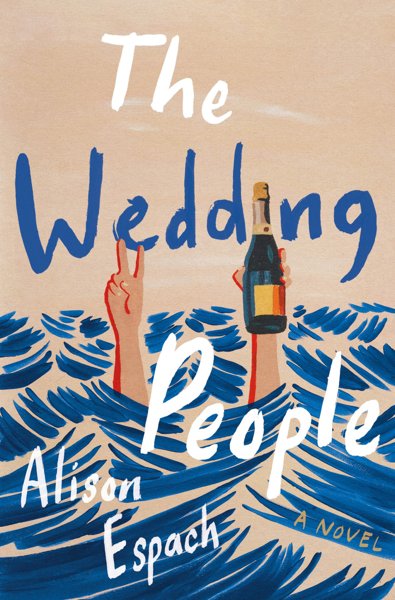
This is my review of The Wedding People by Alison Espach, and it is completely spoiler free.
The question I keep hearing is simple: is it funny or sad? The answer is both, often on the same page. A woman checks into a luxury hotel in Newport, Rhode Island, planning to end her life, and walks straight into a six day wedding. It is warm, quick and very, very quotable.
I give it four out of five. It has a few sprawling stretches, and it is not for everyone, because it opens in a dark place. But I closed it feeling lighter than when I started. I’ll tell you why, and who should skip it.
What Is It About
Phoebe Stone is forty, a professor of Victorian literature from Saint Louis, and she has just had the worst couple of years of her life. Her marriage is over, her career is stuck, and she has stopped caring about the things she used to love. So one morning she puts on an emerald silk dress she has never worn and flies to a grand old Newport hotel, the Cornwall Inn.
She has chosen the place on purpose. It is beautiful, it is far from home, and nobody there will know her. There is one problem. Every other guest is there for a wedding, and the bride, a young woman named Lila, notices Phoebe.
That’s as far as I’ll go. The whole story takes place in the one week of the wedding, from Tuesday to Monday, and the book splits it into days.
How The Week Is Built
This is a book built like a calendar. Each part has a day and an event: the opening reception, the sailing trip, the bachelorette party, the rehearsal dinner, the wedding, the brunch. It is twenty four chapters, about three hundred and eighty pages, and each day gives you a new set piece with a new cast.
That structure is the book’s smartest trick. A story about depression could feel heavy and slow, but a wedding week keeps moving. There is always another party, another disaster, another guest with a strong opinion. Phoebe can’t hide in her head, because someone keeps knocking on her door.
It also gives the book a gentle ticking clock. You know the wedding is coming, so you read faster, wondering what could go wrong.
What Works: The Voice
First strength: the voice. Phoebe is a dry, anxious, funny narrator who notices everything. She corrects the origin of the word balcony in the middle of a crisis. She imagines the jobs people must have to look the way they do. The book stays close to her thoughts, and her thoughts are the best jokes in it.
The humor never feels like a cover for the pain. It is how Phoebe gets through the day. Some of the funniest lines come from a small, sad place, and the book knows it. When it goes quiet and sincere, it earns it.
I laughed out loud more than I expected, and I underlined more than I expected, too. That mix is what made me love it.
What Works: The Hotel And Newport
Second strength: the setting. The Cornwall Inn is a gloriously over the top hotel, with velvet curtains, a coconut pillow, a drink concierge and a lobby bookcase with the books turned backward. Every room in the hotel has a theme, and it’s a pleasure to wander through.
Newport itself is a character. The Cliff Walk, the Gilded Age mansions, the Breakers, the wharves, the cold Atlantic. Espach uses the place the way a good Victorian novel uses a house, as a mirror for what the people inside feel. Phoebe is a professor who studies exactly that, which is a nice joke the book enjoys.
If you’ve ever wanted to live inside a very expensive vacation without paying for it, this book has you covered.
What Works: The People
Third strength: the cast. Lila is the heart of the book. She is spoiled, bossy and very funny, and she keeps surprising you. Phoebe and Lila’s talk is the engine of the story. Around them is a big ensemble of family, friends and hotel staff, and almost everyone gets at least one scene that makes you feel something.
The bride is easy to dislike for a hundred pages, then hard to leave. I won’t say more. The people at this wedding feel like people you’ve met at a real one, loud, anxious and secretly sad.
Books Inside The Book
Because Phoebe is a literature professor, the book is full of other books. She thinks about Jane Eyre, about Virginia Woolf, about Edith Wharton, who once lived in Newport. These nods are not homework. They sit lightly in the story, like decorations, and they say something about how Phoebe uses stories to hide from her own life.
You don’t need to have read any of them. But if you love the Victorian novel, there are plenty of jokes for you. If you don’t, the book never stops to explain, and doesn’t need to.
I also liked the book’s quiet idea: that we read to be saved, and sometimes the only thing that saves us is other people.
Themes Without Spoilers
Under the jokes, the book is about being seen. Phoebe has spent years being quiet, careful and good, and she has stopped believing anyone notices her. A wedding is the loudest place on earth to feel invisible, and the book keeps asking what it takes to be truly looked at by another person.
It’s also about performance. Everyone at this wedding is pretending to be happier, richer or calmer than they are. The bride has a binder. The hotel has a script. Phoebe has a lifetime of good manners. The funniest and saddest moments happen when someone drops the act for a second.
And it is about the hard, boring work of continuing. There’s no big miracle, no single wise speech. The book believes in small things, like a bath, a walk, a nap, a joke told at the right time.
Prose And Pacing
The prose is plain and quick, with long run on sentences when Phoebe’s mind spins and short ones when she lands a joke. Dialogue does most of the heavy lifting, and there is a lot of it. If you like a book that talks, this one will talk your ear off.
Chapters are long, but each has a clear shape, a small scene with a start, a laugh and a turn. Flashbacks about Phoebe’s marriage are woven in, and they are the emotional spine of the book. They can also feel repetitive, because several return to the same wound.
What Doesn’t Work
Now the honest part. First, the ensemble can feel crowded. There are so many wedding people that a few turn into sketches, and some running jokes about hotel staff and drinks get repeated past their charm.
Second, the book sometimes leans on broad comedy. A couple of the set pieces, including a bachelorette party sequence, are big and silly, and tonally they felt a notch too sitcom for me. Your mileage will vary.
Third, the pacing wobbles. In the middle there are a few long conversations that circle the same feelings. I wanted the plot to move a little faster.
Fourth, the book is frank about sex and bodies, with strong language. That’s a feature for some readers and a problem for others.
Content Warnings
Now the content warnings. The book includes a suicide attempt early on, and suicidal thoughts throughout. It also covers infertility and miscarriage, divorce and infidelity, the death of a parent, grief, strong language, and fairly frank sexual content. There is also some drinking, and one scene with drugs.
The book is on the side of life. It is comedic, and it handles the subject with care. But if any of this is raw for you right now, you can pause, or read it with a friend. And if you are struggling, please talk to someone you trust or a local crisis line. You matter.
The Scorecard
Time for the scorecard, out of five. For hook, four and a half. The premise is irresistible, and you’ll want to know how a woman who came to end her life ends up at a wedding.
Humor gets four and a half. Emotion gets four and a half, because the sincere moments land hard. Characters get four, and pacing gets three and a half.
That averages to four point two, which I round to four out of five. It’s not a perfect novel. It’s a generous one.
The Hype And The Movie
Some context. The Wedding People came out in July twenty twenty four, was a Read with Jenna pick, and won the fiction category of the twenty twenty four Goodreads Choice Awards. It was also on the New York Times bestseller list.
As for the movie, here’s what is reported as of October twenty twenty six. TriStar Pictures bought the film rights before the book came out. Will Speck and Josh Gordon are named as directors, and Nicole Holofcener is writing the script. I couldn’t find an official cast or a release date.
Who It’s For
Read it if you like funny, tender novels about starting over. Read it if you love a good hotel, a good wedding disaster or a talky heroine who notices everything. Read it if you want something quick and comforting that still has real feeling underneath.
It also makes a very good book club pick, because everybody ends up arguing about the bride. I made a whole video of questions for that.
Skip it if suicide, infertility or divorce is too close to home right now. Skip it if you want a tightly plotted story, or if frank sex scenes aren’t for you.
If you’ve read it, tell me in the comments: who is your favorite wedding person? I’d love to hear. If you want the plot and the ending, my summary video is next. Thanks for watching, and take care of yourself.