The Verdict
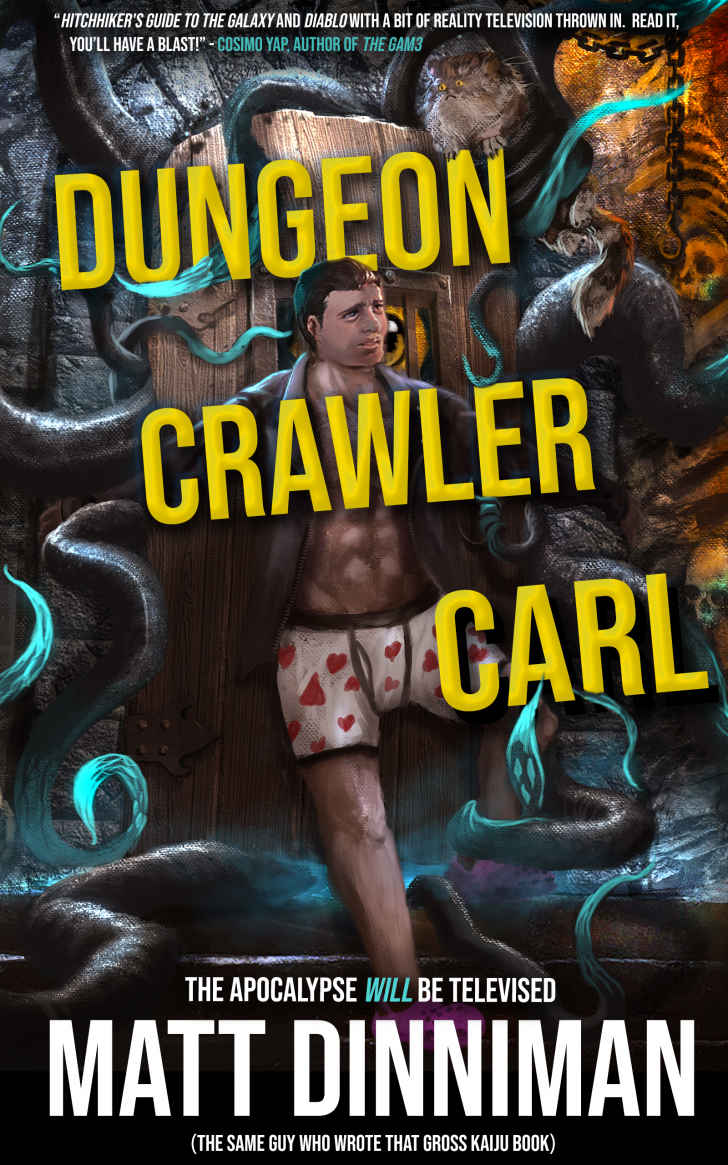
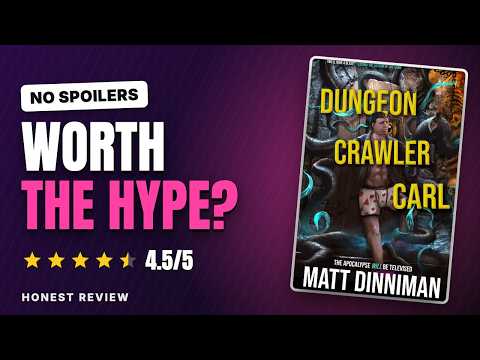
On a freezing January night, every building on Earth is crushed in a few seconds. The survivors are given a choice: climb down into a giant dungeon, or freeze. Carl chooses the dungeon. He is carrying his ex-girlfriend’s prize-winning cat. So, is Dungeon Crawler Carl, by Matt Dinniman, worth your time?
Here’s the short answer. If you want a fast, crude, wildly inventive comedy with real heart underneath, yes. Read it. If you can’t stand swearing, graphic violence, or sex jokes, skip it. I’d give it four and a half out of five for the right reader, and about two for the wrong one. Let me explain.
What It’s About
Carl is a twenty-seven-year-old marine technician and a former Coast Guard sailor. He has just broken up with his girlfriend, and he’s stuck looking after her cat, Princess Donut. Then an alien voice announces that Earth has been seized for its minerals, and the survivors can win their planet back by clearing an eighteen-level World Dungeon.
Here’s the twist. The dungeon is a television show. Viewers across the galaxy watch every crawler, and that attention turns into followers, favorites, and sponsors. Sponsors send loot boxes. Carl has no weapon, no plan, and, thanks to the cold, no pants. Staying alive means being entertaining.
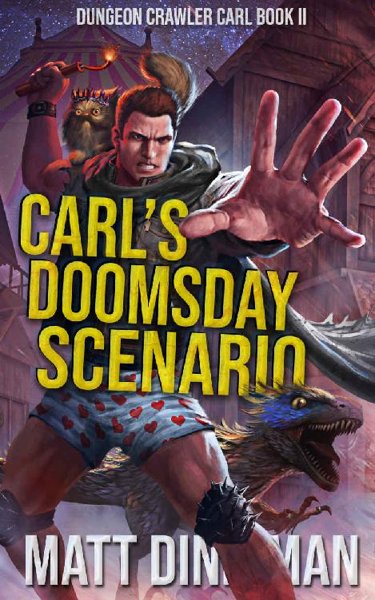
The book is long but moves like a sprint. It has forty-seven chapters and an epilogue, well over a hundred thousand words. And it’s only the first book of a series. This one covers just the first two floors, out of eighteen. Think of it as episode one of a very long season.
The First Hour
The opening is the best argument for this book. In the first chapter, Carl is standing in the street in a leather jacket and borrowed pink sandals when his entire apartment building is flattened. There’s a calm alien announcement, written like corporate fine print. Then it’s down the stairs, and into the light.
At the bottom, the game starts talking. Information boxes pop up over doors and monsters. A host with a game-show voice hands out achievements for things like not wearing pants. Carl is hunted by a goblin-driven bulldozer before he even understands the rules.
And then a guildmaster, a rat-faced man named Mordecai, sits Carl down to explain the dungeon like a safety briefing for a nightmare. That tutorial is the part many readers love. It is funny, and it is also genuinely scary, because each rule has a body count.
What Works
First, the idea. A dungeon crawl that is also a reality show gives the author a joke machine and a stakes machine at the same time. Every kill can earn an achievement, with a snarky message, and a loot box. The humor and the survival rules feed each other.
Second, the cleverness. Carl wins by thinking, not by being special. He mixes explosives, bad weapons, and ordinary engineering, and you can follow every trick. When he builds something ridiculous to beat a boss, the scene works like a heist, and it pays off.
Third, the bosses. Each one is a twisted joke about our world, with a dramatic title card, a theme song, and a fight that is nothing like it first looks. Every boss has a weakness hidden in plain sight, which turns each battle into a puzzle you can try to solve.
And fourth, the writing is fun on a sentence level. The loot descriptions alone are worth the price. A cheap pair of gloves, a magic shirt, even a pedicure kit all come with a tooltip that is part statistics and part stand-up routine.
The Cast
Carl is not a chosen one. He’s a tradesman who fixes things, and he hates drama. He’s stubborn, observant, and angry in a way that keeps him moving. He keeps telling himself the dungeon will not break him, and somehow you believe it.
Then there’s Donut. The cat you meet in the first chapter is not the cat you leave with, and I won’t say more than that. She is vain, brave, terrified, and hilarious, and her bond with Carl is the heart of the book.
Around them are the dungeon’s guides and monsters. Mordecai is a tired guildmaster who has trained crawlers for centuries. Goblins build steam-powered death machines. And an artificial intelligence narrates everything like a sarcastic game show host. It may be the funniest character in the book.
Themes And Heart
Under all the jokes, this is a book about being watched. Everything Carl does is content. Everyone profits, and nobody asks the crawlers. It is satire of reality television, loot boxes, and corporations that treat people as numbers, and it is sharper than you’d expect from a book with a talking cat.
But it never forgets the cost. Almost everyone on Earth is dead, and Carl keeps watching the survivor count fall. He keeps helping people he doesn’t have to help. The comedy never hides that, and the book is better for it.
There’s also a quiet question running through the story: what do you owe other people when the world is a game? The book’s answer is kind, but it is never simple.
Writing And Pacing
Dinniman writes in a chatty first-person voice, like a friend telling you the worst week of his life. The jokes come fast, and they land more often than they miss. The story is also full of game screens, tooltips, and announcements, a style called lit R P G.
If numbers bore you, don’t worry. You can skim most of the stat blocks and still follow everything. The first fifty pages teach the rules. After that the book accelerates, with boss fights as set pieces and small quiet moments in between.
The chapters are short and end on hooks. It is an easy book to binge, and a hard one to put down.
What Doesn’t
First, the humor can be exhausting. There are crude jokes, toilet humor, and a running gag about the game’s strange obsession with feet. Some of it lands. Some of it feels written for a fourteen-year-old, and the pop culture references are relentless.
Second, the tone can whip back and forth. The book is brutal. There is graphic violence, and a few moments are genuinely dark, yet they sit right next to a punchline. For me it mostly works. For some readers it will feel jarring.
Third, it is not a standalone. The story stops mid-journey, with sixteen floors still ahead, and a few mysteries are planted that go unanswered. If you need a tidy ending, this will frustrate you.
And fourth, the rules. The book loves its rules, and sometimes a scene stops to explain a mechanic. It never lasts long, but it can feel like homework.
How It Compares
Dungeon Crawler Carl belongs to a genre called lit R P G, where the rules of a video game show up on the page. Most books in that genre play it straight, with a serious hero who levels up and a lot of numbers. This one plays it for laughs, and for satire, and that is what sets it apart.
The tone is closer to The Hitchhiker’s Guide to the Galaxy than to a typical fantasy quest. The universe is absurd, the bureaucracy is evil, and the narrator is sarcastic. The stakes, though, are closer to The Hunger Games. People really die, and the audience really watches.
It also works as an entry point. You don’t need to love games. If you can enjoy a story where a sarcastic announcer hands out achievements, you’ll be fine. And if you do love games, you’ll catch a hundred small jokes that others will miss.
Content Notes
A quick note on content, so nobody is surprised. The language is strong and constant. The humor includes sexual jokes and crude gags. The violence is graphic, with a lot of gore.
A few scenes are genuinely upsetting, and the book plays some of them for dark laughs, then pulls the rug out. If you’re sensitive to that mix, read a sample chapter or two first. It gives you a very accurate picture of what the rest of the book is like.
If that sounds fine to you, it is the kind of book that’s hard to stop reading.
The Scorecard
Here’s how it breaks down. Humor: five out of five. Worldbuilding: five. Characters: four and a half. Pacing: four. And polish: three and a half. That averages to four point four.
Who It’s For
Read Dungeon Crawler Carl if you love dark comedy, video games, and stories where a regular person is thrown into something absurd. The cover itself compares it to The Hitchhiker’s Guide to the Galaxy and Diablo, and that’s a fair mix. It’s also a good fit if you liked Ready Player One or The Hunger Games, with a lot more jokes.
Skip it if you dislike profanity, graphic violence, or crude humor, or if you want a complete story in one book. It is a book for adults.
And if you like audiobooks, this series is famous for its narrator, Jeff Hays, who voices around two hundred characters across the series.
Where To Get It
If this sounds like your kind of chaos, the links are in the description, including the audiobook. And tell me in the comments: if you woke up in a dungeon tomorrow, what’s the one thing you’d bring? And please say you’d be wearing pants.