The Verdict
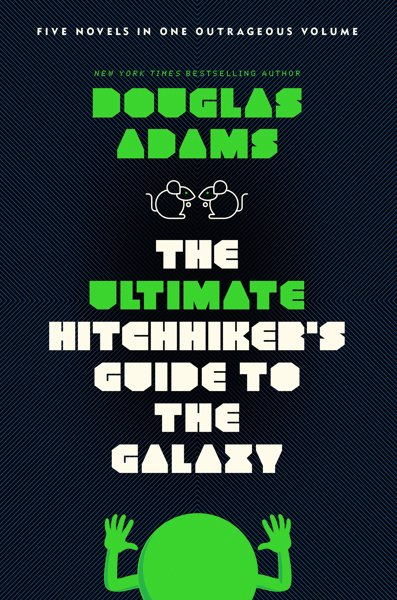
It’s The Hitchhiker’s Guide to the Galaxy, by Douglas Adams, and this is my honest review.
So, is it worth reading? Yes. It is the funniest science fiction novel I know, and the jokes still land more than forty years later. It is not a tidy story, though, and the five book series it started gets patchier as it goes. I give book one four and a half out of five. This review is spoiler free, with a short note on language and a few dated jokes.
What It’s About
Arthur Dent is an ordinary man in an ordinary English village, and on this particular Thursday the council wants to knock down his house to build a bypass. He lies in the mud in front of the bulldozers in protest.
Then his friend Ford Prefect turns up, insisting they go to the pub right now, because the world is about to end. Ford is not from Guildford, as he has always claimed. He is from a small planet near the star Betelgeuse, and he writes for a very remarkable book, and the two of them are about to go on a very long hitchhike.
The First Chapters
The opening is a masterclass. A short prologue tells you about a small blue-green planet whose people still think digital watches are a pretty neat idea. Then we meet the council man, Mr. Prosser, who turns out to descend from Genghis Khan and is deeply nervous about it.
Ford walks into a pub and orders six pints of bitter, quickly please, because the world is about to end. The barman asks whether he’s watching the match. After that, the story hands you the strangest, funniest tour of space and bureaucracy you have ever had, and it doesn’t slow down.
The Shape Of The Book
This first novel is about forty-six thousand words, in thirty-five short chapters. That is quick. Most chapters run to a few pages, and some are barely longer than a joke.
I read it in an omnibus with all five novels, about two hundred sixty-five thousand words in total. It opens with a foreword by Neil Gaiman and a gloriously unreliable introduction by Adams, which is worth reading for the comedy of how many versions of this story exist.
Where It Came From
The story behind it is nearly as strange as the book. Adams says the title came to him in nineteen seventy-one, lying drunk in a field in Innsbruck while hitchhiking across Europe, clutching a battered guide to Europe.
It began as a BBC Radio Four comedy, first broadcast in March nineteen seventy-eight, and he wrote the novel for Pan Books in nineteen seventy-nine, famously late. Adams died in two thousand one. He later wrote a text adventure game of it for the company Infocom, as well.
What Works: The Voice
My first favorite thing is the voice. The narrator is a dry English storyteller who cannot stop commenting. A bypass becomes a speech about points A, B, C, D and E. Time, says Ford, is an illusion, and lunchtime doubly so.
What I love is the control. Adams builds a sentence like an ordinary one, and then in the last four words it steps off a cliff. You can read a page out loud to a friend and get a laugh every few lines.
What Works: The Guide
My second favorite thing is the Guide itself, the electronic book that Ford carries. It has the words Don’t Panic on the cover in large, friendly letters, and its entries interrupt the story to explain things like the Vogons, who are officious, bureaucratic and bad tempered.
Those entries are where the best ideas live. There is the Pan Galactic Gargle Blaster, the worst poetry in the universe, and the towel, which is the most useful thing an interstellar hitchhiker can have. I own a towel now. I take it everywhere.
What Works: The Ideas
My third favorite thing is that the jokes are about something. Arthur’s planning notice is in a locked filing cabinet in a basement, under a sign that says Beware of the Leopard, and that one gag says more about bureaucracy than a hundred editorials.
The book also loves ideas from science and philosophy, such as improbability, a fish that translates languages, and what the size of space does to your sense of yourself. It plays with them and moves on, never lecturing. You come away feeling clever, not told off.
The Characters
Arthur is the heart of it. He is a polite, bewildered man in a dressing gown who only wants a cup of tea, and every disaster happens to him. Ford is his opposite, cheerful, reckless and always short of money.
Then come Zaphod Beeblebrox, the two headed, outrageously vain ex president of the galaxy, and Trillian, who is the sharpest person aboard. And there is Marvin, a robot with a brain the size of a planet, who is permanently depressed. He has the best lines in the book.
The Mood
This is a book about the end of the world, and it is weirdly kind. The universe is huge, careless and absurd, and the only sensible response, the book says, is to stay calm, carry a towel and keep your sense of humor.
That gentleness is a big part of why people love it. The cosmos in this book does not care about Arthur, but the writing clearly does. I put it down feeling lighter, not more cynical.
Writing And Pacing
The prose is clean and quick, and it was clearly written for the ear. Radio is in its bones. Scenes are short, dialogue does most of the work, and the narrator hands off to the Guide whenever the plot needs to breathe.
The pacing is playful rather than tense. The story is a series of strange stops along a journey, and each one ends before it can outstay its welcome. If you like a book you can read in two or three evenings, this is perfect.
What Doesn’t Work
Now the honest part. First, the plot is thin. The story is a clothesline for the jokes, and some episodes feel like sketches that Adams was happy to leave unfinished. The book stops rather than concludes, pointing you toward the next one.
Second, it is a product of nineteen seventy-nine. Several jokes about women and about other people are uncomfortable now, and Trillian does far less than she deserves. A few lines will make you wince.
Where It Wears Thin
Third, the series. Book one is wonderfully tight. The later novels contain brilliant scenes, but they wander, they lean harder on plot, and the mood darkens. By the fifth, I felt the laughter getting thinner. Neil Gaiman’s foreword says Adams did not enjoy writing, and you can sometimes feel it.
Fourth, not every joke works. About one in ten falls flat, particularly the long riffs. I would still recommend all five to a fan, with the warning that the first is the one that really sings.
The Five Book Run
Since I read the whole omnibus, here is my honest verdict on the run. Book two, The Restaurant at the End of the Universe, has some of the best set pieces in the series, but it wanders. Book three, Life, the Universe and Everything, leans on plot and cricket, and it is a mixed bag for me.
Book four, So Long, and Thanks for All the Fish, is the gentlest, and I think it is underrated, because it finally lets Arthur have something. Book five, Mostly Harmless, is the bleakest. Read book one for the joy, book two for the setpieces, and book four for the heart.
A Note On Content
There is no real violence on the page, and almost no sex. There is occasional mild swearing, and the humor is dark about death, since the whole planet is destroyed in a few lines. Some jokes about women, and one about prehistoric people, are very much of their time.
If you are reading with a teenager, it is generally fine. That age advice is my opinion, not an official rating. Mostly, expect a book that treats cosmic disaster as an excuse for a joke and a cup of tea.
The Scorecard
Here’s how I score book one. The voice is five out of five. Ideas, five. Characters get four, since Trillian is underused. Plot gets three, because it is so loose, and the ending gets four. That averages out to four point two, and I round it up to four and a half, because few books are this much fun.
Who It’s For
Read it if you like British humor, Monty Python, or Terry Pratchett, or if you want science fiction that never takes itself seriously. It is also perfect for someone who says they don’t read sci-fi, because it is really a comedy with spaceships in it.
Skip it if you want a tight plot or deep emotional drama, or if you can’t stand silliness. If you finish it, I have a spoiler heavy video on the ending, a guide to the whole series in order, and a list of books to read next.
Where To Get It
That’s The Hitchhiker’s Guide to the Galaxy, by Douglas Adams. Funny, quick and endlessly quotable, and four and a half out of five from me. The book is linked in the description, along with every book I mentioned.
Tell me in the comments: what is the one thing you’d put in your bag if the world ended on Thursday? Thanks for watching, and subscribe if you’d like more honest book reviews.