The Verdict
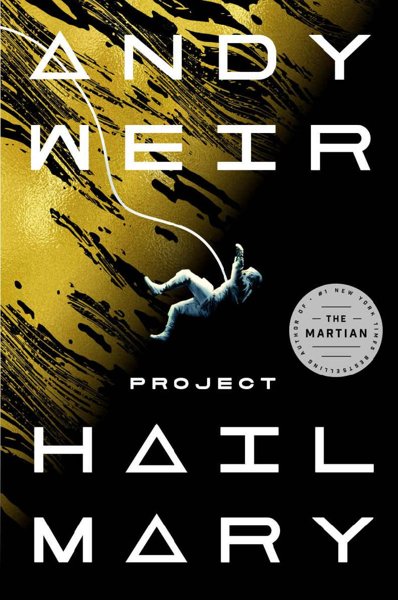
Today’s book is the one everyone keeps pressing into my hands: Project Hail Mary by Andy Weir, the author of The Martian.
A man wakes up alone on a spaceship. He doesn’t know his name, he doesn’t know where he is, and his two crewmates are dead. That is page one, and it only gets better from there.
Here’s my verdict up front. If you like clever problem solving, real science, and a story with a huge heart, this is a must-read. If you need beautiful prose or rich, complex characters, it may feel a little light. My score is four and a half out of five, and it’s one of the most fun books I’ve read in years.
What It’s About
The narrator slowly works out that his name is Ryland Grace. He used to be a molecular biologist, and somehow he ended up teaching junior high science. Now he’s light-years from home on a ship called the Hail Mary.
Back on Earth, something is dimming the Sun. A tiny organism the scientists call Astrophage is eating its energy. The models say the planet will cool, crops will fail, and billions will die within a few decades.
The Hail Mary is a one-way mission to a nearby star called Tau Ceti, the only star close to us that doesn’t seem to be infected. Grace’s job is to find out why, and to send the answer home. The hardcover runs nearly five hundred pages, in thirty chapters, and it moves fast.
The World Back Home
The Earth chapters are a thriller of their own. It starts with a strange line of infrared light that an astronomer spots arcing from the Sun toward Venus. Then a probe confirms the Sun is losing energy, and the numbers are terrifying: a one percent drop within about nine years, five percent within twenty.
So the world’s governments do something they never do. They hand one person almost unlimited power to run the response. Watching that power get used, with aircraft carriers, secret labs and impossible deadlines, is half the fun. It reads like a disaster movie where the heroes are lab coats.
How The Story Works
The structure is the clever part. Grace has amnesia, so the book runs on two tracks. In the present, he is alone in space, solving one problem after another. In the past, his memories come back in flashes, showing how Earth discovered Astrophage and how a teacher ended up on a spaceship.
Each flashback answers one question and raises another. Why him? Why is he the only one alive? And why does he feel so uneasy every time he remembers the woman who ran the project? You read on because the past and the present are racing toward each other.
What Works
First, the science. Weir builds the whole plot out of experiments. Grace drops test tubes to measure gravity, he swings a pendulum to work out whether he’s spinning, and he figures out what Astrophage is made of with a microscope and a hunch. You learn real physics and biology without ever feeling like you’re in class.
Second, the humor. Grace is a nerd with a big mouth, and his voice is funny in the same way Mark Watney was in The Martian. Even in the darkest moments he cracks a joke, often at his own expense.
Third, and this is the big one, the heart. About a third of the way in, the book turns into something I did not expect. I won’t spoil it, but it becomes one of the warmest friendship stories I’ve read in science fiction. It’s the reason readers cry at this book, and it’s the reason it beats The Martian for me.
Three Favorite Moments
No spoilers, I promise, but here are three scenes I still think about. First, the opening chapters, where Grace works out he’s in space using nothing but a pendulum, some test tubes and stubbornness. It’s the best “show, don’t tell” opening I’ve read in a while.
Second, a flashback where Grace explains Astrophage to his junior high class. It’s funny and sweet, and it shows exactly why he was a great teacher.
And third, a moment in the middle where two very different minds finally manage to understand each other. If you’ve read it, you know the one. It made me grin like an idiot.
The Characters
Grace is likable, smart and stubborn, but he’s also a little more complicated than he first seems. The flashbacks slowly show you a man who isn’t sure he’s brave, and that question becomes the emotional spine of the novel.
Then there’s Eva Stratt, the head of the project. She has total authority from the world’s governments, and she uses it without apology. She is cold, practical, and often right, which makes her more interesting than a simple villain. Every scene with her crackles.
The supporting cast is fun but thin. Scientists from Russia, China, Germany and elsewhere pop in, deliver a key idea, and leave. They work as puzzle pieces more than people.
Writing And Pacing
Weir writes in a plain, chatty, first-person voice. It reads like a smart friend explaining things over coffee. The chapters are short, almost every one ends on a problem, and the present-day scenes rarely let up.
The middle does slow down a little. There’s a long stretch of experiments and setbacks, and if math makes your eyes glaze over, you’ll skim a few pages. But the last third is relentless, and the payoff is worth every equation.
The Big Ideas
Underneath the jokes, this is a book about three things. The first is courage, and whether a scared, ordinary person can still do something heroic. The second is cooperation. Countries, scientists and strangers have to trust each other, and the book argues that working together is the only way anyone survives.
The third is science itself as a kind of hope. Grace never wins by luck or strength. He wins by asking a question, running a test, getting it wrong, and trying again. In a time when a lot of fiction about the future is bleak, I found that genuinely uplifting.
What Doesn’t Work
Now the honest part. The prose is functional, not beautiful. If you love lyrical writing, this isn’t it.
Second, the characters on Earth are mostly types: the genius, the soldier, the bureaucrat. Only Stratt really comes alive.
Third, the science explanations can pile up. Weir loves to show his working, and some readers find the long technical passages exhausting.
And finally, a few lucky breaks are very convenient. When the book needs a solution, a solution usually appears. It didn’t bother me much, but careful readers will notice.
Audiobook Or Print
A quick tip. The audiobook narrated by Ray Porter is famous, and for good reason. Parts of this story involve sound in a way that works brilliantly when you hear it. If you’re an audiobook person, this is one to try. If you read in print, you won’t miss any of the plot.
Compared To The Martian
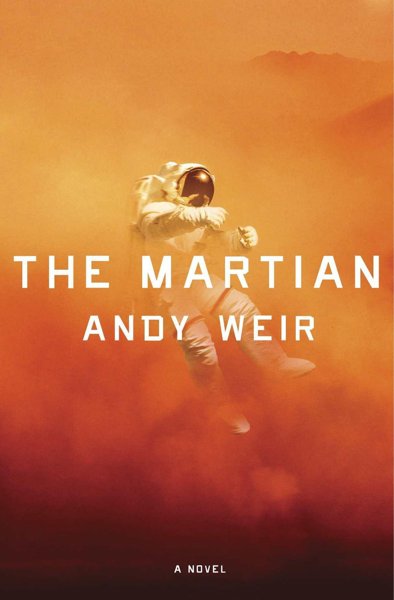
Everyone asks this, so here’s my take. The Martian is tighter and funnier, with one man, one planet and one goal: survive. Project Hail Mary is bigger, stranger and more emotional. The stakes are the whole human race, and the book has room for friendship in a way The Martian never did.
If The Martian was a great survival story, this one is a great story about connection. Most fans I know now rank Project Hail Mary first, and I agree with them.
Content And Age
It’s a clean read. There’s some swearing, a few scenes of peril and injury, and some grim talk about what happens on Earth if the mission fails, but nothing graphic and no romance to speak of. I’d happily hand it to a curious thirteen or fourteen year old.
The Scorecard
Here are my numbers. Plot, five out of five. Science, five. Heart, five. Characters, four. Prose, three and a half. That works out to four point five.
Who It’s For
Read it if you loved The Martian, if you like smart problem solving, or if you want a hopeful story about people working together. It’s also a great pick for teenagers who like science.
Skip it if you want lyrical writing or deep literary characters, or if technical detail bores you.
If you like it, try The Martian next, then Children of Time by Adrian Tchaikovsky, and A Psalm for the Wild-Built by Becky Chambers for something gentler.
Where To Go Next
I also made an ending explained video with full spoilers, a science fact check on Astrophage and Tau Ceti, and a book versus movie comparison for the Ryan Gosling film. The links are below. Tell me in the comments: did this book make you cry? Thanks for watching, and I’ll see you in the next one.