The Short Answer
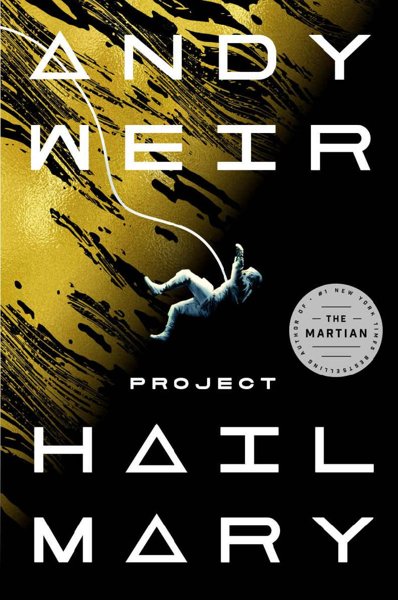
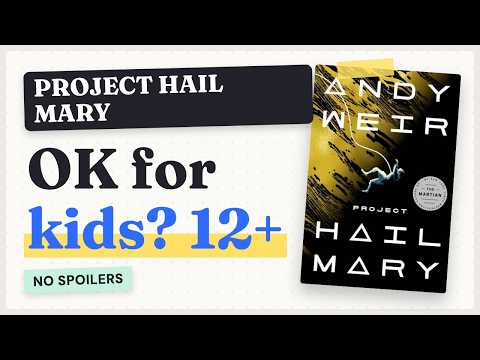
I searched every page of Project Hail Mary for swearing, danger and grown up themes, so you can decide before your kid starts it.
Here is the answer first. By my count of the ebook text, the book holds nine strong swear words in about one hundred fifty thousand words. Four of them are the f word. I suggest twelve and up, and I will show you why, chapter by chapter, with no spoilers.
If you searched for the Project Hail Mary age rating, or you are asking whether Project Hail Mary is appropriate for kids, one note. A novel carries no ratings board label the way a film does. So these are counted facts first, and then my opinion.
The Swear Count
Method first, because numbers need a method. I took the ebook text, chapters one through thirty, and searched for whole words, ignoring capital letters. These are counts, not guesses.
The f word appears four times, as fuck and fucking. The word shit appears three times, and bullshit twice. That is nine of the strongest words, and the last seven chapters contain none of them.
Now the middle shelf. Hell appears ten times. Crap or crappy, eight. Ass, assed, asshole and assholes together, six. Damn or goddamned, five. Bastard or bastards, four. Pissed or pissing, twice. That is thirty five mild to medium words.
Then the soft stuff. The narrator says heck fifty one times, and darn or darned twenty three times, because he swears in a family friendly way. God or Jesus appears forty one times as a whole word, mostly as in oh my God, and once in a real conversation about faith.
To put the strong words in perspective, nine in about one hundred fifty thousand words works out to roughly one every sixteen thousand words. Most readers will pass whole chapters without meeting one.
Where The Language Lands
Where do the strong words fall? In chapters one to seven, three. In chapters eight to fifteen, four. In chapters sixteen to twenty three, two. In chapters twenty four to thirty, none. It gets cleaner as it goes.
Here is the surprise. The narrator himself says only two of the nine, in one line in chapter six, when he first sees something he cannot believe. The other seven come from other people, and every one of them is in a flashback on Earth.
Chapter two has a flight controller shouting as strange images come in. Chapter thirteen has three in one tense argument with a convicted engineer. Chapter eighteen has a launch party toast from a Russian engineer. If your kid reads with a pencil, those are the pages to preview.
Peril And Fear
Is it scary? Not like horror. There are no monsters, no gore and no human villain chasing anyone. The fear is the lonely, claustrophobic kind, and it has a few sharp moments.
Chapter one is a man waking up alone, covered in tubes, with no memory. Chapters two and four show two crewmates who did not survive the trip, and the narrator gives them a quiet burial in space. The bodies are described as thin and dried out, briefly and respectfully. In chapter four he panics, and says he is so going to die.
Chapters seven and nine have spacewalks with real risk. Chapters nineteen and twenty are the intense stretch: an emergency with crushing force, a narrator who thinks it is the end, vomiting, and a painful burn. Chapter twenty one tells of a lab explosion in a flashback, with people killed, told through sirens and a roll call. The final act has more peril. I will not say what.
Death And Dark Themes
The premise is dark. The word suicide appears twenty two times across thirteen chapters, mostly in the phrase suicide mission, because the trip was planned as one way. Death in the book is mostly about sacrifice, and about a world in danger.
Chapter thirteen mentions seven people who died in a workplace accident. Chapter fourteen has a climate scientist ordering a nuclear strike on Antarctica, and a mention of three and a half billion dead people. Chapter twenty six has a speech about war and famine as the stakes. All of it is talk about the stakes, not shown on the page.
Two parental flags. In chapter six, the narrator briefly thinks about painless ways to end his life. In chapter twenty one, crew members are asked how they would want to die if the mission failed, and a drug overdose and a handgun come up. If your reader is struggling, preview those two chapters first.
Alcohol shows up too. Whiskey in chapter two, a launch party in chapter eighteen, and the narrator drinking vodka until he is dizzy in chapter twenty five.
Romance And Sexual Content
Plainly. There is no romance for the narrator. The central relationship is a friendship. There are no sex scenes, and no kissing between characters. The word kiss appears twice, both times as a figure of speech.
Here is what is there. In chapter one he wakes up naked, and has a medical tube removed. One line mentions it, and it is played for a painful laugh. In chapter sixteen, a rule against romance on the crew comes up, and alien reproduction is explained in a clinical way.
In chapter seventeen, two scientists tell the narrator, in a very stiff and funny way, that they have started a sexual relationship, and one bathroom joke follows. In chapter eighteen, a Russian engineer jokes about the narrator and his boss. The words sex and sexual appear ten times in the whole book. Nothing is shown.
How Hard Is The Science
The narrator is a science teacher, and he explains things the way he would to a class. He works out where he is by timing a swinging weight, and he does his math out loud. Kilograms are mentioned sixty three times and neutrinos twenty four times.
You do not have to follow the math to follow the story. The chapters pause and explain, and the ideas are the fun part. But it is a long book, about one hundred fifty thousand words, with plenty of numbers and units.
My opinion draft: a science level of four out of five. A twelve year old who enjoys physics will love it. A reader who dislikes numbers can skim the calculations and still keep the plot.
The Content Grid
Now the grid. I split the book into four parts by chapter, and scored each from zero to five on language, violence, scary moments and science. The scores are my opinion, built on the counts you just saw.
Chapters one to seven, language two, violence one, scary three, science four. Chapters eight to fifteen, language three, violence two, scary two, science four. Chapters sixteen to twenty three, language two, violence three, scary four, science five. Chapters twenty four to thirty, language one, violence two, scary three, science four.
Over the whole book, my meters read language two, violence two, scary three and science four. The hardest stretch for most kids is chapters nineteen to twenty one.
Chapters To Preview
If you only have time for a quick skim, here is my preview list. It is built from the counts, so it is a fact list, with a little opinion on top.
Chapter six, for the narrator’s grim thoughts and one of his two strong words. Chapter thirteen, for the three strong words in one argument. Chapter seventeen, for the frank, funny talk about a relationship. Chapters nineteen and twenty, for the most intense peril. Chapter twenty one, for the explosion and the conversation about how the crew would want to die.
That is seven chapters out of thirty. The rest are mostly puzzles, friendship and mild language like heck and darn, apart from the peril in the final act.
Talking Points For Kids
A parents guide should also say what is good for a kid. The book is about two scientists from different worlds who solve a problem by learning to understand each other. It treats curiosity, teamwork and honesty as heroic.
My opinion draft: it is a good book to read together or to talk about afterward. Ask what the narrator is afraid of, why a one way mission might still be worth it, and what makes the two friends trust each other. Those questions work for a twelve year old, and for a fifteen year old too. Reading together also lets you pause at the flagged chapters and talk.
Book Versus The Film
What about the movie? As of October twenty twenty six, the film opened in the United States on March twentieth, twenty twenty six from Amazon MGM Studios, as reported by several theater and listing sites.
The official rating is PG thirteen, for some thematic material and suggestive references, from the M P A bulletin dated February eleventh, twenty twenty six. Reports describe the film as fairly clean on language.
Remember, the book is not rated. By my count it holds nine strong swear words, and its talk about sex is more direct than the rating reasons suggest. I have not compared the film scene by scene, so this is the rating, not a scene list. If your kid loved the film, the book is a good next step, with a preview.
My Suggested Age
My suggestion, an opinion draft: twelve and up. Under ten, I would wait, because of the length, the science and the darker ideas. Ten and eleven can manage with a parent who has skimmed chapters six, thirteen, seventeen and twenty one. Fourteen and up, I would not worry.
Why twelve? The language is mostly mild, with nine strong words in a very long book. The fear is situational, not graphic. And the dark ideas are handled with humor and warmth, which suits a thoughtful twelve year old.
If this guide saved you time, subscribe and tap like. The full chapter guide is at book explained dot com. And tell me in the comments: what is the youngest age you would hand this book to?