What is Frankenstein about?
The story opens with letters. An explorer named Robert Walton is sailing toward the North Pole, writing home to his sister. One day his crew spots a strange sledge on the ice, and then pulls a nearly frozen stranger aboard. That stranger is Victor Frankenstein.
Is Frankenstein worth reading?
Short, haunting and smarter than its reputation, with one of fiction's great characters in the creature. The pacing is uneven and the hero is exhausting. Four out of five. Read it if: you want a short classic that is strange and sad; you only know the movies and want the real book; you like moral questions with no easy answer. Skip it if: you need a fast plot; dense nineteenth century sentences make you tune out. Review: Frankenstein →
Is there a summary of Frankenstein?
Frankenstein summary, told the way Mary Shelley built it: Walton's letters, Victor's story and the creature's own tale, with a word count of each narrator from the 1831 text. Full spoilers. Summary: Frankenstein →
Is there a Frankenstein movie or series?
Frankenstein book vs movie: the frame story, the creature's own voice, the lightning, Elizabeth, and the pyre versus the sunrise, in a kept, cut and changed table. Full spoilers. Book vs movie: Frankenstein →
What books are like Frankenstein?
Dracula by Bram Stoker, Strange Case of Doctor Jekyll and Mister Hyde by Robert Louis Stevenson, Never Let Me Go by Kazuo Ishiguro.
Who wrote Frankenstein and when?
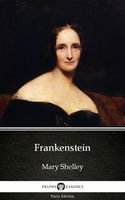
Mary Shelley wrote it. She began it in the summer of 1816, at age eighteen, during a ghost story challenge near Lake Geneva, and it was first published in 1818. She revised it for a new edition in 1831.
Should I read the 1818 or the 1831 Frankenstein?
Either works for a first read. The 1831 text is the revised version and the one most editions print; scholars debate how much the changes matter, with some arguing the later text makes Victor's fate feel more like destiny. Check your copy's title page.
Is Frankenstein hard to read?
The prose is formal and nineteenth century, and the opening letters and early chapters are slow. The 1831 text runs about 75,000 words (our rough count), so it is short for a classic.
Is there a Guillermo del Toro Frankenstein movie?
Yes. Del Toro's Frankenstein reached Netflix on November 7, 2025, after a limited theatrical run from October 17, 2025, with Oscar Isaac and Jacob Elordi (as of October 2026).