The Verdict
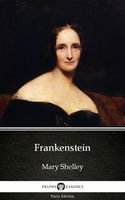
Today’s book is Frankenstein.
Forget the green guy with bolts in his neck. The real book is a sad, strange story about a man who makes a person, and then runs away from him. It was started by a young woman who was only eighteen, and it still has teeth.
My verdict: read it. It’s short, it’s smarter than its reputation, and the creature is one of the best characters in fiction. But the pacing is uneven, and the hero is exhausting. I give it four out of five, with no spoilers.
What It’s About
The story opens with letters. An explorer named Robert Walton is sailing toward the North Pole, writing home to his sister. One day his crew spots a strange sledge on the ice, and then pulls a nearly frozen stranger aboard. That stranger is Victor Frankenstein.
Victor tells his own story. A happy childhood in Geneva, a loyal best friend, and a girl named Elizabeth who grew up beside him. Then university at Ingolstadt, and a hunger to find the secret of life itself.
After two years of secret work, on a rainy November night, he sees the creature’s dull yellow eye open. That is the setup, and it’s the part you already know. It runs twenty-four chapters plus those opening letters, and I won’t spoil anything past that first night.
Three Narrators
Frankenstein is a story inside a story inside a story. Walton writes letters. Inside those letters is Victor’s confession. And inside Victor’s confession, a long stretch is told by the creature himself, in his own words.
I love this structure. Every narrator wants you on his side, and every one of them is a little unreliable. You keep asking who you should believe, and the book never tells you outright.
It also makes the whole thing feel like found evidence, a pile of papers someone saved. That gives a monster story a strangely human, true to life feel, and it’s why the book still reads like a confession instead of a horror movie.
Not Like The Movies
If you only know the films, the book will surprise you. The creation scene is quiet. There’s a dying candle, rain on the window, and no storm of lightning, no helper named Igor, and no triumphant shout.
The creature isn’t a grunting brute either. He thinks, he speaks, and he argues. And in the book he never gets a name, which feels deliberate. Frankenstein is the scientist’s last name, and people have been mixing it up for two hundred years.
What Works
Three things work beautifully. First, the creature’s own voice. His chapters start with him waking in a forest, not knowing what light, cold or hunger even are. He teaches himself to speak by secretly listening to a family through a wall. It’s tender, it’s patient, and it’s the best writing in the book.
Second, the atmosphere. Walton’s polar daydreams, Victor’s rainy night of the creation, a hike beside a glacier in the Alps. The landscapes feel like weather inside someone’s head, and they make the quiet scenes feel huge. You can almost hear the ice cracking.
Third, the nerve of the premise. One clean question drives everything: what do you owe the thing you made? There are no side plots to hide behind. That question hasn’t gotten old, and the book never lets Victor, or you, off the hook. That focus is rare, and it’s why the story feels so tight.
The Creature
Let’s talk about him, because he’s why the book lasts. He is frightening, yes. But he is also articulate, curious, and desperately lonely. He learns to read, he reasons, and he asks Victor a question that’s hard to answer: why did you make me, and then leave?
What I love is that nobody around him ever gives him a chance. Everyone judges him by his face before he speaks a word. The book keeps nudging you to wonder who the real monster is, and it’s not a cheap twist. It’s the whole point. I found myself arguing with Victor out loud, which is the best thing a classic can make you do.
Victor
Now the hero, and here my opinion gets spicy. Victor is brilliant, privileged, and absolutely terrible at taking responsibility. He chases a dream for two years, collapses into horror the moment it works, and spends much of the book feeling sorry for himself.
The creation scene is the perfect example. There’s no triumphant laugh. Victor looks at what he built, feels sick, and runs out into the rain. Even in his dream that night, the people he loves turn into corpses.
You can see why that’s the point. A creator who flees his own creation is the story. But as company for hundreds of pages, Victor wears thin. Elizabeth and his friend Henry are kind and loyal, yet they mostly exist to give him something to care about.
The Big Ideas
Mary Shelley began this book in the summer of eighteen sixteen, near Lake Geneva, during a ghost story challenge among friends. It was published in eighteen eighteen. The ideas inside are bigger than a ghost story. Ambition without care. Knowledge without responsibility. A person shaped by how the world treats him.
Every few years a new technology arrives, and people say Frankenstein all over again. That’s not a coincidence. It may be the oldest warning label we have. Today you could swap in artificial intelligence, gene editing, or any invention built fast and owned by nobody, and the questions would still fit.
Writing and Pacing
The prose is formal and stately, full of long sentences and big feelings. Characters cry out to heaven and faint at bad news. It takes a few pages for your ear to adjust, and then it flows, and the key scenes are surprisingly short and sharp. My tip: if the sentences feel heavy, try an audiobook, or read a chapter aloud.
The opening letters are an acquired taste. Walton gushes about the pole for pages before anything happens, and I know some readers bounce off right there. Stay with it. By the time Victor starts talking, the book has a pulse.
The pacing is another story. The first chapters are slow family backstory, and the middle has long stretches of grief. Then the creature’s narration arrives and the book wakes up, and from there it moves with real purpose. At about seventy five thousand words it’s short for a classic, but it doesn’t always feel short.
What Doesn’t Work
Here’s the honest part. First, Victor’s self pity. He announces how wretched he is again and again, and it gets repetitive. Second, convenient coincidence. In one early scene his best friend steps off a coach at the exact moment Victor is standing in the street.
Third, the women get very little to do. Elizabeth is described as a saint, and that’s mostly her job. Fourth, the final stretch is a long pursuit that asks for patience. It lands, but you have to meet it halfway, and some readers will drift before it does.
Content Notes
A quick heads up. There’s death and murder, plenty of grief and despair, and some unsettling scenes about the lab and dead bodies. None of it is explicit.
The language is old fashioned, and the book assumes you’re willing to sit with sadness for a while. If you’re in a heavy season of your own, go gently, because this is a book about loneliness more than it is about horror.
The Scorecard
My scores. Ideas, five out of five. The creature, five. Atmosphere, four. Pacing, three. Supporting cast, three. That averages to four out of five.
Which Version
Quick note on editions. The book came out in eighteen eighteen, and Mary Shelley revised it for a new edition in eighteen thirty-one. That later text is the one most editions print, and it’s the one I used for this review.
Scholars argue about how much the changes matter, with some saying the later text makes Victor’s fate feel more like destiny. I can’t compare them, so check which one your copy prints. For a first read, I’d pick whichever edition you can get your hands on and not worry.
And yes, there’s Guillermo del Toro’s film, which was released on Netflix in November twenty twenty-five. This video is only about the book.
Who It’s For
Honestly, this is a good first classic. Read it if you like short classics that are strange and sad. Read it if you’ve only seen the movies and want the real thing, or if you enjoy moral questions with no easy answer. Skip it if you need a fast plot, or if dense nineteenth century sentences make you tune out.
If you want more, these three are a good place to start. Try Dracula by Bram Stoker, Strange Case of Doctor Jekyll and Mister Hyde by Robert Louis Stevenson, and Never Let Me Go by Kazuo Ishiguro.
Where To Get It
It’s short enough to finish over a long weekend, and it’s a classic you can actually enjoy rather than just tick off a list. Frankenstein is in the public domain, so there are free and cheap editions everywhere, plus audiobooks. Links are in the description. Just check whether your copy prints eighteen thirty-one or eighteen eighteen.
Tell me in the comments: whose side are you on, Victor’s or the creature’s? Thanks for watching, and subscribe for more honest book reviews.