The Verdict
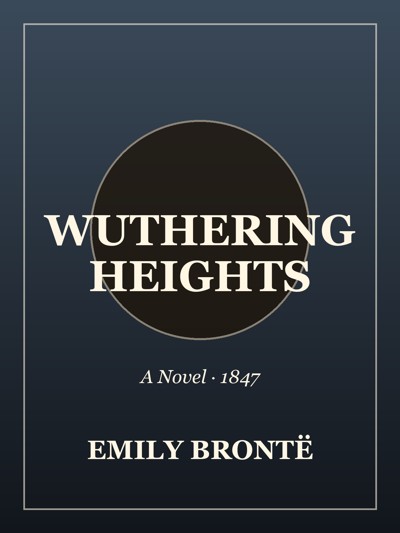
Today’s book is Wuthering Heights, by Emily Brontë, and I’m answering three questions people keep asking: is it a love story, is it hard to read, and is it worth reading?
This review is spoiler-free, which means no late reveals, no deaths and no twists. My verdict: it is not the swoony romance people think it is, it is harder than most novels from its era, and it is absolutely worth reading. I give it four and a half out of five.
What It’s About
The book was published in eighteen forty seven under the name Ellis Bell. It opens when a gentleman called Lockwood rents Thrushcross Grange in Yorkshire and visits his landlord, a rude, dark, silent man named Heathcliff, at a farmhouse called Wuthering Heights.
A snowstorm traps him there for the night, and he has a terrifying dream. Back at the Grange, he asks his housekeeper, Nelly Dean, what is going on in that house. Nelly tells him the whole story of two families, the Earnshaws and the Lintons, and what happened when a stranger was brought into one of them.
Is It a Love Story
So, is Wuthering Heights a love story? Not in the way most readers expect. It has one of the most famous love declarations in English fiction, but it is not a romance with a happy ending, and it is not a tale of two people who are good for each other.
It is a story about obsession, class, pride and revenge. The central pair hurt each other and everyone around them. If you go in wanting a swoony period romance, you may be shocked. If you go in wanting a dark, passionate, strange story about love as a destructive force, it is perfect.
Is It Hard to Read
Is it hard to read? Honestly, yes, a bit, but less than its reputation. The challenges are real. There are two narrators, one telling a story inside the other’s. There are only a few names, but they repeat, and there are two Catherines and a Linton who is also a first name.
And then there is Joseph, the old servant, whose speech is written in thick Yorkshire dialect. The first chapters are the hardest. After that, the plot pulls you along. Reading a family tree first helps a lot, and so does reading Joseph’s lines aloud or simply skimming them.
Length and Structure
For length, it is a bit over a hundred thousand words, in thirty-four chapters, which most people finish in a week or two of steady reading. The chapters are short and often end on a hook, so it reads faster than the page count suggests.
The structure is clever. The book starts near the end, jumps back years, and then catches up with the opening. Once you understand that the story is being told in a long conversation, with Nelly pausing for supper and Lockwood interrupting, the framing becomes a pleasure instead of a puzzle.
What Works: Atmosphere
The best thing about the book is its atmosphere. Brontë writes the moors as a living force. There is wind, snow, mud, crumbling stone, and a farmhouse where the trees all lean one way. You can feel the cold on the page. Few classics create a place this vividly.
It also reads like a gothic ghost story. There are dreams, hauntings, strange sounds at windows, and an air of dread over everything. If you like creepy houses and storms, the first few chapters alone are worth the price of the book.
What Works: The Characters
The characters are the second great strength. Nobody in this book is simply good. Catherine is wild and selfish and magnetic. Heathcliff is a victim and a monster at the same time. Even gentle Edgar can be cold, and the narrator, Nelly, is sometimes unfair and often wrong.
That complexity is why people still argue about them. You will want to understand them, shout at them, and occasionally feel for them. For me, the real surprise was how much I cared about the minor characters, especially in the second half.
What Works: The Big Idea
I also admire the book’s ambition. It looks at how cruelty is passed from one person to the next, how a child’s treatment shapes the adult, and how class and money poison love. For an eighteen forty seven novel, it feels remarkably modern.
I cannot say more without spoiling, but I will say the book has a shape that rewards patience. The last third changes the mood in a way I did not expect and still think about. That is why it stays on the shelf of great novels.
The Writing
As for the prose, it is dense but powerful. Brontë’s sentences can be long, and some of the vocabulary is old fashioned, but the dialogue is sharp, strange and sometimes darkly funny. Some of the famous speeches are astonishing, and you will see why they have been quoted for generations.
The pacing is uneven. The opening and the middle are gripping, while a few stretches in the later chapters can drag, especially when characters repeat their grievances. A modern editor would cut some of it. But even the slow parts keep the mood tight.
What Doesn’t Work
Now the criticisms. First, almost everyone is unlikable, and that tires some readers. If you need a character to root for, you may feel lost. Second, the cruelty is relentless. Children are mistreated, and the violence is described in plain, unflinching detail.
Third, Joseph’s dialect can be a slog, and the nested narration can feel clunky. And fourth, the book assumes you can sit with discomfort. It does not explain, comfort or judge. For me those are strengths, but I understand why many readers give up halfway through.
How To Read It
If you want to enjoy it, here is my advice. First, expect to be confused for about fifty pages, and keep going. Second, keep a note of who is married to whom, or look at a family tree. Third, do not worry about Joseph’s dialect. Skim it, or sound it out, and carry on.
Fourth, remember who is speaking. Nearly everything is filtered through Nelly or Lockwood, so you are always getting one person’s version of events. Watch what they leave out. Once you read it that way, the book becomes a puzzle you solve while you read, and that is a lot more fun.
The Film Question
Many people arrive at the book because of the new film. As of October twenty twenty-six, the twenty twenty-six movie directed by Emerald Fennell, with Margot Robbie and Jacob Elordi, is a loose reimagining that covers only part of the story, so the book will surprise you.
I would read the book first if you can. It is a different experience: colder, stranger, and more about revenge than romance. If you have already seen the film, read it anyway. You will find a whole second half, and a different idea of what the story is about.
Content Notes
Content notes, as the reviewer’s assessment. The book contains child abuse and neglect, domestic violence, cruelty to animals, alcoholism, threats of murder, grief, illness and death, and a lot of verbal brutality. It has no explicit sex scenes.
The language of the time includes racialised and class based insults aimed at one character, which is part of the book’s point but can be uncomfortable. If you are sensitive to abuse stories, go carefully, and maybe read with a friend.
The Scorecard
Here are my scores. Atmosphere gets five out of five, because the moors are unforgettable. Characters get four and a half, for complexity and for how hard they are to like. Structure also gets four and a half, clever but demanding.
Readability gets three and a half, because of the dialect and the first chapters. And impact gets five, because nothing else is quite like it. That averages out to four and a half out of five.
Who It’s For
Read it if you like gothic stories, flawed characters and bleak weather. Read it if you loved Jane Eyre, Rebecca or Frankenstein. And read it if you have only seen the films, because the book is stranger and richer than any of them.
Skip it if you need likable people, a fast romance, or a tidy ending. It is also a poor choice if you are in a fragile mood. And if you are wondering about the twenty twenty-six film, it is a loose reimagining, so reading first is the better way in.
Where To Get It
The book is long out of copyright, so there are many cheap and even free editions. This review is based on the Penguin Classics Deluxe edition that collects all three Brontë sisters’ famous novels, Jane Eyre, Wuthering Heights and Agnes Grey. Links to the book are in the description.
Pick an edition with notes if you can, since they explain the dialect and the dates. A good audiobook can help too, especially for Joseph. Whichever you choose, give the first three chapters time. The book earns your patience.
Your Turn
So, are you team Heathcliff, team Catherine, or team Nelly? And did you find the book hard to read? Tell me in the comments, because I love hearing how this one lands for people.
If you liked this review, please like and subscribe. My ending explained and book versus film videos are next, with full spoilers. Thanks for watching, and I’ll see you next time.