Hook and Warning
This is the complete Wuthering Heights guide: the full story in order, every important scene, the characters and family trees, the ending, what it all means, and what to read next. If you want everything about this book in one place, this is it.
Fair warning: this video is full of spoilers, including every major death and the ending. If you have not read Emily Brontë’s novel yet and want to be surprised, bookmark this and come back. Otherwise grab a cup of tea, because we are heading to the Yorkshire moors, and it is going to be a long, wild ride.
This guide is for readers who just finished the book and want to make sense of its narrators, repeated names and time jumps, for people who have seen a film, maybe the new twenty twenty-six movie, and want the real story, and for students who need a clear overview. I’ll use plain language, flag my own opinions, and retell everything in my own words.
Here is the plan. We start with the author and the setting, then follow the story act by act, then step back for the characters, the debate about Heathcliff, the themes, the adaptations and the questions worth arguing about. Chapter markers are in the description, so you can jump around, but the story section works best from the top.
Emily Brontë and the Book
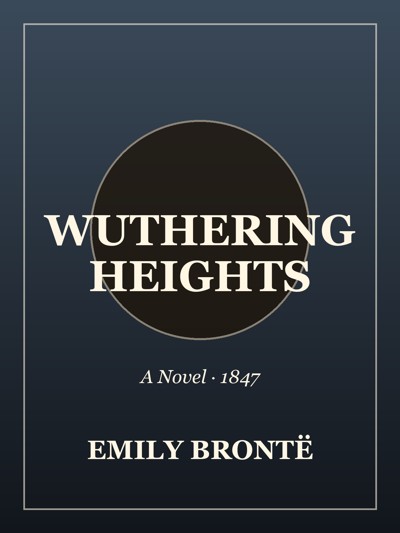
Wuthering Heights was published in eighteen forty seven under the name Ellis Bell. The real author was Emily Brontë, who lived at the parsonage in Haworth, in the hills of Yorkshire, where her father was the clergyman. Her sisters Charlotte and Anne also wrote, and they too used male pen names.
It was Emily’s only novel, and she died the following year, at thirty. Reviewers at the time were baffled. One called it wild, confused and improbable, and others objected to its savage, selfish characters, though some noticed a rugged power. After her death, Charlotte edited a new edition, and the book slowly became a classic.
The book’s strangeness comes partly from where it was written. Haworth is a stone village on the edge of the moors, with a churchyard beside the parsonage, and the family lived with illness and death all around them. You can feel that bleak, windy landscape on every page.
Many readers visit Haworth and the moorland farm ruins that are often linked to the story, such as Top Withens, although Brontë never says which places she had in mind.
Two Houses
The title is the name of a farmhouse high on the moor. Lockwood explains early on that wuthering is a local word for the roaring weather that batters the place in storms. Everything leans away from the wind: the stunted firs, the bent thorn trees, even the house, which has narrow windows and strong stone corners.
Over the door are carved the date fifteen hundred and the name Hareton Earnshaw. Down in the sheltered valley is Thrushcross Grange, a refined house with a park, carpets and servants. The whole book is a tug of war between those two houses: wild and tame, hard and soft, the moor and the garden, and the two families who live in them.
Brontë gives us only a few miles of country, and she uses it brilliantly. The moor between the houses is a character of its own, with its bogs, crags and a cave that children call the fairy cave. Characters walk or ride between the houses constantly, and every journey matters, because crossing from one to the other usually means crossing a line of class, comfort and danger.
Lockwood and the Ghost
The story opens in eighteen oh one. A gentleman called Lockwood, tired of society, rents the Grange and calls on his landlord, Heathcliff, a dark, silent man who lives at the Heights with a surly old servant, Joseph, a rude young man, and a sharp-tongued young woman. A snowstorm traps Lockwood for the night.
In a box-like oak bed he finds the names Catherine Earnshaw, Catherine Heathcliff and Catherine Linton scratched on the ledge, and he reads a child’s diary about the cruelty of her brother Hindley.
Then he dreams of a small cold hand at the window, and a voice sobbing that it has been lost on the moor for twenty years. Heathcliff bursts in, and then Lockwood sees him wrench open the window, weeping and begging Cathy to come in.
Notice what Brontë does here. She starts with a ghost story, and she lets the narrator, a vain city man, misread everything. It makes the reader curious to learn who Catherine was, and why this rough landlord weeps over a window. The book then spends a long stretch of evenings answering that question, with Nelly telling the story in chunks while Lockwood recovers in bed.
Nelly Begins
Back at the Grange, ill with a cold, Lockwood asks his housekeeper, Nelly Dean, to explain. She grew up at the Heights, and she starts with a harvest morning when old Mr Earnshaw set off on foot for Liverpool, sixty miles away, asking his children what he should bring back.
Hindley, his son, asked for a fiddle, and his daughter Catherine, not yet six, for a whip. Three days later he returned, exhausted, carrying a dirty, ragged, black-haired child he had found starving in the street. He had asked around, but nobody claimed him. Mrs Earnshaw wanted the child thrown out, yet the master insisted he be raised as one of the family.
This is also where we meet the book’s most debated voice. Nelly Dean is warm, sensible and nosy, and she has a stake in everything she describes. She tells us she disliked Heathcliff at first, pinched him, and was sent out of the house for putting him on the landing. Keep that in mind: every judgment she makes comes from someone who was there, and who was not neutral.
A Child Named Heathcliff
The household named him Heathcliff, after a son who had died, and the name served as both first name and surname. Hindley’s fiddle had been crushed in the master’s coat and Catherine’s whip was lost, so both children resented the newcomer. But Catherine soon took to him, and the two became inseparable.
Old Earnshaw doted on the silent, patient boy, to the fury of his own son, and when Hindley tormented Heathcliff the old man would shake his stick in rage. After Mrs Earnshaw died, Hindley was sent away to college, and the master’s health failed. The servant Joseph whispered one story after another against the children, and Catherine made her father’s last years harder by teasing him, then softened as he died.
I find the early chapters oddly tender. Heathcliff, who will become a terrifying figure, is first a silent child who takes beatings without crying and nurses a fever without complaint. Catherine is the first person to treat him as a friend, and their world of play on the moors is the one place where he is truly free. Everything later is shaped by losing it.
Wild Children
Old Earnshaw died quietly in his chair one October evening, with Catherine singing to him and Heathcliff on the floor at her feet. The happy years ended with him. Hindley came home for the funeral with a wife, Frances, took over as master, and demoted Heathcliff from companion to servant, sending him to work in the fields.
Catherine and Heathcliff took to the moors for whole days. One Sunday night they crept down to Thrushcross Grange to spy on the Lintons in their glowing drawing room. A bulldog seized Catherine’s ankle. The Lintons recognised her and carried her inside, but they threw Heathcliff out, and Mr Linton called him a little Lascar, or an American or Spanish castaway.
The scene at the Grange window is one of the book’s best. The two children look into a gleaming room and see the Lintons quarrelling over a lapdog, and Heathcliff scorns them. Yet when Catherine is taken in and cared for, and he is thrown out into the dark, he learns exactly what the difference between them is worth. It is a lesson in class that he never forgets.
The Grange Changes Her
Catherine stayed at the Grange for five weeks. At Christmas she came home dressed like a lady, with ringlets and silk, and she laughed at how dirty Heathcliff looked. He was humiliated. The next day, Edgar Linton made an innocent remark about Heathcliff’s long hair, and Heathcliff threw a tureen of hot apple sauce in his face.
Hindley locked him in the garret. That night Heathcliff told Nelly that he was working out how to repay Hindley, however long it took, and that God would not have the satisfaction, but he would. It is the first time we see the child turning into the man he will become, and it is chilling. By now Catherine has been shown what money and manners can buy.
Catherine returns divided. She is genuinely fond of the Lintons, but she also loves the freedom of the moors and the boy who shares it. She learns to behave one way at the Grange and another at the Heights. Nelly says she lived a double character without quite meaning to deceive anyone, and that doubleness is the crack that eventually splits her in two.
Catherine’s Choice
The turning point comes in the kitchen. Hindley’s wife Frances has died of consumption after giving birth to a son, Hareton, and Hindley has collapsed into drink and violence. Catherine, now grown, tells Nelly that Edgar Linton has asked her to marry him, and that she has said yes.
Her reasons are shallow: he is handsome, young and rich. But then she says her heart tells her she is wrong. She says Heathcliff is more herself than she is, that their souls are the same, and that her love for Edgar is like the leaves in the woods, while her love for Heathcliff is the rock beneath. She also says it would degrade her to marry him now.
This speech is the emotional centre of the book. It is also deeply flawed. Catherine is partly right, in that she and Heathcliff are alike, and partly selfish, because she thinks she can marry Edgar and use his money to lift Heathcliff up. Nelly sees the problem at once, and she says it is the worst reason of all. I think Nelly is correct.
The Storm and the Marriage
Heathcliff, sitting behind the settle, hears the part about degrading her and quietly leaves. Catherine never knows. That night a thunderstorm breaks, and she sits out in the rain, calling for him until she is soaked, then falls into a fever. Heathcliff is gone, and nobody knows where.
At the Grange, Mr and Mrs Linton catch her fever and die. Three years after her father’s death, Catherine marries Edgar, and Nelly goes with her to the Grange, leaving little Hareton behind. For a while, Nelly says, the couple are happy, although Catherine has moods of silence that Edgar never understands. He treats her gently, afraid of upsetting her, and she rewards him with sunshine. It is the calm before the real storm.
Notice how the weather matches the moment. The storm cracks a tree against the house, and Catherine sits in it, drenched, while Joseph prays. Brontë keeps using the same trick: Catherine’s inner storm is mirrored outside. This is also the first of her serious illnesses, which will always arrive when she is denied what she wants, and which Edgar will learn to dread.
Heathcliff Returns
Then, one September evening, a tall, dark, well-dressed man appears at the Grange door. It is Heathcliff, back after three years, with money from no one knows where and the bearing of a soldier. Catherine flies to him, wild with joy, and Edgar goes pale with annoyance.
Heathcliff settles at the Heights as Hindley’s lodger. He gambles with Hindley, lends him money and slowly takes over his life. He also visits the Grange. Edgar’s sister Isabella, eighteen, falls for him. Catherine warns her that he is a pitiless, wolfish man, but Isabella will not listen, and Heathcliff, asking whether she is her brother’s heir, sees a chance for revenge. He tells Catherine he cares nothing for the girl, then secretly embraces her.
Part of Heathcliff’s mystery is that nobody learns where he went. Nelly guesses that he may have been a soldier, or that he made money in any number of ways, but the book never says. His transformation is as strange as his arrival: a ragged boy becomes a gentleman with money and a calm, dangerous manner. He is no longer fighting for acceptance. He is fighting for payback.
The Quarrel
Heathcliff kisses Isabella in the garden, and when Catherine confronts him, he tells her she has treated him infernally. Edgar overhears and orders him out. Catherine locks the door, throws the key into the fire, and Edgar strikes Heathcliff on the throat. Heathcliff smashes the lock and escapes.
Edgar then demands that Catherine choose between them. She storms off, locks herself in her room, and refuses to eat. By the third night she is delirious, tearing feathers from her pillow and failing to recognise her own face in the mirror. She cries that she wants to be on the moor again. That same night, Heathcliff elopes with Isabella, and Edgar disowns her.
This sequence shows Brontë at her most dramatic. Edgar, generally mild, finally acts, and Catherine, trapped between husband and friend, reacts by punishing everybody, herself included. She uses illness as a weapon, and it works for a moment, but then it gets out of her control.
Nelly, who reports it all, admits she did not take the danger seriously enough, and she carries that guilt. It is a good example of why you should read her carefully: she tells you what she did, and what she wishes she had done.
Catherine’s Death
Heathcliff and Isabella marry, and the news reaches the Grange in a cold little note. Edgar refuses to reply, and Catherine slowly recovers from her brain fever. She is changed, pale and dreamy, with a gaze fixed far away. Nelly describes her as beautiful in a way that felt unearthly, like someone already half gone.
Then Isabella writes to Nelly from the Heights. She asks whether Heathcliff is a man or a devil, describes a house of dust and hatred, and shows how Hindley keeps a pistol with a knife attached to threaten Heathcliff. Heathcliff, meanwhile, corners Nelly and forces her to promise to arrange a meeting with Catherine. She does, on a Sunday, when Edgar is at church.
Heathcliff walks into the room and the two embrace for minutes. They accuse each other of breaking each other’s hearts. Catherine says he has killed her and thrived on it, and he answers that she destroyed them both by marrying Edgar, yet he forgives her. When Edgar returns, Heathcliff places her unconscious body in his arms and leaves.
At midnight, Catherine gives birth to a daughter, seven months along, and two hours later she dies without waking. Heathcliff, standing under an ash tree in the garden, already knows. He prays that she will not rest while he lives, and beats his head against the trunk until it bleeds.
The Revenge
After Catherine’s death, the book shifts gear. Isabella escapes from the Heights in a snowstorm, after Hindley and Heathcliff fight, and flees to the south of England, where she gives birth to a son and names him Linton. She never returns. Edgar, grieving, retreats to his park and his daughter.
Hindley, left alone, drinks and gambles himself to death within months, at twenty-seven. Heathcliff, who had already bought up his debts, now owns the Heights outright. He hangs on to Hareton, who should have inherited it, and tells the child he is his now, and that we will see whether one tree can grow as crooked as another.
For the next dozen years Hareton is kept ignorant. He is never taught to read, and Heathcliff delights in his coarseness, saying the boy will be the opposite of everything his father wanted. It is the cruelest part of the revenge, because Hareton is a gentle child at heart. Joseph helps by flattering the boy’s pride in the family name.
Meanwhile, Heathcliff has become a hard landlord, and he sits alone with Catherine’s memory. Nelly says the villagers feared him. The house is cleaner, but joyless. And he waits, with patience, for the next thing he wants, which is the Grange.
The Next Generation
At the Grange, Edgar raises little Cathy in a bubble. Nelly calls those the happiest years of her life. Cathy is sweet, lively, a bit spoiled, and forbidden to leave the park. Then, at thirteen, while her father is away, she rides to Penistone Crags, meets Hareton at the Heights, and is horrified to learn he is her cousin.
Edgar returns with Linton Heathcliff, aged about twelve, after Isabella dies. Within a day, Joseph appears to demand the boy for Heathcliff. Edgar must obey. Linton, pale and peevish, is carried off to the Heights, and Cathy is told he has gone away. Heathcliff greets his son with disgust, calling him a puling chicken.
Three years pass. At sixteen Cathy wanders onto the moor on her birthday and runs into Heathcliff, who invites her in to see Linton. She is thrilled. Nelly objects, but Cathy writes love letters back and forth with her cousin until Nelly discovers and burns them. Heathcliff uses this to lure her back, claiming Linton is dying of love.
Cathy begins secret visits to the Heights. She finds a sulky, selfish invalid, and she tries to be kind. She also meets Hareton again and laughs when he can only spell his own name. Nelly scolds her. When Edgar finds out, he forbids further visits, but Heathcliff has already begun to tighten his trap.
The Trap
As Edgar weakens, Heathcliff speeds up. Linton begs Cathy to meet him on the moor, and she goes with Nelly, only to find him terrified. Heathcliff appears, lures both women to the house, and locks them in. Linton admits his father has threatened him, and says they are to be married in the morning.
Cathy fights back. She tries to snatch the key, bites Heathcliff’s hand, and gets beaten for it. Finally she agrees to the marriage, if only he will let her see her dying father. Heathcliff refuses to release her. Nelly is shut in another room and kept there for five days with only Hareton bringing food.
When Nelly is let out, she hurries to the Grange. Edgar is dying, and Cathy escapes with Linton’s help in the night and reaches him just in time. He dies within hours, peacefully, with her beside him, whispering that he is going to her mother.
Edgar had planned to change his will so that Cathy’s fortune would be held in trust, out of Heathcliff’s reach, but the lawyer, Mr Green, had been bought by Heathcliff and delayed. By the time he arrives, Edgar has died, and the will is never changed.
Heathcliff Wins
Heathcliff now takes Cathy back to the Heights, where she must nurse Linton, who dies within weeks. Linton had been forced to leave everything to his father. And since Cathy’s property passes to her husband, all of it passes to Heathcliff. He now owns Wuthering Heights and Thrushcross Grange, and he can do as he likes.
Cathy is penniless, and he treats her with contempt. Hareton and Joseph are given the same treatment. Heathcliff lets the Grange to a tenant, who is Lockwood, and Nelly is kept away from Cathy. Zillah, the new housekeeper, shows her scorn. For the first time Cathy feels the cold that Heathcliff once did.
During all this, Heathcliff tells Nelly something shocking. The day before Edgar’s funeral, while the sexton was digging the grave, he made the man take the earth off Catherine’s coffin, and he opened the lid. He looked at her face, which was still hers. He had one side of the coffin taken away, and he made a deal that his own coffin would be opened the same way.
He says he has not had a good night since she died, and he has felt her presence everywhere, but never in a way he can touch. Since the grave, he feels calmer. It is the creepiest scene in the book, and it ties Heathcliff’s cruelty to his grief. He has not moved on, and he never will.
Cathy and Hareton
Back in the present of the book, winter turns to spring and the story catches up with Lockwood, who has left for London. When he returns that September, he finds a changed household. In the garden he sees Cathy tutoring Hareton, correcting his reading with a smack on the cheek and a kiss when he gets it right.
Nelly explains how it happened. Heathcliff had grown quieter. Cathy, lonely and bored, kept needling Hareton about his ignorance, and he threw his books on the fire in a rage. But after an accident confined him to the kitchen, they were thrown together. One Easter Monday she apologised, kissed his cheek and gave him a book.
From then on they were friends. They planted flowers where Joseph’s currant bushes had been, and Joseph raged. Hareton learned quickly. He was clever and proud, and her praise made him blossom. Nelly says there will not be a happier woman in England on their wedding day, and I believe her.
My favourite moments come back to back. At breakfast Heathcliff seizes Cathy by the hair, then looks into her face and lets go. That evening he finds the two of them reading together, sees Catherine’s eyes in both faces, and cannot bring himself to hurt either. It is the first time his cruelty fails, and the second generation takes over the story.
Heathcliff’s End and the Last Page
Heathcliff tells Nelly something that is hard to forget. He has everything he planned, he says, and yet he cannot be bothered to pull either house down. He is not repenting. He is simply tired, and there is only one wish left. He stops eating. He wanders at night. He stares at a point in the air and smiles.
On the last morning she finds him lying in the panelled bed, the window open, rain on his face, eyes wide. He had arranged to be buried beside Catherine, and the sexton obeys. No minister comes. Joseph is delighted, thanking God that the rightful master has been restored. Hareton weeps and covers the grave with turf.
Lockwood, hearing the end of the story, slips out through the kitchen as Cathy and Hareton return from a walk, leaving a coin for Joseph. They will marry on New Year’s Day and move to the Grange. Walking home, he visits the three graves on the slope by the moor. He watches moths among the heather and harebells, hears the soft wind, and wonders how anyone could imagine unquiet sleep there.
That is the story. Nelly says the dead are at peace, but the villagers say they walk. A shepherd boy cries that he cannot pass Heathcliff and a woman under the Nab. Brontë leaves both readings open. For me, the point is that the living, Cathy and Hareton, are finally free to love without the shadow of the dead.
The Cast and Family Trees
Let’s reset the cast. The Earnshaws are Mr Earnshaw and his wife, then Hindley and Catherine, and Hindley’s son Hareton. The Lintons are Mr and Mrs Linton, then Edgar and Isabella. Heathcliff belongs to neither house. He is brought into one, marries into the other, and finally takes both.
The next generation ties the trees together. Catherine and Edgar’s daughter is Cathy, and Isabella and Heathcliff’s son is Linton Heathcliff. Cathy marries Linton, her first cousin, and after he dies she is set to marry Hareton, her other first cousin. By the end the Earnshaw and Linton lines are merged, and Heathcliff’s line is gone.
The names help. Catherine Earnshaw becomes Catherine Linton, her daughter Catherine Linton becomes Catherine Heathcliff, and is about to become Catherine Earnshaw, so the three names scratched on the ledge become the path she follows. I find that symmetry thrilling, and it explains why the story needs two generations to complete itself.
Add the supporting cast. Nelly Dean, the housekeeper and narrator. Joseph, the preaching servant. Zillah, the later housekeeper. Kenneth, the doctor. Mr Green, the corrupt lawyer. Frances, Hindley’s short-lived wife. If you remember about ten names, the book opens up.
Is Heathcliff Black
Now the question that dominates the modern conversation: is Heathcliff Black? The honest answer is that the text never says. Lockwood calls him a dark-skinned gypsy. Mr Linton guesses at a Lascar, or an American or Spanish castaway. Nelly jokes about the Emperor of China and an Indian queen. Heathcliff himself wishes for fair skin.
Brontë found him in Liverpool, one of the great slave ports of the time. That detail invites readers to think of the slave trade, but it does not prove it. Scholars have read him as Romani, Irish, of African or Asian descent, or a dark English child. Terry Eagleton reads him as an Irish famine orphan, and Caryl Phillips has imagined his missing years.
What the book does show is how others treat him. He is insulted, reduced to a gypsy or a beast, and shut out of inheritance because he has no name or parents. He later wins by owning property. That is why the casting question matters. The twenty eleven film cast a Black actor, while the twenty twenty-six film chose a white actor, and viewers disagree about what that means.
My own view is that the ambiguity is deliberate. Heathcliff is the stranger whom everyone sees as other. Reading him as Black, Romani or Irish all add layers, and the text allows each. The one thing it does not allow is a simple, comfortable answer, and I think Brontë would like that.
Themes, Symbols and Craft
The big theme is the cycle of cruelty. Heathcliff is abused as a child, and he abuses Hareton and Linton. Hindley is bitter, and he damages his son. Catherine is spoiled and pulled between two worlds. Each generation hurts the next, until Cathy and Hareton break the pattern with education and kindness. That is the book’s real hope.
Class is the second theme. Catherine marries for status. Heathcliff returns rich to buy his revenge. Hareton is reduced to servant. Money, land and inheritance control who can love whom, and Brontë shows how marriage is a business deal as much as a romance. The book is deeply aware of English property law.
The symbols are windows, weather and names. Windows separate the living from the dead and the inside from the outside. Storms and snow mark every crisis. Names are inherited, shared and fought over, and one tiny detail, Hareton learning to read his name over the door, carries enormous weight.
As for craft, the double narration is the key. Lockwood and Nelly filter every event, and each has blind spots. Brontë also uses mirrored pairs, two houses, two generations, two Catherines, to give the story a shape. It looks wild, but it is carefully built, and I think that is why it lasts.
Meaning and Adaptations
So what is Brontë saying? To me, she is saying that passion without kindness destroys, that cruelty is learned and passed on, and that the wild, natural world will outlast human rules. She neither condemns Heathcliff nor excuses him. And she gives the last word to the survivors rather than the lovers.
The book has been adapted many times. William Wyler’s nineteen thirty nine film, with Laurence Olivier and Merle Oberon, cuts the second generation and adds a scene of the ghosts walking in the snow. Peter Kosminsky’s nineteen ninety two version keeps the second generation, with Juliette Binoche playing both Catherines and Ralph Fiennes as Heathcliff.
Andrea Arnold’s twenty eleven film cast Black actors as Heathcliff and focused on the moor and the childhood years. Emerald Fennell’s twenty twenty-six film, with Margot Robbie and Jacob Elordi, reimagines the story, adds an explicit affair and stops at Catherine’s death. It was released in February and earned roughly two hundred and forty million dollars, as of October twenty twenty-six.
And Kate Bush’s song Wuthering Heights reached number one in the UK in nineteen seventy eight, bringing the novel to a whole new audience. More than a century after Brontë, people were still singing Cathy’s name at the window, and that tells you how deeply the story has entered our culture.
What To Read Next
If you loved Wuthering Heights, try Jane Eyre by Charlotte Brontë, from the same year, more hopeful and more romantic. The Tenant of Wildfell Hall by Anne Brontë faces an abusive marriage with striking courage. Rebecca by Daphne du Maurier is a brooding gothic with a haunting house.
And The Lost Child by Caryl Phillips is a twenty fifteen novel inspired by Wuthering Heights. Between them, these four books give you a love of gloomy houses, tough heroines and strange weather.
Your Turn
Some questions to chew on. Is Heathcliff a villain, a victim, or both? Why does Catherine choose Edgar, and was it really a free choice? Are Nelly and Lockwood reliable? What is the second generation for? And how do you read the ending: ghosts, or peace? Tell me in the comments, because I read every one.
That is the complete guide to Wuthering Heights. Thank you for sticking with me. If this helped, please like and subscribe, and links to the book are in the description. I’m Hailey, and I will see you in the next one.