Fair Warning
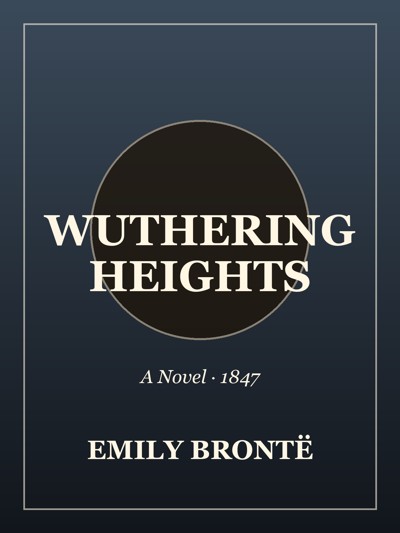
Today is the Wuthering Heights ending explained, with Heathcliff and Catherine at the center, from the night they are torn apart to the very last page.
Fair warning: this video is full of spoilers, including every important death. If you have not finished Emily Brontë’s novel, pause here and come back later. The short answer is that Heathcliff dies, but not because anyone defeats him, and the second half of the book exists to heal the first.
The Frame
Quick reset. The book opens in eighteen oh one, when a gentleman called Lockwood rents Thrushcross Grange and visits his landlord, Heathcliff, at Wuthering Heights. It is a grim, hostile household, and a snowstorm traps Lockwood there for the night.
He sleeps in an old oak bed, finds the name Catherine scratched all over the window ledge, and has a nightmare of a child’s ghost begging to be let in. He then watches Heathcliff sob at that same window. Back at the Grange, he asks his housekeeper, Nelly Dean, to tell him the story.
Two Children on the Moors
Nelly’s story starts years earlier. Old Mr Earnshaw walks to Liverpool and comes home with a dark, ragged orphan, who is named Heathcliff after a son who died. Earnshaw’s own son Hindley hates the newcomer. His daughter Catherine adores him, and the two run wild on the moors.
When old Earnshaw dies, Hindley takes charge and turns Heathcliff into a farm labourer. Then Catherine is bitten by a dog at Thrushcross Grange and spends five weeks being nursed there. She comes home dressed like a lady, and she starts to drift toward the gentle, wealthy Edgar Linton.
The Choice
This is the hinge of the whole book. Catherine tells Nelly that she has accepted Edgar, because he is handsome and rich and will make her the greatest woman in the neighbourhood. Then she says that being his wife feels as wrong as being in heaven. Her famous line is that Heathcliff is more herself than she is.
But she also says it would degrade her to marry Heathcliff now. He hears only that part, and he leaves that night. He is gone for three years. Catherine marries Edgar, and when Heathcliff returns, rich and polished, the trap is set.
Catherine’s Death
Heathcliff takes rooms at the Heights and strips Hindley of everything at cards. He also elopes with Edgar’s sister Isabella, not for love but to hurt Edgar and to get a hold on the Linton fortune. Edgar finally demands that Catherine choose between them, and she locks herself in her room, starves, and falls into delirium.
Heathcliff forces one last meeting, a violent embrace. That same night Catherine gives birth to a daughter, also named Catherine, and dies two hours later. Heathcliff begs her ghost to haunt him for as long as he lives, and she does.
The Revenge
Heathcliff spends the next eighteen years collecting what he feels he is owed. Hindley drinks himself to death at twenty-seven, and Heathcliff already holds the mortgage on every acre, so Wuthering Heights becomes his. Hindley’s son Hareton, who should inherit it, grows up a servant who cannot read.
Isabella escapes to the south and has a son, Linton. When she dies, Heathcliff claims the boy, a weak, selfish, sickly child he despises. But Linton is also a tool. If he marries Edgar’s daughter and outlives Edgar, the Grange will pass through him to Heathcliff.
The Second Generation
Young Cathy grows up sheltered at the Grange, then slips away to the Heights, where she meets Hareton and the sickly Linton. She is kind to Linton and cruel to Hareton. When Edgar falls ill, Heathcliff tricks her into visiting, locks her up with Nelly, and forces her to marry Linton.
Edgar dies within days. Then Linton dies as well, and his will leaves everything to his father. Heathcliff now owns the Grange and the Heights, and the girl who should have owned both is a penniless widow living in his house.
Why Two Generations
So why does Emily Brontë keep going? Because the first half is a tragedy of two people who cannot have each other, and the second half asks whether the damage can be undone. One way to read it is as a repeat of the same story with a different answer.
The pattern is the same: a girl of the Grange, a rough boy of the Heights, cruelty, snobbery and a house that locks people in. This time the girl learns to read with the boy instead of laughing at him. Catherine chose status over Heathcliff. Cathy chooses Hareton, and kindness gets a chance. That is my reading, not an official one.
Cathy and Hareton
The change begins in the humblest way. Cathy, bored and miserable at the Heights, keeps mocking Hareton’s reading, and in a rage he throws his books on the fire. Later she apologises, kisses his cheek, and gives him a book wrapped in paper. He accepts it, and she starts teaching him.
Nelly, who watches all of this, calls their union the crown of all her wishes. By the time Lockwood returns in the autumn of eighteen oh two, Hareton is a gentle, reading young man, and Cathy is correcting his mistakes with slaps and kisses.
Heathcliff Gives Up
The strangest moment in the book is when Heathcliff’s revenge simply stops working. He tells Nelly that he holds every lever he needs to destroy the two houses, and yet he cannot be bothered to pull any of them. He can no longer enjoy their destruction.
Two things do it. Hareton and Cathy both have Catherine’s eyes, and every glance at them reopens the wound. And he wants only one thing now. He stops eating. He talks to something nobody else can see. He walks the moors at night. The revenge was never the point. Catherine was.
How Heathcliff Dies
Nelly finds him in the old panelled bed, with the window swinging open and the rain pouring in. He is dead, his eyes wide, and what looks like a smile on his face. He had told her exactly how he wished to be buried, and he had arranged with the sexton that the sides of his coffin and Catherine’s would be taken away.
Nobody can say what killed him. Joseph, the servant, is delighted. Hareton, the man Heathcliff wronged most, is the only one who weeps, and he lays the turf on the grave himself.
The Last Page
The ending is deliberately open. Nelly says the locals swear Heathcliff walks the moors with a woman. A shepherd boy is too frightened to pass the two of them. Joseph says he has seen two figures at the chamber window on rainy nights. Nelly insists the dead are at peace. Lockwood is not sure.
Cathy and Hareton will marry on New Year’s Day and move to the Grange, leaving Wuthering Heights to Joseph. Lockwood visits the three graves, Edgar’s soft with moss, Heathcliff’s still bare, and wonders how anyone could imagine unquiet sleep for the sleepers in that quiet earth.
Is Heathcliff Redeemed
So is Heathcliff redeemed? I would say no, and I do not think Brontë wants us to say yes. He stops his revenge because he loses interest, not because he repents, and he refuses a minister. What he gets is something stranger: the end of his exile from Catherine, on his own terms.
That is what makes the ending so powerful and so uneasy. The book lets us understand him completely and forgive him not at all. It also leaves us with the living, Cathy and Hareton, as proof that the cruelty did not have to win.
The Name Game
One detail ties the whole book together. On the window ledge in Lockwood’s first night, the name is scratched in three versions: Catherine Earnshaw, Catherine Heathcliff, and Catherine Linton. It reads like a girl trying on her possible futures, and the book pays it off twice.
The first Catherine becomes a Linton. Her daughter becomes a Linton, then a Heathcliff, and by the last chapter she is about to become an Earnshaw. The name that began carved over the door, Hareton Earnshaw, comes back to the house, and the circle closes.
Can You Trust Nelly
A fair question about this ending is whether we can trust the woman telling it. Nelly Dean admits she mistreated Heathcliff as a child, carried tales, and withheld facts. She also arranges the secret meeting between Heathcliff and the dying Catherine, and then spends much of the story judging people she helped to ruin.
So when she says the dead are at peace, she may be reassuring herself. Lockwood, who is not very observant either, seems half persuaded. Brontë gives us two unreliable narrators and lets us fill in the rest, which is exactly why the ending keeps its power.
What It All Means
Is it a happy ending? Partly. The living are rescued: Hareton gets his house back, Cathy gets a husband who loves her, and the cycle of abuse ends. But the dead lovers are not obviously saved. Brontë never tells us whether Heathcliff and Catherine are together, haunting, or simply gone.
My take is that she wants both. Nelly, the practical narrator, says rest. The superstitious servants say ghosts. Lockwood stands between them, and so do we. That open door is why people are still arguing about this ending nearly two hundred years later.
Your Turn
What do you think happened to Heathcliff and Catherine at the end? Are they ghosts on the moor, or is Nelly right and they are finally at rest? Tell me in the comments, because I read every one.
If this helped, a like and a subscribe would mean a lot. Next up is the book against the new twenty twenty-six film, every difference, so keep an eye out. Thanks for watching, and I’ll see you in the next one.