The Short Answer
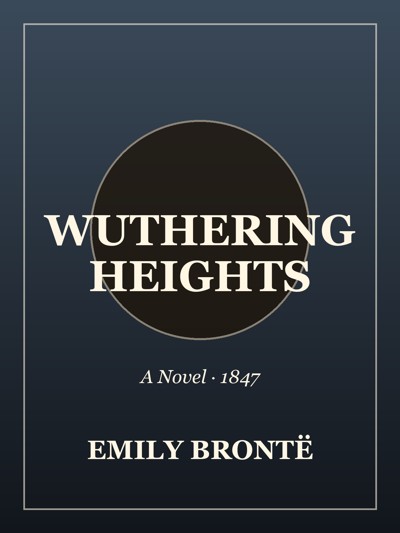
Today I’m explaining the Wuthering Heights characters: who is who, the Earnshaw and Linton family trees, and one question people keep asking, is Heathcliff Black?
Spoiler level: I will mention what happens to each character, so this video has book spoilers. And here is the honest answer on Heathcliff. The text never says. It calls him a dark-skinned gypsy, it hints at other origins, and it leaves his parentage a blank on purpose.
Heathcliff
Let’s start with the man himself. Heathcliff is a child picked up by Mr Earnshaw on the streets of Liverpool, starving and speaking what the family hears as gibberish. He is brought home, named after a son who died, and the name serves as both his first name and his surname.
He grows from abused outsider to wealthy, vengeful master of Wuthering Heights. Nelly calls him a cuckoo. Catherine calls him a wolfish man. Isabella asks whether he is a man or a devil. Brontë wants us to feel his pain and fear his cruelty, both at once.
What the Text Says
So what does the book actually say about how he looks and where he is from? Lockwood describes him on page one as a dark-skinned gypsy in aspect, but a gentleman in dress and manners. Mr Earnshaw calls him a child so dark he might have come from the devil. Hindley calls him a gypsy and an imp.
Mr Linton, seeing him as a boy, guesses he might be a little Lascar, or an American or Spanish castaway. Nelly, trying to comfort him, jokes that his father might have been the Emperor of China and his mother an Indian queen, kidnapped by wicked sailors. And his own wish is for light hair and fair skin.
Is Heathcliff Black
Now the direct answer. The novel never says Heathcliff is Black. It says dark skin, black hair, dark eyes, and it uses the word gypsy, which meant a Romani traveller or simply an outsider. It never gives his race, his birthplace or his parents, and no character in the book knows them.
One line shows how unsure everyone is. Heathcliff tells his sickly son, with a sneer, that at least he does not have white blood, a line readers have argued over for generations. So the honest answer is that he is racially ambiguous, and he is treated by everyone around him as a racial outsider.
Why Readers Argue
Why does this debate matter? Because of where he is found. At the time of the story, Liverpool was one of Britain’s biggest slave trading ports, full of ships and sailors from across the world. Putting a nameless dark child on its streets invites readers to think about empire, the slave trade, and who counts as English.
Critics have read him in different ways. Terry Eagleton argues he resembles an Irish famine orphan. Novelist Caryl Phillips reads him as possibly a child of the slave trade. Others say Brontë deliberately left the gap. My view is that the gap is the point, and that the question is real, even though the text will not close it.
Catherine Earnshaw
Catherine Earnshaw is the heart of the book. She is wild, beautiful, selfish, passionate, and unable to choose. She loves Heathcliff, she says she is Heathcliff, and she marries Edgar Linton for status and security. That choice destroys all three of them.
She is not simply a victim or a villain. She wants everything: the moor, the comfort, the love, the respect. When she cannot have it, she makes herself ill. She dies young, hours after giving birth, leaving a daughter who inherits her name, her eyes, and her chance to do better. Nelly never quite forgives her, and neither, in some ways, does the book.
The Earnshaw Family Tree
Now the Earnshaw tree. At the top is Mr Earnshaw, the old master, and his wife. They have two children, Hindley and Catherine, and they take in Heathcliff as a third. Hindley marries Frances, who dies of consumption soon after giving birth to their son, Hareton.
Hindley then drinks himself to death, and Heathcliff takes over the house. So the Earnshaw line, carved into the stone over the door, ends up with Hareton, who is raised as a servant by the man who ruined his father. By the last chapter, he is the heir again.
The Linton Family Tree
The Linton tree is simpler. Mr and Mrs Linton own Thrushcross Grange, and they have two children, Edgar and Isabella. Edgar marries Catherine Earnshaw, and they have one daughter, Catherine Linton, always called Cathy to tell her apart from her mother.
Isabella elopes with Heathcliff and has a son, Linton Heathcliff. So the families are joined twice. Cathy and Linton are first cousins, and Cathy and Hareton are cousins as well. Brontë ties it all together so tightly that Heathcliff’s whole revenge plan runs along the branches of the tree.
Hindley
Hindley Earnshaw is Catherine’s older brother, and the book’s first bully. His father favours the orphan over him, so he grows up bitter, and when he becomes master he repays every slight by turning Heathcliff into a farm hand and forbidding him the lessons Catherine receives.
Then his wife Frances dies, and he collapses into drink and gambling. In one terrifying scene, drunk and raving, he holds his own small son over the banister, the child slips, and Heathcliff, standing below, catches him. Hindley dies at twenty-seven, and the reader may pity him as much as hate him.
Edgar and Isabella
Edgar Linton is gentle, rich, conventional and kind. Heathcliff sneers at him as a milk-blooded coward, and Catherine mocks him as a timid leveret, but he loves his wife and his daughter and holds his ground. Nelly stands by him. Edgar spends his last years grieving, and dies at peace, with his daughter beside him.
Isabella is his younger sister. She is sheltered and impulsive and falls for Heathcliff’s dark, brooding looks, ignoring every warning. She pays dearly for it. After the marriage she writes to Nelly, asking if he is a man or a devil, and escapes to the south, where she brings up her sickly son and dies of a long illness.
The Second Generation
Cathy is the daughter of the first Catherine. She is lively and spoiled but kind. Her mistake is thinking everyone is as nice as her father. Linton Heathcliff is Isabella’s son, a whining, selfish, sickly boy whom Heathcliff uses to trap Cathy. He dies young.
Hareton Earnshaw is the true surprise. Rough, illiterate, and raised to hate, he turns out to have an honest, warm heart. By the end, he and Cathy are the book’s healing couple, and he is the only person who mourns Heathcliff. The second generation is where the book changes its mind.
Nelly Dean
Nelly Dean, or Ellen Dean, is the housekeeper who tells most of the story. She grew up with the Earnshaws, since her mother nursed Hindley, and later moves to the Grange with Catherine. She cares for Hareton and for Cathy, and she is decent, practical, opinionated and often wrong.
She is no neutral narrator. She admits she bullied Heathcliff as a child, carried tales, withheld news and set Catherine against her husband. So when she judges people, remember that she took part in their story. Brontë wants us to question her.
Lockwood
Mr Lockwood is the outer narrator, a gentleman from the city who rents Thrushcross Grange in eighteen oh one. He thinks he is perceptive and he is usually wrong. He misreads the family at Wuthering Heights, mistakes who is married to whom, and admits he once ran from a girl he liked at the seaside.
But he serves a purpose. He is an outsider, like us, who asks the questions we would ask. His dream of Catherine’s ghost opens the book, his visit to the three graves closes it, and his own last words are about the quiet sleepers.
Joseph and the Rest
A few more names to know. Joseph is the old servant, a fierce, self-righteous preacher who speaks in thick Yorkshire dialect and torments every child in the house. Zillah is the housekeeper at the Heights during the second half. Kenneth is the local doctor.
Frances is Hindley’s wife, who dies early of consumption. Robert, the Lintons’ servant, seizes Heathcliff after the family bulldog, Skulker, bites Catherine’s ankle. And there is Mr Green, the lawyer, who sells out Edgar’s will to Heathcliff. It sounds like a lot, but you really only need about ten names to follow the story.
Love or Obsession
One last question: are Heathcliff and Catherine a great love story? They are the most famous couple in English literature, but look at what the book actually shows. They never share a home, a bed, or a day of adult happiness. They hurt each other, and they hurt everyone around them.
My reading is that they are less lovers than a single soul in two bodies, which is what Catherine says, and that is why it is both beautiful and frightening. The book does not tell us to copy them. It tells us to feel them.
Your Turn
Who is your favourite character, and who do you think is the real villain? Let me know in the comments. If Hareton is your favourite, you are in good company.
If this helped, a like and a subscribe go a long way, and my full Wuthering Heights guide has the whole story. Thanks for watching, and see you next time.