The Verdict
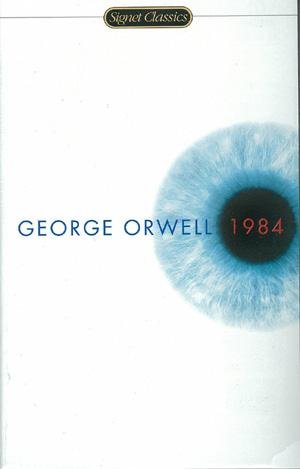
Today’s book is Nineteen Eighty-Four, by George Orwell, the book that nearly every dystopian novel since has been borrowing from.
I expected a museum piece. What I got was faster, stranger and more personal than its reputation, at least until it turns very bleak.
My verdict: read it, but go in with open eyes. It’s short, brilliant and deeply uncomfortable, and its ideas have outlived the year in its title. The middle gets lecture heavy, and nobody would call it cozy. I give it four and a half out of five, with no spoilers, not even the ending.
What It’s About
It’s April, nineteen eighty-four, or so the diary says. Winston Smith is thirty-nine, lives in London, the chief city of Airstrip One, a province of a superstate named Oceania, and works at the Ministry of Truth. His job is to rewrite old newspapers so that the past always agrees with the Party.
The book opens with the clocks striking thirteen, and a poster of a mustached face on every landing: Big Brother is watching you. In every room there’s a telescreen, a television that watches you back. So Winston buys a notebook, finds the one corner the telescreen can’t see, and starts a diary. For this, they could kill him.
The novel comes in three parts. Part one builds the world. Part two is a secret rebellion. Part three I won’t touch. It’s short for a book this famous, and the plot is simpler than you might expect, because the real story is what the world does to a person’s mind.
A Day At The Ministry
Here’s what a day looks like. Winston works in the Records Department, where old news gets corrected. If the Party predicted something wrong, someone like Winston fixes the old article, drops the original down a memory hole, and the mistake never happened.
Then, at eleven o’clock, comes the Two Minutes Hate. Everyone gathers in front of a giant screen to scream at the face of the Party’s number one enemy, Emmanuel Goldstein. It’s a gripping scene, because the hatred is contagious, and Winston feels it too.
Outside work, it isn’t any better. There are patrols, informers, and children who are trained to report their own parents. Orwell makes the machinery of control feel cheap, boring and exhausting, which is far scarier than a villain’s secret lair.
What Works
First, the world feels lived in. It isn’t only fear. It’s boiled cabbage in the hallway, Victory Gin that tastes like nitric acid, and razor blades that vanish from the shops. The dread arrives through shortages and small humiliations.
Second, the ideas are razor sharp. The Party rewrites yesterday’s news, then denies it ever said anything different. The book shows how calm and clerical that kind of lying can be, and how quickly people stop noticing.
Third, it’s more than a lecture. One tiny act, writing in a diary, carries real suspense. I was nervous for Winston from the first chapter, and that tension never fully lets go.
Newspeak And Doublethink
Let’s talk ideas, because this is where Orwell is untouchable. Newspeak is the Party’s new language, built to shrink. A friend of Winston’s works on the dictionary and is proud of it, because his team destroys words every single day.
The logic is chilling, and simple. If there’s no word for rebellion, it gets harder to even think about rebellion. Language stops being a tool for saying things, and becomes a fence around what can be thought.
Then there’s doublethink: holding two contradictory beliefs and accepting both. War is peace. Freedom is slavery. Ignorance is strength. Those slogans are on the front of the Ministry of Truth in the very first chapter, and by the end you will never forget them.
The People
Winston is the heart of the book. He isn’t a hero. He’s frail, a bit vain, with a bad ankle and a mean streak. That’s exactly why he works. He’s afraid on every page, and the fear makes his small acts of defiance feel enormous.
Julia is a young mechanic who services the novel writing machines in the Fiction Department, and in part two she changes everything. I like that she’s practical and rebellious in a different way: she wants to live now, while Winston wants to understand. I only wish she had a little more inner life.
And then there’s O’Brien, a polished member of the Inner Party whom Winston feels drawn to. I’ll leave him there, because the less you know about O’Brien going in, the better.
The Secret Rebellion
Part two is where the book turns from a warning into a love story. A secret note, a meeting in the countryside, and then a rented room above a shop with no telescreen. In this world, a private afternoon is the most radical thing you can do.
I loved how Orwell treats small pleasures. A glass paperweight, a packet of real sugar, a woman singing in the courtyard. They feel precious because the rest of the world has been drained of them.
Part two also has my favorite sequence in the whole book. During Hate Week, the Party announces that the country has always been at war with a different enemy, and an entire ministry works day and night to make every record agree. It’s funny, awful and completely believable.
Writing And Pacing
Orwell’s prose is plain and exact, almost newspaper clean, and then suddenly vivid. The opening is one of the great openings in English fiction: a cold bright day, and the clocks were striking thirteen. One small detail, and you know the world is wrong.
The pacing comes in three speeds. Part one is slow and atmospheric, a long guided tour. Part two is the fastest and the most human. Part three is the heaviest, and it’s built to be hard to take and hard to put down.
It’s also short enough that even the slow stretches pass. You could finish it over a long weekend, and I think that length is a gift. Orwell makes his point and moves on.
What Doesn’t Work
Now the honest part. First, the book inside the book. Midway through, Winston gets a banned volume of political theory, and we get a long stretch of it. The ideas are fascinating, but it’s a textbook, it stops the story cold, and plenty of readers skim it.
Second, the characters around Winston are thinner. Many of them exist to carry an idea, and some of the dialogue gets stiff when people stop to explain things. Winston’s early thoughts about women are also unpleasant, deliberately I think, but they date the book.
Third, it’s relentlessly bleak. That’s part of the point, but the ride isn’t fun. If you want comfort, look elsewhere. I mean that as a warning about what you’re in for, and not as a complaint about the writing.
Content Notes
A few content notes. There’s torture and graphic violence in part three, public executions, a hanging described with relish, and cruelty involving children. There’s sexual content, including memories that are joyless or exploitative, and the narrator’s attitude toward women is often harsh. Themes include surveillance, suicide and state violence. It isn’t gory for its own sake, but it is psychologically heavy.
Does It Hold Up
Does it hold up? Better than almost any book of its era, and not because it predicted gadgets. Yes, telescreens look a bit like the screens in our pockets, and everyone loves to point that out. But the deeper idea is about language, memory, and who controls the record.
It was published in nineteen forty-nine, written in the shadow of the war and of totalitarian states, and Orwell did much of the writing on a remote Scottish island called Jura. To me, that is why it feels like observation and not fantasy.
One caution. The word Orwellian now gets used for everything. If you only know the slogan, the book is more specific, and a lot sadder, than you think.
The Scorecard
Here are my scores. Ideas, five out of five. Worldbuilding, five. Characters, four. Pacing, three and a half. And lasting impact, five. That averages out to four and a half out of five.
The two lower scores come down to the same thing. Winston is unforgettable, but the people around him mostly serve the ideas, and the long theory stretch slows the middle.
Who It’s For
Read it if you love big ideas in a small book, if you want to know where the word Orwellian came from, or if you liked Animal Farm and want his bigger, darker book.
Skip it if you want a comfort read right now, if torture and state violence are hard lines for you, or if you need every character to be deeply developed.
If you like this one, try Brave New World by Aldous Huxley, Fahrenheit four fifty-one by Ray Bradbury, and The Handmaid’s Tale by Margaret Atwood. Each imagines a different way to lose freedom.
Where To Get It
You can find Nineteen Eighty-Four in print, ebook and audiobook, and the links are in the description. Because Orwell died in nineteen fifty, the book has been in the public domain in the UK and the EU since twenty twenty-one, so free editions exist there. In the United States it’s still under copyright, as of October twenty twenty-six.
Tell me in the comments: which slogan stuck with you most, war is peace, freedom is slavery, or ignorance is strength? Thanks for watching, and subscribe for more honest book reviews.