The Short Version
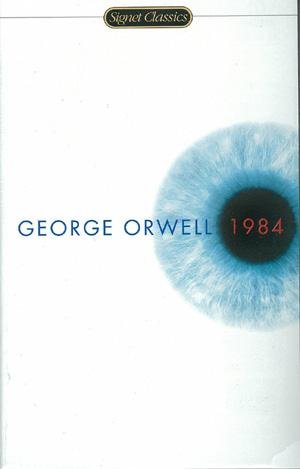
This is a full summary of George Orwell’s Nineteen Eighty-Four, chapter by chapter, with every spoiler, including the ending. Winston Smith, a small, tired worker at the Ministry of Truth, starts a secret diary and begins to doubt the Party that rules Oceania. He falls in love with Julia, a young woman from the Fiction Department, and they rent a hidden room and try to join a rebellion through a powerful Party man named O’Brien. Then the trap closes, and the last part of the book follows what the Ministry of Love does to Winston’s body and mind, all the way to Room 101.
Part One, Chapter 1: The Diary
Part One shows Winston’s world before anything happens to him. On a cold April day, Winston, who is thirty-nine, climbs to his flat in Victory Mansions past posters of a huge face with the caption BIG BROTHER IS WATCHING YOU. A telescreen in his wall watches and listens, and it can never be switched off. From his window he sees the Ministry of Truth, where he works, with the three Party slogans on its front: WAR IS PEACE, FREEDOM IS SLAVERY, IGNORANCE IS STRENGTH. Sitting in an alcove the telescreen can’t see, he opens a blank book he bought in a junk shop and starts a diary, dated April 4th, 1984. He remembers that morning’s Two Minutes Hate, when office workers screamed at the face of Emmanuel Goldstein, the Party’s great enemy. A dark-haired girl from the Fiction Department, whom he dislikes and fears, sat behind him. And for one moment he caught the eye of O’Brien, an Inner Party member, and felt that O’Brien was on his side. Looking down, Winston finds he has filled half a page with a call for Big Brother’s downfall. Then someone knocks at the door. This chapter sets up the whole book: a world of constant watching, and one man’s first crime of thought.
Part One, Chapter 2: Mrs. Parsons And The Children
The knock is only Mrs. Parsons, a neighbor, asking Winston to unblock her kitchen sink. Her husband, Tom Parsons, works with Winston at the Ministry and is a cheerful, unquestioning Party man. Their two children, dressed in the uniform of the Spies, point a toy gun at Winston, call him a traitor and a thought-criminal, and the boy hits him in the neck with a catapult. They are angry because they missed a public hanging. Back home, Winston thinks about how children are trained to report their own parents. He recalls a dream from years before, in which a voice, which he now believes was O’Brien’s, said they would one day meet in a place with no darkness. The telescreen announces a great victory, then a cut in the chocolate ration. Winston writes a greeting to the future from the age of Big Brother and doublethink, and decides that thoughtcrime already is death. He scrubs the ink off his fingers and leaves a grain of dust on the diary so he will know if it is moved. The chapter shows how even families have become tools of the Party.
Part One, Chapter 3: Doublethink
Winston dreams of his mother and baby sister sinking in deep water, looking up at him, and senses that they died so he could live. Then he dreams of the Golden Country, a sunny old pasture, where the dark-haired girl throws off her clothes in one bold gesture. The telescreen wakes him for the morning exercises, the Physical Jerks. As he bends and stretches, he tries to remember his childhood, including sheltering from an air raid in a Tube station. Officially, Oceania is at war with Eurasia and has always been, but Winston knows that only four years ago the enemy was Eastasia. If everyone accepts the Party’s lie and every record agrees, the lie becomes history. He thinks about doublethink, the trick of holding two opposite beliefs at once and then forgetting that you are doing it. He starts to recall the one time he held real proof that the Party had faked the past. Then the instructor on the telescreen shouts at him by name for not bending low enough. This chapter explains doublethink and the Party’s control of the past.
Part One, Chapter 4: Rewriting The Past
At his desk in the Records Department, Winston gets his day’s orders through a pneumatic tube. His job is to correct old copies of the Times so that Big Brother’s predictions and the Ministry of Plenty’s promises always turn out to be right. The originals go down a memory hole to be burned. He knows the numbers he changes are made up anyway. Across the hall, a man named Tillotson seems to be doing the same task. Winston’s hardest job of the day concerns Comrade Withers, a disgraced Inner Party member who has become an unperson. Winston decides to replace an old speech about Withers with a story about Comrade Ogilvy, a brave young Party member who died in battle. Ogilvy never existed, but a few lines of print and some faked photographs will make him real. Winston reflects that it is possible to invent the dead, but not the living. The chapter shows the Ministry of Truth at work and how a lie becomes a fact.
Part One, Chapter 5: Syme And Newspeak
In the crowded underground canteen, Winston eats lunch with Syme, a language expert working on the Eleventh Edition of the Newspeak Dictionary. Syme happily explains that his team destroys words every day. Why keep a word like bad when ungood does the same job? The goal of Newspeak is to narrow thought until rebellion can’t even be put into words. Winston feels sure that Syme, who is too intelligent and too outspoken, will one day be vaporized. Parsons joins them, collects money for Hate Week, and proudly tells how his seven-year-old daughter followed a stranger and handed him to the patrols. The telescreen announces that the chocolate ration has been raised to twenty grammes, a day after it was cut to that amount, and nobody seems to notice. Winston wonders if he is the only one with a memory. Then he sees the dark-haired girl at the next table watching him, and fears she is a spy. This chapter introduces Newspeak and shows how easily people swallow the Party’s contradictions.
Part One, Chapter 6: Katharine
Winston forces himself to write a memory in his diary. Three years earlier, he went with a prostitute in a poor part of London, and only when he turned up the lamp did he see that she was an old woman. Writing it down brings no relief. The memory makes him think of Katharine, his wife, from whom he parted nearly eleven years ago. She was a loyal Party member with a mind full of slogans. She treated their weekly attempts to have a child as a duty to the Party, and they separated when no child came. Winston explains how the Party works to remove pleasure from love and sex, through groups like the Junior Anti-Sex League, so that people stay tense and loyal. He longs for a real love affair, which feels impossible. This chapter shows that the Party controls private life too, and that for Winston, desire itself has become a kind of rebellion.
Part One, Chapter 7: The Photograph
Winston writes that any hope lies with the proles, the poor working people who make up most of Oceania’s population. They have the numbers to overthrow the Party, but they only riot over things like saucepans and never over things that matter. He copies a passage from a children’s history book that describes life before the Revolution, and he can’t tell how much of it is true. Then he remembers his one piece of proof. Years ago, three old Party leaders, Jones, Aaronson and Rutherford, confessed to meeting the enemy abroad and were later executed. Winston had once seen them at the Chestnut Tree Café. Around 1973, a torn page of the Times slid onto his desk with a photograph showing all three at a Party event in New York on the same day they had confessed to being in Siberia. Afraid of the telescreen, he dropped it into the memory hole. He understands how the Party rewrites the past, but not why. He ends by writing that freedom means being allowed to say that two plus two make four. This chapter gives Winston his central question, and the idea of objective truth that the Party will later attack.
Part One, Chapter 8: The Junk Shop
One April evening, Winston skips the Community Centre and wanders through the prole streets. A rocket bomb lands nearby, and he kicks a severed hand into the gutter. He goes into a pub to question an old man about life before the Revolution, but the man only remembers small things, like the price of beer and a top hat, and Winston realizes the past can’t be recovered this way. Without meaning to, he finds himself back at the junk shop where he bought the diary. The owner, Mr. Charrington, a gentle widower of sixty-three, sells him a heavy glass paperweight with a piece of pink coral inside. Upstairs, Mr. Charrington shows him a cozy old room with a big bed, an old print of a church and no telescreen, and teaches him the first lines of an old rhyme about the bells of London churches, starting with St. Clement’s. Leaving the shop, Winston sees the dark-haired girl in the street, and is sure she has followed him. Back home, terrified, he thinks of arrest, O’Brien and Big Brother’s face on a coin. The chapter introduces the paperweight, the room and Mr. Charrington, which all matter later.
Part Two, Chapter 1: The Note
Part Two is Winston’s secret rebellion. Four days after the junk shop, the dark-haired girl, her arm in a sling, falls in a Ministry corridor. As Winston helps her up, she presses a folded scrap of paper into his hand. Back at his desk, after forcing himself to wait, he reads it. It says, “I love you.” For a week he tries to speak to her in the canteen, while bad luck, a man named Wilsher and a crowded room keep getting in the way. Finally they sit at the same table and, without looking at each other, arrange to meet in Victory Square. There, hidden in a crowd watching trucks of Eurasian prisoners go by, she gives him exact directions to a place in the countryside for Sunday afternoon. Before they part, she squeezes his hand. This chapter turns the girl Winston feared into the person who will change his life.
Part Two, Chapter 2: The Golden Country
On the second of May, Winston takes the train out of London and follows her directions through bluebell woods. The girl leads him to a hidden clearing ringed by young trees, too thin to hide a microphone. She tells him her name is Julia. She tears off her Junior Anti-Sex League sash and shares real black-market chocolate. She explains that her cheerful Party loyalty is a disguise, and that she knew from his face he was against the Party. At the edge of the wood, Winston sees a field that looks almost exactly like the Golden Country from his dreams. A thrush sings to no one, and they kiss. Back in the clearing, Julia undresses with the same careless gesture as in his dream, and they make love. Winston is glad she has had many lovers, because any sign that Party members are not pure gives him hope. To him, their lovemaking is an attack on the Party. The chapter turns love and desire into political acts.
Part Two, Chapter 3: Julia
Julia handles every practical detail: routes, timings, places to meet. Through May, they can mostly only meet in crowded streets, talking in short bursts, and once in the hot belfry of a ruined church. There Winston learns more about her. Julia is twenty-six and lives in a hostel. She services the novel-writing machines in the Fiction Department, and once worked in the section that makes cheap books for the proles. She hates the Party but has no interest in its ideas. She simply wants to break the rules and stay alive. Winston tells her about Katharine and a day on a community hike when they stood alone at the edge of a quarry and he thought of pushing her over. Julia says she would have done it. Winston says they cannot win, only choose how to fail, and he says, “We are the dead.” Julia refuses to accept that. The chapter shows how differently the two of them rebel.
Part Two, Chapter 4: The Room Above The Shop
Winston rents the room above Mr. Charrington’s shop. It is dangerous, and both of them know it, but they want a place of their own. Julia arrives with Inner Party treasures: real coffee, real sugar, white bread, jam and tea. Then she paints her face with make-up and puts on scent, wanting to be a woman in this room, not a Party comrade. Outside, a prole woman sings a popular song while hanging up laundry. When Julia throws a shoe at a rat in the wainscoting, Winston goes pale. Rats are his worst horror, tied to a recurring nightmare in which something unbearable waits behind a wall of darkness. Julia promises to block the hole. She knows more lines of Mr. Charrington’s old church-bells rhyme, learned from her grandfather. Winston gazes into the glass paperweight and imagines it as a tiny world holding the room and their lives. The chapter makes the room a safe haven, while quietly planting the rats.
Part Two, Chapter 5: Hate Week Preparations
Syme disappears. His name is simply missing from a list, as if he had never existed. Meanwhile London prepares for Hate Week, with posters of a giant Eurasian soldier, a new Hate Song and more rocket bombs than ever. Parsons runs the decorations at Victory Mansions. Winston and Julia meet in the room as often as they can that June, and Winston gets healthier. He drinks less gin, gains weight, and his coughing stops. They dream of escaping, though they know they can’t. Winston tells Julia about O’Brien. Julia suspects the war itself might be fake, and that the government fires the rocket bombs to keep people afraid. But she does not remember that Oceania was at war with Eastasia only four years ago, and she doesn’t care. She is bored by Party theory and falls asleep when Winston explains it. This chapter shows that people who don’t think about the Party’s lies can stay sane by ignoring them.
Part Two, Chapter 6: O’Brien’s Signal
One day, in the Ministry corridor, O’Brien walks up beside Winston and speaks to him. He praises Winston’s Newspeak articles and mentions a friend who is an expert, whose name he has forgotten. Winston is sure he means Syme, now an unperson, so the remark itself is a small shared crime and a signal. O’Brien offers to lend Winston an advance copy of the new Tenth Edition of the Newspeak Dictionary and writes his home address on a scrap of paper, right in front of a telescreen. Winston memorizes it and destroys it later. He believes the secret conspiracy is real and that he has reached its edge. He also feels as if he has stepped into his own grave. He knows the road from thought to diary to action can only end in the Ministry of Love, and he accepts it. This chapter is the point of no return.
Part Two, Chapter 7: Winston’s Mother
Winston wakes up in tears beside Julia. A dream has brought back a buried memory. After his father vanished, his mother, his sick little sister and he lived in hunger. Winston, about ten or twelve, always demanded more food. One day, the family received a small slab of chocolate. His mother gave him most of it, but he snatched his sister’s share too and ran. When he came home, his mother and sister were gone, and he never saw them again. Winston realizes his mother’s protective hug meant something, even though it changed nothing. The proles, he decides, are still human, because they stay loyal to each other. He tells Julia that once they are caught, nothing will matter except not betraying each other in their hearts. Julia agrees that the Party can make you say anything but can’t get inside you. This chapter defines what betrayal would really mean, which the ending will test.
Part Two, Chapter 8: Joining The Brotherhood
Winston and Julia go to O’Brien’s luxurious flat in the Inner Party quarter. O’Brien turns off his telescreen, something only Inner Party members can do. Winston says they are enemies of the Party and want to join any conspiracy against it. O’Brien confirms that Goldstein is real and that the secret organization, called the Brotherhood, exists. His servant Martin is a member too. O’Brien asks whether they would kill, lie, cheat and even throw acid in a child’s face for the cause. They say yes to everything except one thing: they refuse to be separated forever. O’Brien explains that members work blind, with no hope of seeing results, and will confess when caught. He promises to send them Goldstein’s book, which will arrive in a briefcase. Before Winston leaves, O’Brien finishes the church-bells rhyme, including a line Winston never knew. This chapter seems to give Winston everything he hoped for, which makes it one of the book’s cruelest scenes.
Part Two, Chapter 9: Goldstein’s Book
On the sixth day of Hate Week, during a huge rally, a messenger hands the speaker a note. In the middle of a sentence, he switches the enemy from Eurasia to Eastasia. In the confusion, a stranger hands Winston a briefcase. Winston works around the clock for days, erasing every record of the old war. Then, free at last, he goes to the room and opens the book, The Theory and Practice of Oligarchical Collectivism, by Emmanuel Goldstein. Its third chapter says the endless war between Oceania, Eurasia and Eastasia can never be won. It exists to use up goods and keep people poor and afraid. Its first chapter says society has always been split into the High, the Middle and the Low, and that the Party plans to freeze that order forever through control of memory and doublethink. Julia arrives, and Winston reads aloud until she falls asleep, just before the book explains why the Party wants power. Winston falls asleep feeling that he is not mad. This chapter puts Goldstein’s book, and the Party’s whole system, on the page.
Part Two, Chapter 10: The Arrest
Winston and Julia wake in the evening and watch the prole woman in the yard below, singing as she hangs up laundry. Winston suddenly sees her as beautiful and feels sure that the future belongs to the proles, who are strong and still human. He remembers the thrush. Then he repeats his old phrase, “We are the dead,” and Julia echoes it. A hard voice behind them answers, saying they are the dead. A telescreen has been hidden behind the old print the whole time. The picture falls, men in black uniforms pour in, and someone smashes the glass paperweight on the hearth. A guard punches Julia in the stomach, and she is carried out. Then Mr. Charrington walks in, younger and sharper, with darker hair and no accent. He is a member of the Thought Police. This chapter destroys the room, the paperweight and every hope the couple had.
Part Three, Chapter 1: The Cell
Part Three takes place inside the Ministry of Love. Winston sits in a bright, windowless cell, hungry and afraid, with telescreens in every wall. He realizes this is the place without darkness that O’Brien spoke of, because the lights are never turned off. Other prisoners come and go. Ampleforth, the poet, was arrested for leaving the word God in a Kipling poem because he could not find another rhyme. Parsons arrives, terrified. His own daughter heard him talking in his sleep against Big Brother and reported him, and he says he is proud of her. A starving prisoner is ordered to Room 101 and begs to be tortured or killed instead, even offering up his wife and children. Then O’Brien walks in. Winston cries out that they have got him too. O’Brien says they got him long ago. A guard smashes Winston’s elbow with a truncheon, and Winston learns that pain leaves no room for heroes. This chapter reveals O’Brien’s betrayal and builds dread around Room 101.
Part Three, Chapter 2: Four Fingers
Winston endures beatings and endless questioning, and confesses to every crime they suggest. Then he wakes strapped to a bed, with O’Brien beside a dial that controls pain. O’Brien calls him mentally ill and offers to cure him. He shows Winston the old photograph of Jones, Aaronson and Rutherford, then drops it into a memory hole and claims it never existed. Truth, he says, is whatever the Party decides it is. Holding up four fingers, he asks how many Winston sees, and turns up the pain each time Winston says four. In the end Winston honestly doesn’t know. After a shock to the brain, he briefly truly sees five. O’Brien then lets Winston ask questions. Julia betrayed him at once, O’Brien says. Big Brother exists and will never die. Whether the Brotherhood exists, Winston will never know. When Winston asks about Room 101, O’Brien says he already knows what is there. This chapter shows the Party attacking not just Winston’s body but his grip on reality.
Part Three, Chapter 3: The Last Man
O’Brien says there are three stages to Winston’s cure: learning, understanding and acceptance. He reveals that he helped write Goldstein’s book. Its description of the Party is true, but its hope of a prole uprising is nonsense. Then he answers the question the book never reached. The Party wants power purely for its own sake. Power means making others suffer, and the future it promises is endless cruelty, “a boot stamping on a human face,” forever. Winston says that some spirit of humanity will defeat the Party. O’Brien calls him the last man and makes him look in a mirror. Winston sees a filthy, skeleton-thin, balding wreck, and O’Brien pulls out one of his teeth. Winston breaks down in tears, but he says that he has not betrayed Julia. O’Brien agrees. Winston has confessed everything about her, but he has not stopped loving her. This chapter explains the Party’s motive and leaves Winston with one last thing it hasn’t taken.
Part Three, Chapter 4: Learning To Surrender
Winston is moved to a more comfortable cell. He is fed well, washed and given new teeth, and his body slowly recovers. On a slate he writes the Party’s ideas, including that two and two make five, and he trains himself to stop dangerous thoughts before they start, a skill called crimestop in Newspeak. He accepts everything the Party says about the past. But one day, half dreaming of the Golden Country, he cries out Julia’s name, and realizes how much he still loves her. He decides to obey the Party outwardly while keeping his hatred hidden deep inside, hoping to die hating them, which would be a kind of freedom. Then O’Brien arrives. He says Winston has improved in his mind but not in his feelings, and asks how he feels about Big Brother. Winston says he hates him. O’Brien says obedience is not enough, Winston must love Big Brother, and sends him to Room 101. This chapter shows that the Party demands his heart, not just his behavior.
Part Three, Chapter 5: Room 101
Room 101 is deep underground. Winston is strapped into a chair, his head held so he can only look forward. O’Brien explains that Room 101 contains the worst thing in the world, which is different for every person. For Winston, it is rats. A guard brings in a wire cage holding two huge, starving rats, with a mask on the front made to fit over a face. O’Brien describes what the rats will do and reminds Winston of the nightmare behind the wall of darkness. As the cage comes closer and the wire touches his cheek, Winston understands that there is only one way out: to put another person between himself and the rats. He screams for them to do it to Julia instead, and says he doesn’t care what happens to her. Then he hears the cage door click shut, not open. This chapter is where Winston finally betrays Julia, in exactly the way he swore he never would.
Part Three, Chapter 6: The Chestnut Tree Café
Winston has been released. He spends his afternoons drinking gin at the Chestnut Tree Café, where the three old leaders once sat. He has a pointless, well-paid job on a Newspeak dictionary sub-committee. Waiting for war news from Africa, he idly traces the start of two plus two in the dust on the table. He remembers meeting Julia by chance one cold March day in the Park. She had a scar on her forehead, and her body felt stiff. Each admitted betraying the other, and that it changes how you feel about the other person. They said they must meet again, then drifted apart. A happy memory of playing Snakes and Ladders with his mother returns, and he pushes it away as false. Then a trumpet announces a great victory in Africa. Winston feels the final change inside him, imagines the bullet he has long hoped for, and looks up at the poster. “He loved Big Brother.” The book’s last line shows that the Party has won completely.
The Appendix: The Principles of Newspeak
After the story ends, the book adds an essay explaining Newspeak, the official language of Oceania. It was meant to fully replace standard English, called Oldspeak, by about 2050. Its purpose was to make any thought against the Party impossible by removing the words needed to think it. The vocabulary had three groups. The A words covered everyday life. The B words were built for politics, like goodthink and crimethink. The C words were technical terms. The word free could only describe things like a field without weeds, never political freedom. The essay says passages like the Declaration of Independence could not be translated, and that writers such as Shakespeare and Dickens were being rewritten before their originals were destroyed. The essay is written in the past tense, as if looking back.
The Chapters At A Glance
| Part | Chapter | Key event |
|---|---|---|
| One | 1 | Winston starts a secret diary and recalls the Two Minutes Hate |
| One | 2 | The Parsons children call him a traitor; he writes to the future |
| One | 3 | Dreams of his mother and the Golden Country; doublethink explained |
| One | 4 | Winston rewrites the past and invents Comrade Ogilvy |
| One | 5 | Syme explains Newspeak; the dark-haired girl watches Winston |
| One | 6 | Winston confesses an old memory and recalls his wife Katharine |
| One | 7 | Hope in the proles; the photograph of Jones, Aaronson and Rutherford |
| One | 8 | Prole pub, the glass paperweight and Mr. Charrington’s room |
| Two | 1 | The girl slips Winston a love note; they meet in Victory Square |
| Two | 2 | First meeting in the countryside; her name is Julia |
| Two | 3 | Julia’s story, the church belfry and the quarry memory |
| Two | 4 | They rent the room above the shop; Winston’s terror of rats |
| Two | 5 | Syme vanishes; Hate Week preparations; happy weeks in the room |
| Two | 6 | O’Brien gives Winston his address |
| Two | 7 | Winston remembers stealing chocolate and losing his mother |
| Two | 8 | O’Brien welcomes them into the Brotherhood |
| Two | 9 | The enemy switches mid-speech; Winston reads Goldstein’s book |
| Two | 10 | The hidden telescreen; arrest; Mr. Charrington is Thought Police |
| Three | 1 | The cell, Parsons, the Room 101 terror and O’Brien’s arrival |
| Three | 2 | The pain dial and the four fingers |
| Three | 3 | Power for its own sake; Winston sees himself in the mirror |
| Three | 4 | Winston surrenders outwardly but still hates Big Brother |
| Three | 5 | The rats in Room 101; Winston betrays Julia |
| Three | 6 | The café, the meeting with Julia and the final victory |
Where To Go Next
Want to know whether the book is worth your time, without the spoilers above? Read our spoiler-free 1984 review.