Before We Start
Stay to the end and you will know why that dot is there.
Full spoilers ahead, including how the book ends, so if you have not read The Giver yet, this is your stop sign. The ending has its own video, and I will point to it when we get there.
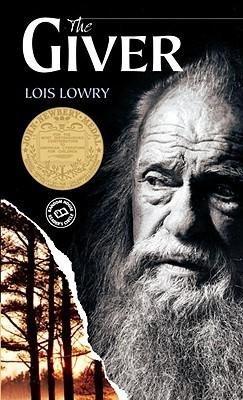
Here is the short version. Lois Lowry published The Giver in nineteen ninety-three. It follows Jonas, a boy of twelve in a community with no war, no hunger, no pain and almost no choices. At the Ceremony of Twelve he is picked for the one job that holds every memory the community gave up. He learns what that peace costs, he learns what the word release really means, and then he runs.
First comes a chart of the community’s rules, built from the text, with a chapter number on each one. Then the plot in four acts.
The Rules Chart
Every rule on this chart is one the book states or shows, with the chapter beside it. Start with the ladder of ages, because the community marks growing up with objects.
At Seven, a jacket that buttons in the front, chapter six. At Eight, pockets, and your first volunteer hours. At Nine, a bicycle, also chapter six. At Ten, your braids or long hair are cut. And at Twelve, an Assignment, chapter seven. After that, nobody counts age anymore.
Now the daily rules. Speak with precise language, chapter one. Apologize out loud, and the other person must accept. Share your feelings every evening, chapter one. Tell your dreams every morning, chapter five. Take the pill once the Stirrings begin, also chapter five. And two children to a family unit, one male and one female.
One rule holds the others in place. In chapter one, Jonas’s mother, who works at the Department of Justice, says there is no third chance. A citizen who breaks the rules a third time is released. Release is also how the Old leave, with a celebration, and how a newchild can be sent away. Keep that word in mind, because the book does not say plainly what it means until chapter nineteen.
Act One: The Chosen Child
Act one runs from chapter one to chapter nine. It is almost December, and Jonas is apprehensive, which is the careful word he settles on, about the Ceremony of Twelve. At home his father, a Nurturer, is worried about a newchild who is not growing as he should. The committee is talking about releasing him. His name is Gabriel, and he soon comes to stay with the family at night. In chapter six, after Jonas’s father pleads for him, the committee gives Gabriel one more year, and everyone in the family signs a pledge not to get attached.
Small cracks appear. In chapter three Jonas sees an apple change, just for an instant, and has no word for it. In chapter four, while bathing an old woman named Larissa, he asks where released people go. She says only the committee knows, and that the person walks through a special door looking happy. In chapter five Jonas has a dream he cannot explain, and his mother tells him it is the Stirrings and hands him his first pill.
Then the Ceremony. Asher becomes Assistant Director of Recreation. Fiona becomes Caretaker of the Old. And the Chief Elder skips Jonas, who is number nineteen, going straight from eighteen to twenty. Then she explains. He has not been assigned. He has been selected as the next Receiver of Memory, a job so rare that the community has only one. The Chief Elder lists what the Committee looked for: intelligence, integrity, courage, wisdom still to come, and a rare Capacity to See Beyond.
That night Jonas opens his folder and finds a single sheet. It holds eight rules. He may ask anyone any question. He may not discuss his training, tell his dreams, or ask for medicine for training pain. He may not apply for release. And the last rule says, in three words, you may lie. He reads it twice, and then wonders whether every adult once got the same sentence.
Act Two: Snow, Color and Pain
Act two covers chapters ten to sixteen. Jonas meets the current Receiver, an old man with pale eyes like his own, in a room lined with more books than Jonas knew existed. In chapter eleven the old man puts his hands on Jonas’s back and gives him a memory of snow, a sled and a hill. It is the first time Jonas feels anything like it. The old man tells him to call him The Giver.
The Giver explains Sameness. The community gave up weather, hills and color so that life would be predictable. In chapter twelve Jonas learns that the apple changed because he was beginning to see red. Over the next weeks, color comes and goes. In chapter thirteen he says he wants to choose a blue tunic or a red one. Then he and the Giver talk through why people are not trusted with choices, and they end on one word, safer.
Then the memories turn painful. In chapter thirteen he watches a memory of elephants, and tries and fails to share it with his sister Lily. In chapter fourteen a sled ride on ice ends in a broken leg, and the Giver will not give him relief. Later come hunger and war, and Jonas learns why the community keeps a Receiver. Someone has to hold the pain so that nobody else has to.
At the end of chapter fourteen, he soothes Gabriel in the night and finds that a memory of sailing has slipped into the baby. He decides not to tell anyone.
In chapter sixteen he gets a memory of a family gathered at a holiday, with grandparents, and the Giver gives him the word love. That night Jonas asks his parents if they love him. They tell him the word is too general to use. He says he understands, and it is his first lie to them. The next morning, he stops taking his pill.
Act Three: What Release Means
Act three is chapters seventeen to twenty, and it is the heart of the book. On an unscheduled holiday, Jonas sees the other children playing at war and understands it for the first time. At dinner his father says that identical twins will be born tomorrow. He will weigh them, keep the larger one, and release the smaller one. Lily chants, one for here, one for Elsewhere, and nobody at the table finds it strange.
In chapter eighteen the Giver finally tells Jonas about the Receiver who came before him, a girl named Rosemary. She lasted five weeks. Then she asked to be released, and her memories flooded back into the community. That was the failure everyone keeps mentioning.
In chapter nineteen, Jonas learns that private ceremonies are recorded, and that he is allowed to watch. He watches the twin’s release. His father gives the smaller baby an injection, and the baby goes still. Jonas understands that release means killing, that his gentle father did it cheerfully, and that nobody told him the truth.
In chapter twenty, Jonas is furious, and the Giver says the people around them know nothing. Release is the same for the Old and for rule breakers. Fiona, who loves the Old, is already being trained in it. Then the Giver offers a plan. If Jonas gets far enough away, the memories he carries will return to the community. The Giver will stay to help them cope. And he admits that Rosemary was his daughter.
Act Four: The Escape
Act four is the last three chapters, and I will keep it short because the ending video goes line by line. The plan is for Jonas to slip away the night before the December Ceremony, after two weeks of strength and courage memories from the Giver. But in chapter twenty-one his father says Gabriel will be released in the morning. Jonas cannot wait for the plan. He leaves that night, with Gabriel on the back of his father’s bicycle.
They hide by day and ride by night. Search planes pass overhead, and Jonas shares memories of cold with Gabriel to hide their warmth. The road changes, food runs out, and snow falls for real. In the last pages he finds a sled at the top of a hill and rides it down toward lights and music. The book never says whether they arrive. For how to read that, the ending explained video is linked in the description.
What It Means
Everything from here is my opinion. Look back at the chart. Almost every rule takes away a choice or shrinks a feeling, and release is the rule that keeps the rest tidy. Anyone who does not fit, whether too old, too small or too many times wrong, simply goes through the special door.
Lowry does not make the community stupid. Even Jonas, in chapter thirteen, finds himself agreeing that people need protecting from wrong choices, before the frustration sets in. The Giver says the people chose a Receiver to carry their burden for them. The book’s argument is about the price, and the price is color, weather, grandparents and the word love.
Chapter twenty-two gives my favorite line of reasoning. Starving in the wild, Jonas thinks that staying would have meant starving in other ways. And for Gabriel there would have been no life at all. So there was no real choice.
And the red dot on the whiteboard is the apple. It is the first color Jonas sees, and the first sign that he is different.
Your Turn
Which rule on the chart would you have broken first? Tell me in the comments. If you want the ending line by line, the link is in the description. Subscribe, tap like, and I will see you next time.