The Verdict
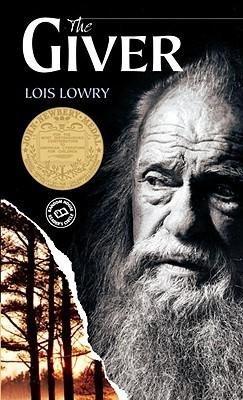
Today we’re talking about The Giver, by Lois Lowry, a book that many of us read in school and never quite forgot.
Is it still worth reading as an adult? Yes. It’s short, it’s sharp, and it asks a question that stays with you for days. It is not perfect, and the world it builds is a little too neat. I give it four and a half out of five. This whole review is spoiler free.
What It’s About
The Giver was written by Lois Lowry and published in nineteen ninety three. It won the Newbery Medal the next year, and it became a staple of school reading lists.
The story is set in a community that looks peaceful. Everyone has a job assigned by the Committee of Elders. Everyone lives with a family unit that was chosen for them. There is no war, no hunger, and no pain. There is also no color, no music, and no memory of what came before.
Our narrator is Jonas, a twelve year old who is about to take part in the Ceremony of Twelve, where every child is given a lifelong assignment. Jonas is chosen for something rare and secret. He becomes the Receiver of Memory, the one person who holds the past so that the community can make wise decisions without it.
The book is only about two hundred pages, and you can read it in an evening. That’s part of its charm. Lowry trusts you to fill in the gaps.
What Works
The first strength is the premise. The community is built on small, sensible rules. Nobody is hungry. Nobody is alone. Nobody has to choose a spouse or a career. Lowry asks you to slowly notice what is missing. The rules seem kind, and that is exactly what makes them frightening.
The second strength is the way Lowry shows the past. When Jonas begins receiving memories from the Giver, the book shifts. Snow, sunlight, a sled, the feeling of an animal under your hand. Those passages are short and vivid, and they make you feel the cost of the community’s choices.
The third strength is the honesty of the book’s big question. The Giver does not pretend that pain and choice are simple. It asks whether a life without suffering is also a life without the things that make us human. You will argue with yourself about that question for a long time after you close the book.
The Characters
Jonas is a good everyman narrator. He is observant and polite, and he is also a little too quick to accept what the adults tell him. That makes his growing doubts more powerful. You feel him waking up.
The Giver himself is the emotional center of the book. He is patient and sad, and he is the only adult who truly understands what Jonas is carrying. His scenes are the best in the novel.
The supporting characters are thinner. Jonas’s family members are polite and distant, and his friends are more symbols than people. That is a deliberate choice, because the community is supposed to smooth out individuality. As a reader, though, I wanted to know them a little better.
The Writing And Pacing
Lowry writes in clean, plain sentences. There is almost no decoration, and that suits a story about a world with no color and no feeling. It is an easy book to read aloud, and younger readers can follow it without any trouble.
The pacing is uneven in the middle. The first third is slow, because we spend a lot of time on daily rituals. Once the memories begin, the book speeds up, and the last section is tense and emotional.
What Doesn’t
My first criticism is that the world is a little too tidy. Some of the rules feel designed to make the point rather than to feel lived in. Adults will notice this more than teenagers.
My second criticism is the lack of detail about how the community works behind the scenes. Who decides, and how? The Committee of Elders is very present in the story and very vague in its logic.
My third criticism is that the ideas are more powerful than the plot. The book is very good at making you think, and less good at making you feel surprised. If you want a thriller, look elsewhere.
The Scorecard
Ideas: five out of five. Worldbuilding: four. Characters: four. Pacing: three and a half. Impact: five. That gives an average of four and a half out of five.
Who It’s For
Read The Giver if you like books that ask big questions in small packages. It is a great choice for readers aged twelve and up, and for adults who want to revisit a classic.
Skip it if you want a fast, action-driven story, or if you need fully developed side characters.
If you enjoyed it, try Brave New World by Aldous Huxley, Never Let Me Go by Kazuo Ishiguro, or Fahrenheit 451 by Ray Bradbury.
Where To Get It
Links to the book and the audiobook are in the description below. Tell me in the comments: would you accept the Community, or would you want to see color for yourself? Thanks for watching, and I’ll see you next time.