The Verdict
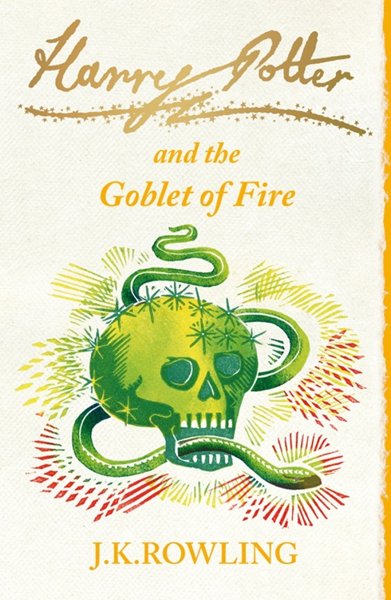
Today I’m giving you my honest take on Harry Potter and the Goblet of Fire, by J.K. Rowling, which is book four of seven.
Quick verdict. This is the book where the series stops being a school story and turns into something bigger and much darker, and I think it is one of the best of the seven. It is long, and the middle gets crowded. But the first act is thrilling, and the last stretch is some of the strongest writing in the whole series. I give it four and a half out of five, and this review is spoiler free, even for the late twists.
What It’s About
The book came out in July of two thousand, from Bloomsbury in Britain and Scholastic in America. It has thirty seven chapters, and by my count it runs close to one hundred and ninety thousand words, so it is a real doorstop.
The book opens before Harry even appears, with a chilling scene in an old, empty house, where a lonely gardener overhears a conversation he was never meant to hear. It is a great hook, and it tells you right away that this story has teeth.
Then we meet Harry, who is fourteen, heading into his fourth year at Hogwarts. Over the summer his scar hurts again, and the Weasleys invite him to the Quidditch World Cup. Then the school year starts, and Hogwarts is chosen to host the Triwizard Tournament, a famous contest between three wizarding schools.
The rules are simple. Each school gets one champion, picked by a magical Goblet of Fire. You have to be seventeen to enter. And then the Goblet does something nobody expected, and Harry’s name comes out. Who put it there, and why? That question drives the whole book.
One note. This is book four, so it leans on the first three. If you haven’t read those, start there.
A Bigger Magical World
The best thing about the first half is how much the world grows.
First, the Quidditch World Cup. Harry and the Weasleys travel by Portkey, an old boot, to a huge campsite full of witches and wizards from everywhere. It is funny, loud and full of detail, with Ministry staff begging old wizards to put on trousers so the Muggles won’t notice, and salesmen selling every gadget you can imagine. Then the match arrives, and the night takes a frightening turn that sets up everything to come.
Second, the other schools. A carriage pulled by enormous horses brings Beauxbatons Academy, and a great ship arrives for Durmstrang Institute. Suddenly Hogwarts is one school among many, with its own customs and rivalries.
Third, the Ministry. We meet people who run magical games, law and international relations, and we learn that being a hero in a school story is very different from being one in the real world.
What Works
Five things work beautifully for me.
First, the Tournament itself. The tasks are inventive and tense, and each one forces Harry to rely on friends, on cleverness, or on a little help he shouldn’t be getting. I love the dragons, and I love how the book builds the dread of waiting for them. Rowling understands that anticipation is half of the fun.
Second, the mystery. Somebody wanted Harry in that Tournament. Rowling scatters suspects everywhere, from rival teachers to Ministry officials to students, and every chapter makes you reconsider. I guessed wrong more than once, and the real answer is sitting in plain sight from early on.
Third, the humor. Fred and George plot to trick the age rule with an Ageing Potion, Hermione’s elf badges cause chaos, and Rowling keeps finding fresh jokes even as the plot darkens. The comedy makes the later scenes hit harder.
Fourth, the teaching. Professor Moody’s first Defence Against the Dark Arts class, with a jar of spiders and three curses the law forbids, is one of the most memorable lessons in the series. It is scary, and the whole room goes silent, and it makes the danger feel real.
And fifth, the shift in tone. The early chapters are packed with jokes, and then, slowly, the mood tightens. By the last third, the laughs have stopped, and you can feel the series turn a corner. It is one of the boldest tonal pivots I have read in a children’s book.
Characters and Themes
Now let’s go deeper, because this is also the book about growing up.
Harry is more isolated than ever. When his name comes out of the Goblet, almost nobody believes he didn’t cheat, and one of his closest friends stops speaking to him for a while. Rowling is very good at that kind of pain, the loneliness of being doubted when you are telling the truth.
Ron and Hermione both get real arcs. Ron struggles with always standing next to the famous one. Hermione, meanwhile, starts a campaign for house-elf rights, and whether you find it inspiring or exhausting, it gives her something important to fight for.
Hagrid gets some lovely scenes too, and so does Dumbledore, who is calm and kind on the surface and quietly worried underneath.
Then there is Cedric Diggory, the Hogwarts champion everyone expected to see. He could have been a cardboard rival. Instead he is decent and fair, and that makes the Tournament feel like a real contest between people you like.
The big themes are fairness, prejudice and the way the press shapes what people believe. A gossip columnist named Rita Skeeter turns everyone’s private lives into headlines, and the book has plenty to say about that.
Writing and Pacing
Rowling’s writing is still clear and warm, but it is far more confident now. The jokes land, the set pieces are vivid, and the dialogue crackles. Chapters end on little hooks that make it very hard to put the book down at a sensible hour.
The structure is unusual. The first chapters are a prologue and a slow build. Hogwarts doesn’t even arrive until nearly a third of the way in, and the Goblet doesn’t choose its champions until chapter sixteen. Then we get a task, a big social event, another task, and a long run toward the finale.
I think that rhythm mostly works, because every chapter plants something, from a throwaway line to a small odd detail. On a second read, you realise how much of the mystery was sitting right there. But it does mean the book is a marathon, and it asks for a little patience before the payoff arrives.
What Doesn’t Work
I did have some complaints. Let me give you four.
First, the length. Some stretches in the middle are a lot of school gossip and homework, and the story’s momentum dips.
Second, the house-elf campaign. I like Hermione, and I like the idea, but it takes up a lot of space, and the jokes about it start to repeat. This is a matter of taste, so you may feel differently.
Third, the other champions are thin. Fleur and Viktor are interesting on paper, but they mostly orbit Harry, and I wanted more of their inner lives.
Fourth, the Ministry plot has a lot of names. Several officials are introduced fast, and keeping track of who works where can be a chore.
Content Notes
A few quick heads ups. This is the darkest Harry Potter book so far.
There is real danger to young people, with dragons, magical creatures and cruel curses that are shown on the page. There is bullying, a lot of teenage jealousy and some mild romance. Older readers will notice the book touches on prejudice and on cruel treatment of people who are different.
The final chapters are heavy, with fear and grief that earlier books don’t have. I would suggest this is best for readers around twelve and up, and younger readers who loved books one to three may want a parent nearby.
The Scorecard
Here is my scorecard, out of five.
Plot, five out of five. It builds and builds, and the payoff is huge.
Characters, four and a half. Harry, Ron and Hermione grow in believable ways.
World building, four and a half. The wider wizarding world makes everything richer.
Pacing, three and a half. The middle is a bit crowded.
Ending, five. It changes the series forever.
That averages out to four and a half out of five.
Who It’s For
Read it if you loved the first three books and are ready for the series to grow up. Read it if you like a good mystery, a competition with real stakes, and a story that gets braver as it goes.
Skip it, or at least wait, if you haven’t read the earlier books, or if you want something fast and light. It is also a heavier read for sensitive younger readers.
If you enjoy it, the next book in the series continues the story directly.
Where To Get It
You can find links to the book and the audiobook in the description. Two excellent audiobook versions exist, narrated by Stephen Fry in Britain and Jim Dale in America, and both are a great way to enjoy the long chapters.
Tell me in the comments, which Triwizard task do you think you could survive? And if you want to know how it ends, my ending explained video is next. Thanks for watching, and I’ll see you in the next one.