The Verdict
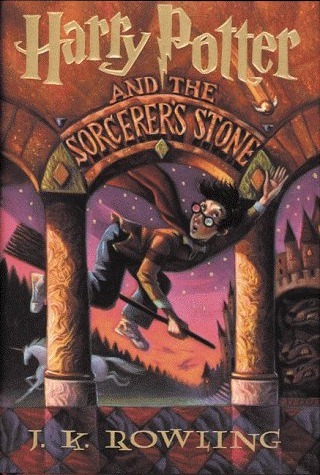
With HBO’s new Harry Potter series arriving this Christmas, a lot of people are picking up the first book again, or reading it for the very first time. So today: is Harry Potter and the Sorcerer’s Stone still worth reading?
My answer is yes, absolutely, for kids and for adults. It’s funny, cozy, beautifully structured, and it plants clues you’ll only notice on a reread. It’s also clearly a book for younger readers, and some parts feel thin next to the later books. My score: four and a half out of five.
What It’s About
Harry Potter is an orphan living in a cupboard under the stairs at his aunt and uncle’s house. The Dursleys are aggressively normal and very unkind. On his eleventh birthday, a giant named Hagrid tells him the truth: he’s a wizard, and he’s famous, because as a baby he survived an attack by the dark wizard Voldemort.
Harry goes to Hogwarts School of Witchcraft and Wizardry, makes two best friends, Ron and Hermione, and slowly realizes that something very valuable is hidden inside the school, and someone is trying to steal it.
The Book At A Glance
It was first published in the UK in nineteen ninety seven as Harry Potter and the Philosopher’s Stone. In the US, Scholastic changed the title to Sorcerer’s Stone in nineteen ninety eight.
It’s the shortest book in the series: seventeen chapters, roughly seventy seven thousand words, around three hundred pages in the US edition. A confident ten year old can read it alone, and it’s a wonderful read-aloud.
The Opening
The first chapter is one of the best openings in children’s fiction. We don’t start with Harry. We start with Mr. Dursley, a man who is proud to be perfectly normal, on a day when strange things keep happening: an owl in daylight, people in cloaks, a cat reading a map.
It’s funny, a bit sinister, and it tells you the rules of the world without a single info dump. By the time Hagrid knocks down the door of the hut on the rock, you’re completely hooked.
What Works
First, the world. Diagon Alley, the Sorting Hat, moving staircases, chocolate frogs with collectible cards, the Hogwarts Express. Rowling builds a place every reader wants to visit, and she does it through small, specific details.
Second, the humor. The Dursleys are grotesque and hilarious. Dumbledore’s speeches are delightfully odd. Ron’s jokes and Hermione’s know-it-all moments land even for adults.
Third, the friendship. Harry, Ron and Hermione don’t start as friends. Hermione is annoying, Ron is rude, and it takes a troll in a bathroom to bring them together. It feels earned.
And fourth, the mystery. The book is really a detective story. Who is trying to steal the Stone, and why? The clues are fair, and the twist is set up from the very first chapters.
The Characters
Harry is a good hero for this age: brave, curious and lonely, but not perfect. He breaks rules, he loses his house fifty points, and he makes mistakes about people.
Hermione is the scene stealer, and Ron gives the trio its heart and humor. Neville is the quiet star of the book. Among the adults, Hagrid is the warm center, McGonagall is strict but fair, and Snape is one of the best written teachers in fiction, because the book lets you hate him for exactly the wrong reasons.
Writing And Pacing
The prose is simple and brisk. Rowling writes like a storyteller at bedtime: short scenes, strong images, lots of dialogue.
The pace is a little uneven. The first third, with the letters and Diagon Alley, is wonderful. The middle has the school year, Quidditch and holidays, and it moves fast but sometimes skips months in a paragraph. The last fifty pages are a gauntlet of puzzles that still thrills.
Reading It As An Adult
Here’s the fun part of a reread. You notice how much is planted. Characters who seem like background turn out to matter. A throwaway line about a motorbike becomes important books later. And the Mirror of Erised chapter, where Harry sees his parents, hits much harder when you’re older.
It’s also a book about grief, though it wears it lightly. An eleven year old boy sitting in front of a mirror every night just to see his family. That’s heavy, and Rowling handles it with real tenderness.
What Doesn’t Work
Now the honest part. First, the Dursley chapters are cartoonish. They’re funny, but the abuse is played for laughs in a way some modern readers find uncomfortable.
Second, the plot relies on adults being oddly absent. The most powerful wizard alive leaves the school on the night it matters, and three eleven year olds have to save the day.
Third, the house point system is famously unfair. The ending gives one house a last-minute win in front of the others, and Slytherin readers have been grumbling ever since.
And fourth, as the first book, it’s lighter and simpler than what comes later. If you only read this one, you’re missing what makes the series great.
Who It’s For
Read it if you’ve never read Harry Potter, if you’re reading with kids aged around eight and up, or if you want a cozy reread before the HBO show.
Skip it, or wait, if very young readers scare easily: there’s a three-headed dog, a troll, a hooded figure in a forest, and a frightening final confrontation. And if you only like adult fiction, the simple style might not hold you.
The Scorecard
My scores. World-building, five out of five. Humor, five. Characters, four and a half. Plot, four and a half. Prose, four. That’s an average of four point six, so four and a half out of five.
Where To Go Next
I’ve also made an ending explained video, a book versus movie comparison for the two thousand one film, and a guide to HBO’s new series. They’re linked below. Tell me in the comments: which Hogwarts house are you in?