The Short Version
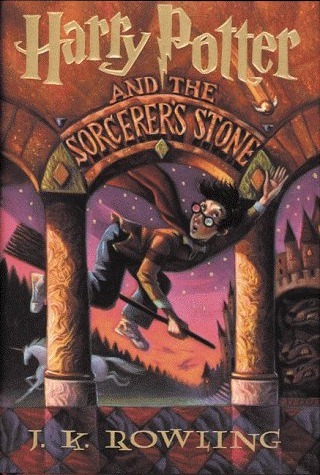
Today we’re comparing the first Harry Potter book with the two thousand one movie, the one that made Daniel Radcliffe, Emma Watson and Rupert Grint famous.
Short answer: it’s one of the most faithful book adaptations ever made. Most scenes and plenty of dialogue come straight from the page. But it still cut a lot, especially side characters, Snape’s potion puzzle, and some of the funniest bits. Let’s go through what changed, and whether it matters.
The Movie At A Glance
The film was directed by Chris Columbus and written by Steve Kloves. It was released in November two thousand one, as Harry Potter and the Philosopher’s Stone in the UK and Sorcerer’s Stone in the US.
It runs about two and a half hours, one hundred fifty two minutes. It made about nine hundred seventy five million dollars worldwide in its first run, and with later re-releases it passed one billion, according to Box Office Mojo.
The Cast
The kids were unknowns: Daniel Radcliffe as Harry, Rupert Grint as Ron and Emma Watson as Hermione. The adults were a who’s who of British acting: Richard Harris as Dumbledore, Maggie Smith as McGonagall, Alan Rickman as Snape, and Robbie Coltrane as Hagrid.
Rickman is the standout for me. He plays Snape so the reveal still works, but there’s something in his performance that hints at more.
What The Movie Keeps
The structure is almost identical. The Dursleys, the letters, the hut on the rock, Diagon Alley, Platform nine and three quarters, the Sorting Hat, the troll, Quidditch, the Mirror of Erised, the forest, the trapdoor and the House Cup.
Even small details survive: the snake at the zoo, the chocolate frog card, the Remembrall, Neville’s ten points. Columbus said he wanted fans to see the book they loved, and it shows.
Change One: Peeves Is Gone
The poltergeist Peeves, who torments students throughout the book, is completely missing. A scene was reportedly filmed with Rik Mayall as Peeves, but it was cut.
It’s a small loss for the plot but a big one for the comedy. Peeves never appears in any of the eight films.
Change Two: The Obstacles
In the book there are six obstacles under the trapdoor. The movie keeps Fluffy, the Devil’s Snare, the flying keys and the chess game, but cuts the troll, which in the book is already knocked out, and Snape’s logic puzzle with seven bottles.
That second cut matters. The puzzle is Hermione’s big moment in the book, solved with pure logic. In the film, her moment comes earlier, in the Devil’s Snare, and the way out is different. In the book she lights a fire. In the movie she tells Harry and Ron to relax.
Change Three: Norbert
The dragon subplot is much shorter. In the book, Hagrid hatches Norbert, the trio smuggles the dragon to the top of the Astronomy Tower at midnight to hand it to Charlie Weasley’s friends, and that’s how they end up in detention in the Forbidden Forest.
In the film, Norbert hatches, Draco sees it, and we’re told Dumbledore is sending the dragon to Romania. It’s simpler, but it loses the midnight adventure.
Change Four: Characters Trimmed
Lots of side characters shrink. The centaur Bane doesn’t appear. Charlie Weasley is only mentioned. Ron’s brother Percy gets a few lines.
The movie also gives some of Ron’s lines and moments to Hermione, a pattern fans noticed across the films. In the book, Ron is funnier and more knowledgeable about the wizarding world.
Change Five: A Shorter Ending
The ending is quicker too. In the book, Harry wakes in the hospital wing and has a long conversation with Dumbledore about the mirror, Snape’s debt to his father, Flamel’s choice to die, and the protection his mother left in his skin.
The film keeps the heart of it, the mother’s love, but trims the rest. Hagrid’s photo album of Harry’s parents does make it in, though, and it’s a lovely final beat.
Which Is Better?
The book wins on humor, detail and the mystery. You get Peeves, the logic puzzle, Norbert’s night flight, and more of Ron.
The movie wins on atmosphere. John Williams’s music, the Great Hall’s floating candles and the casting set the visual template for an entire generation. It’s warm, a little slow, and very faithful.
What This Means For HBO
And that’s exactly why HBO is making a TV series. With eight episodes, the new Philosopher’s Stone has room to bring back what the film had to cut: Peeves, Norbert’s night flight, the potion puzzle, and more time with the Dursleys and with Hogwarts itself.
Your Turn
So, which do you prefer, the book or the movie? And what are you most hoping the HBO series restores? Tell me in the comments. My review, the ending explained, and an HBO series guide are linked below.