Quick Verdict
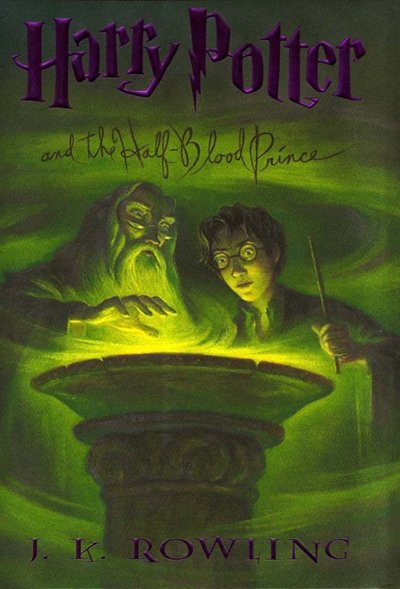
Today we are comparing Harry Potter and the Half-Blood Prince, book six of seven, with the two thousand nine film. All facts about the film are as of October twenty twenty six.
Fair warning, this video contains spoilers, including Dumbledore’s death. My quick verdict is that the film is gorgeous and well acted, but it trades much of the book’s mystery for mood. As a movie, I like it. As an adaptation, it leaves out a lot.
The Film At A Glance
Warner Bros. released the film on the fifteenth of July, two thousand nine, in the United Kingdom and the United States. David Yates directed it, from a screenplay by Steve Kloves, and David Heyman and David Barron produced.
Daniel Radcliffe, Rupert Grint and Emma Watson return as the trio. Michael Gambon plays Dumbledore and Alan Rickman plays Snape. Jim Broadbent joins as Horace Slughorn, Helena Bonham Carter is Bellatrix, and Tom Felton is Draco.
Two young actors play Tom Riddle. Hero Fiennes-Tiffin is Riddle at eleven, and Frank Dillane plays him at sixteen. The runtime is one hundred and fifty three minutes, which is short for a book this size.
It is the sixth of eight films, and Nicholas Hooper wrote the music. It was also the most expensive Harry Potter film, with a reported budget of around two hundred and fifty million dollars. You can feel the money in the sets, and the film looks much darker and bluer than the earlier ones.
What The Film Keeps
The bones of the story are still there. Dumbledore recruits Slughorn. Harry wins a bottle of Felix Felicis, and the Prince’s textbook makes him a star in Potions. Draco is secretly working on something, and Dumbledore and Harry go in search of a Horcrux.
The film also keeps the book’s humor. Slughorn’s parties, Ron’s accidental love potion trouble, and Lavender Brown, played by Jessie Cave, are all there, and they are some of the funniest scenes in the series.
I think Broadbent is a perfect Slughorn. He is charming and cowardly at the same time, which is exactly what the part needs.
The Burrow Scene
The biggest addition is an action scene at the Burrow. In the film, Death Eaters attack the Weasleys’ home and set it on fire. Nothing like that happens in the book, where the Burrow is never attacked.
Why add it? The likeliest reason is simple. The book is mostly talk and memory, and the film wanted a big set piece in the middle. Critics have noted that it takes the place of material from the book that could have been used instead.
That part is my opinion. I enjoyed the scene as a movie moment, but it adds nothing to the plot, and it takes screen time away from the story that matters.
What Was Cut
Here is the longer list.
The Gaunt family is gone. The book’s Bob Ogden memory, with Marvolo, Morfin and Merope, is cut, and so is the story of how Voldemort’s parents met. The film does keep the orphanage scene and Slughorn’s memory of the young Riddle asking about Horcruxes, and those two scenes are strong.
Because of those cuts, the film gives you much less of how Tom Riddle turned into Voldemort, and why he chose the objects he did. Readers who loved the Pensieve lessons will notice that gap.
The film also removes the Dursleys, and it changes the opening. Instead of the Prime Minister meeting the Minister of Magic, we see Death Eaters destroy the Millennium Bridge.
The Prince And Snape
The Half-Blood Prince is the title, yet the film gives the mystery much less room. In the book, Hermione investigates and Snape searches for the book after Sectumsempra, using Legilimency to interrogate Harry. One reviewer notes that the film cuts that interrogation, so the only foreshadowing left is Snape healing Draco.
In the film, Harry chases Snape near Hagrid’s burning hut and tries Sectumsempra. Snape blocks it and reveals he is the Half-Blood Prince. Reports differ slightly on the exact moment in the scene, but the reveal happens in that chase.
It works on screen, with Alan Rickman’s cold fury. But in the book the reveal arrives with Hermione’s newspaper clipping about Eileen Prince, and that investigation is gone.
Dumbledore’s Death
The tower scene is close in spirit. Draco has Dumbledore at his mercy, he hesitates, the Death Eaters arrive, and Snape kills Dumbledore. Rickman and Gambon are remarkable in it.
But the surrounding events change. The book has a long battle in the school corridors, in which Bill Weasley is badly hurt by Greyback. The film drops that battle, and a director interview reportedly said it was cut so as not to look too similar to the big Hogwarts battle in the final film.
The funeral is removed too. Instead, the film ends with students and teachers raising their wands in tribute, with their light driving away the Dark Mark. It is beautiful, but the book’s white tomb, merpeople and centaurs are lost.
Book Or Film
So which tells the story better? For plot, the book wins easily. Its structure is a puzzle, with Dumbledore’s lessons slowly explaining a villain, and that puzzle is mostly gone from the film.
For atmosphere, the film does something the book cannot. It makes the wizarding war feel cold and gray, and it gives the teenage romance room to breathe. Radcliffe’s comic timing under Felix Felicis is a highlight, and Rickman and Gambon make the central friendship feel real.
That is my opinion. If you only watch the film, you get a moving story about loss. If you read the book, you get a mystery too.
Reception And Verdict
The film was well reviewed. Rotten Tomatoes lists eighty three percent from critics, and Metacritic gives it seventy eight out of one hundred. Bruno Delbonnel’s cinematography earned an Academy Award nomination.
Box office figures vary by source, from roughly nine hundred and twenty six million dollars to over one billion worldwide, so I will just say that it reportedly earned somewhere between nine hundred and thirty million and a billion dollars.
My verdict is that it is a lovely, melancholy film that works best if you have read the book. Without the book, you miss why Voldemort matters and why Snape’s story hurts. Which is better, the book or the film? Tell me in the comments, and let me know which cut scene you miss most. Thanks for watching, and I’ll see you in the next one.