The Verdict
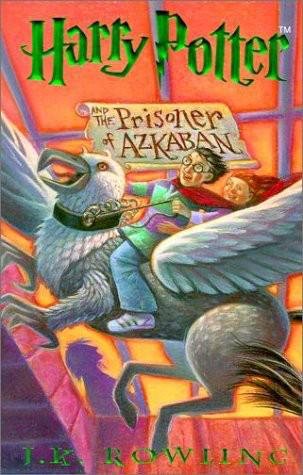
Today I’m reviewing Harry Potter and the Prisoner of Azkaban, by J.K. Rowling, which is book three of seven, and this is a spoiler free review.
Quick verdict. This is the book where the series grows up. It is darker, funnier and more cleverly built than the first two, and it has one of the best plots Rowling ever wrote. It dips in a couple of places, but I give it five out of five. And I will not spoil a single twist.
What It’s About
It is the summer before Harry’s third year, and he has just turned thirteen. Harry is stuck at the Dursleys, doing his homework in secret, and his aunt Marge is coming to stay. That visit goes badly wrong, and Harry runs away from Privet Drive with his trunk in the middle of the night.
Then the real news arrives. A man named Sirius Black has escaped from Azkaban, the wizard prison, and nobody has ever escaped from Azkaban before. Everybody agrees on two things. Black was a servant of Lord Voldemort, and he is coming for Harry.
So Hogwarts is no longer the safe place it used to be. The school is ringed with guards that are more frightening than any villain in the first two books. The question driving the story is simple. How do you protect a boy from a man who can get through anything?
Year Three At Hogwarts
The book was first published in nineteen ninety nine, and my edition has twenty two chapters and roughly one hundred and seven thousand words. That makes it the longest of the series so far, and you can feel the extra room. Confident readers from around nine or ten can manage it, and it is a great one to read aloud in installments.
The first act is a whirlwind. There is the explosive trouble at Privet Drive, a wild ride on a purple triple decker bus called the Knight Bus, and a long, cozy stay in Diagon Alley. Then comes the Hogwarts Express, and an unwelcome visitor boards it in the dark.
After that the year settles into a rhythm that I love. Lessons, Quidditch, the first trips to the village of Hogsmeade, and a new teacher who is not like any teacher Harry has had. The seasons turn from autumn to spring, and every chapter adds one more piece to a puzzle.
What Works
Four things work wonderfully for me.
First, the plot. This is a tightly engineered mystery, and it plays so fair that a second read feels like watching a magic trick with the secret revealed. Small details from the first chapters come back later in ways that made me gasp, and I will say more about that in my clues video.
Second, the new teacher. Professor Lupin is gentle, shabby and kind, and he is one of the few Defense Against the Dark Arts teachers who actually teaches. His first lesson, about a creature in a wardrobe, is one of the funniest and most memorable scenes in the series.
Third, the atmosphere. The dementors are frightening because of what they do, not because of what they look like, and the way Rowling writes cold and despair is unforgettable. This is the first book where the danger feels real and personal, and it never turns gory.
And fourth, the world keeps growing. We get Hogsmeade, the Shrieking Shack, a magical map, and new subjects like Divination and Care of Magical Creatures. The magic has more rules, more history, and more jokes at its own expense.
The small inventions are a joy too. A birthday present in the very first chapter is a book that bites and scuttles across the floor like a crab. Another is a little spinning glass top that lights up when someone untrustworthy is nearby. Rowling never runs out of these, and they make the world feel playful even while the plot grows darker.
Characters and Themes
Harry is thirteen here, and he behaves like it. He is moody, stubborn and curious, and when he learns who Black is, he is angrier than he has ever been. I love that the book lets him be wrong and lets him learn from it.
Hermione is in top form, and she is carrying something she will not talk about. Ron is funnier and more loyal than ever, and the friendship between the three of them is tested hard in the middle of the book. It feels real, because friends really do fall out over things like pets and presents.
The adult side is just as strong. Lupin is quietly sad in a way I did not fully understand until the end. Snape is at his most vicious. Hagrid becomes a teacher and is nervous about it, which is adorable. And Professor Trelawney, who reads tea leaves, is a comic gift.
The big themes are fear and trust. The book asks what we are really afraid of, and how we decide who to believe when everyone around us is certain. It also quietly asks how much of a person’s reputation is true, and I found that surprisingly moving.
Writing and Pacing
Rowling’s prose is warmer and more confident than before. The jokes land, the scenes have vivid details, and the descriptions of the dementors and of a storm at a Quidditch match are some of her best writing.
The structure is the star. Each term has its own story, and each story quietly feeds the main mystery. Not one scene is wasted, and the closing chapters move at a sprint. The last stretch is the best thing in the first three books.
Reading it as an adult, I notice how patiently Rowling plants things. A gift from a friend, a pet, a map, and a student with a very full schedule all look like background and turn out to be the whole point. It trusts you to be curious, and it rewards you for it.
The humor deserves a mention as well. The Knight Bus conductor, a portrait of a bumbling knight, and a Divination teacher who sees doom in every teacup keep the mood from getting too heavy. The book is scary and silly in the same breath, and that balance is a big part of why it works.
What Doesn’t Work
It is a five star book for me, but it is not perfect. Here are four small complaints.
First, the middle sags a little. A few chapters of Quidditch, homework and squabbling between friends slow the momentum, and some younger readers may drift.
Second, the big explanation near the end is very long. Several characters pour out information in one room, and while it is gripping the first time, it is a lot of talking.
Third, a couple of the grown ups are drawn in one color. Snape has hardly a kind word, Draco is a cartoon snob, and the Minister of Magic is mostly a bumbler. They are fun, but I wanted a little more depth.
Fourth, if you stop and think hard about how some of the clever tricks work, you may find loose ends. Rowling hides them well, and I forgive them, but a picky reader may not.
Content Notes
This is the darkest of the first three books, but still a children’s story. The dementors cause fear, sadness and fainting, and some characters hear echoes of terrible memories. There is a murderer on the loose, and one night someone gets into a dormitory with a knife.
There is also a scene where a character magically swells up like a balloon, a hippogriff is threatened with execution, and a boy ends up with a broken leg. There is bullying, some scary creatures, and talk of death, loss and grief.
I would say it is best for readers around ten and up, or a little younger with a grown up beside them, especially for the dementor scenes.
The Scorecard
Here is my scorecard, out of five.
Plot, five out of five. It is brilliantly built.
Characters, five. Lupin alone makes this a classic.
Atmosphere, four and a half. The dementors are a triumph.
Pacing, four and a half. A few chapters in the middle sag.
Ending, five. It is thrilling and moving.
That averages out to four point eight, which I happily round up to five out of five.
Who It’s For
Read it if you loved the first two books, if you enjoy a clever mystery with fair clues, or if you want the moment the series starts to feel big. It is also a fantastic pick if you are reading along with HBO’s series, which reportedly plans one season per book.
It also works as a gift for a young reader who has just finished the second book. The story is scarier but still very safe in the end.
Skip it, or wait a little, if you are brand new to Harry Potter, because this one builds on the first two. And hold off if very young or sensitive readers would be frightened by the dementors.
If you like this, my ending explained video digs into every twist, and the clues video shows what was hiding in plain sight.
Where To Get It
You can find links to the book and the audiobook in the description. The audiobook is a joy, with warm character voices that bring Lupin and the dementors to life.
Tell me in the comments, who is your favorite character in this book, Lupin, Hermione or someone else? And if you want to know how it ends, my ending explained video is next. Thanks for watching, and I’ll see you in the next one.