The Verdict
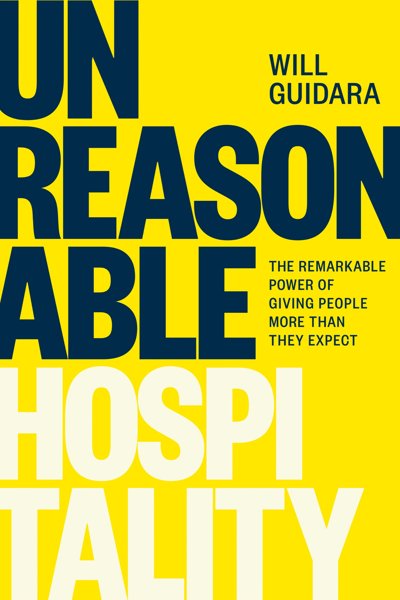
Today I’m reviewing Unreasonable Hospitality by Will Guidara, the business book that seems to be on every manager’s desk lately.
My verdict: it’s warm, inspiring and full of stories you’ll want to retell. You don’t need to work in restaurants to get a lot from it. But it’s also part memoir, part leadership book, and it runs long, with some advice that’s easier to follow at a world-famous restaurant than in an ordinary job. I give it four out of five.
What It Is
The book came out in twenty twenty two, published by Simon Sinek’s imprint, Optimism Press. It’s about three hundred pages in twenty chapters, plus an epilogue.
It follows Guidara’s career, from studying at Cornell to running the dining room at Eleven Madison Park in New York, buying the restaurant with chef Daniel Humm, and taking it to number one on the World’s 50 Best Restaurants list in twenty seventeen.
The Big Idea
The core idea is simple. Service is getting the job done right. Hospitality is making people feel something while you do it. Guidara’s line is that service is black and white, and hospitality is color.
And then he pushes it further: what if you went beyond what’s reasonable? What if you gave people something so personal and unexpected that they’d tell the story for years?
What Works
First, the stories. The street hot dog plated like a fine dining course. Sleds bought on the spot for kids from Spain who had never seen snow. These are perfect examples, and they make the principle impossible to forget.
Second, the practical tools. The Rule of ninety five five, managing ninety five percent of your budget tightly so you can spend the last five percent generously, is genuinely useful in any business.
Third, the leadership chapters. Guidara is good on culture: how to treat your team the way you want them to treat customers, how to build rituals, and how to give people creative ownership.
And fourth, the honesty. He writes about mistakes, clashes with his chef partner, burnout, and refusing to let go of control. It’s more humble than most business books.
The Best Chapters
If you want the essentials, read the opening chapters on the hospitality economy and making magic, the chapter on setting expectations, the chapters on culture and collaboration, chapter seventeen, Learning to Be Unreasonable, and chapter eighteen, Improvisational Hospitality, where the Legends and Dreamweavers come in.
Those chapters carry the heart of the book.
The Restaurant Story
Even if you skip the business advice, it’s a fun behind-the-scenes look at fine dining. The four-star New York Times review, the Michelin stars, the World’s 50 Best ceremonies, the pre-shift meetings and the obsession with details.
Restaurant people will recognize a lot. Everyone else will enjoy peeking behind the kitchen door.
What Doesn’t Work
Now the honest part. First, it’s long. The career story and the business lessons are interleaved, and some chapters drift into memoir when you just want the idea.
Second, scale. Many of the best examples depend on a luxury restaurant’s budget and staff, including a full-time role just for creating surprises. Translating that to a small shop, a hospital or a call center takes work, and the book gives fewer tools for that.
Third, it can feel a little polished. Guidara is a natural storyteller, and some anecdotes are clearly well-rehearsed.
And fourth, a lot of the ideas echo Danny Meyer’s Setting the Table, which Guidara openly credits. If you’ve read Meyer, you’ll recognize the foundations.
Who It’s For
Read it if you manage people, work with customers, or run a small business. It’s also great for anyone who loves restaurants and wants a behind-the-scenes story.
Skip it if you want a step-by-step customer service manual, or if business memoirs aren’t your thing.
How To Use It
My tip: read it with a pen. Every time you hit a story, ask: what’s the hot dog in my job? What’s the small, personal gesture that would surprise the people I serve?
I made a separate video with a practical plan for exactly that. It’s linked below.
The Scorecard
My scores. Inspiration, five out of five. Stories, five. Practical advice, four. Applicability outside restaurants, three and a half. Pacing, three and a half. That’s an average of about four point two, so four out of five.
Where To Go Next
My ten minute summary, the practical plan, and a list of books like it are all linked below. Tell me in the comments: what’s the most unreasonable hospitality you’ve ever experienced?