The Verdict
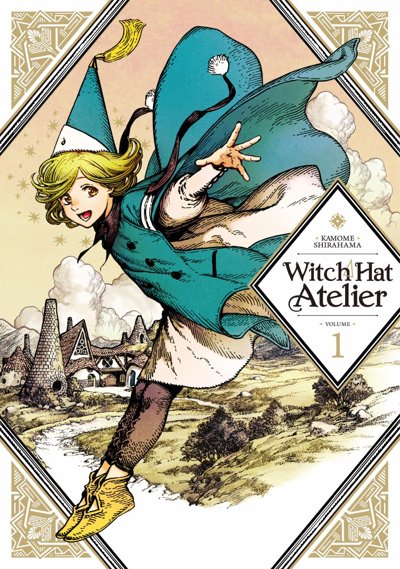
Today’s book is a manga, and one of the most beautiful I’ve ever read. It’s Witch Hat Atelier, volume one, by Kamome Shirahama.
My verdict: read it, especially if you love fantasy, or art you can stare at for an hour. It has a clever magic system, a heroine you root for, and a first chapter that hurts. The only thing holding it back is that volume one is mostly setup. I give it four and a half out of five.
What It Is
Witch Hat Atelier began in Japan in twenty sixteen, in Kodansha’s Morning Two magazine, and the English edition comes from Kodansha. This first volume is five chapters, about two hundred pages.
It’s drawn in black and white, with a couple of color pages. It also won an Eisner Award in twenty twenty, for Best U.S. Edition of International Material from Asia.
The Setup
In this world, magic is everywhere, but only witches are allowed to cast spells. Everyone else just gets to enjoy the results. Coco is a dressmaker’s daughter in a quiet village, and she loves magic more than anything. She also assumes she can never do it.
Then a traveling witch named Qifrey shows up, and everything changes. I won’t say how.
The Magic
The big idea is how spells work. A spell is a drawing, called a seal, made of a central sigil, some signs around it, and a ring that closes the circle. You draw it with special ink, and it activates.
What I love is that the rules matter. A longer sign pushes magic farther. Lines that aren’t connected won’t work. A messy seal fails. So solving problems means drawing smarter, and that makes magic feel like craft.
The Characters
Coco is curious, stubborn and kind, and her love of magic is infectious. Qifrey is warm and mysterious, a teacher who clearly has secrets.
Then there are the other apprentices. Tetia is bubbly and friendly, and Agott is proud and prickly. Their dynamic gives the second half real heart.
The Art
The art is the star. Shirahama’s panels are dense, delicate and full of detail, from tiny sigils to huge, eerie landscapes like the floating Dadah range. If you’ve ever wished a fantasy world felt designed, this is it.
What Works
First, the magic system, which is clever and visual. Second, the art, which is some of the best in manga. Third, the emotion. Coco’s choices cost her something, and the story takes that seriously.
What Doesn’t
Now the honest part. First, volume one is a lot of setup. It ends with questions, not answers, so you’ll want volume two immediately.
Second, a few characters are still sketches. Agott is more attitude than person so far.
Third, the density. The explanatory pages are text heavy, and the detailed panels reward slow reading, which isn’t for everyone.
Content Notes
It’s rated for teens. There’s a frightening, emotional scene where a parent is hurt, some peril, and a few dark moments, but nothing gory.
The Scorecard
My scores. Art, five out of five. Worldbuilding, five. Characters, four. Pacing, four. Emotion, four and a half. That averages to four and a half.
Who It’s For
Read it if you love fantasy, magic systems, or beautiful art, or if you liked the anime and want the source.
Skip it if you want fast action right away, or if you don’t enjoy slower, setup heavy openings.
Where To Go Next
I’ve also made a full summary of volume one, and a guide to the manga and the anime. They’re linked below. Tell me in the comments: would you rather read the magic, or watch it?