Intro
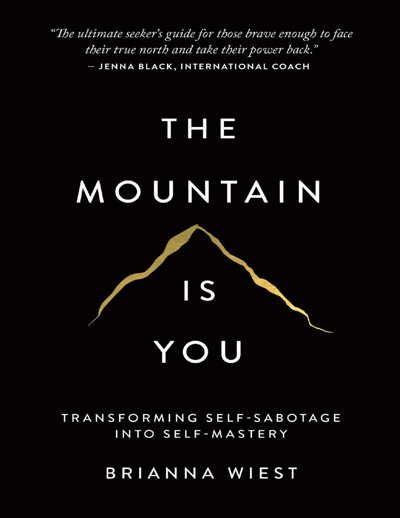
Today I’m summarizing The Mountain Is You, by Brianna Wiest, one chapter at a time, in plain language.
A quick note: this is a summary of the book’s ideas, not therapy or medical advice. If you are struggling, please talk to a licensed professional.
The Introduction
The book opens with a metaphor from nature. Forest fires look destructive, but they clear space for new growth. Wiest says that a breakdown in your life can work the same way, as the doorway to a breakthrough.
Chapter One
Chapter one is called The Mountain Is You, and it gives the core claim: nothing holds you back more than yourself. On the surface, self sabotage looks like self hatred or a lack of willpower. In reality, she says, it meets an unconscious need.
She tells the story of Carl Jung as a child. After he hit his head at school, he began to faint, and he later realized that the fainting was his mind’s way of avoiding school.
Chapter Two
Chapter two says that there is no such thing as self sabotage. When a habit moves you forward, you call it a skill. When it holds you back, you call it sabotage, but it is the same machinery.
The habits you cannot stop are designed by your subconscious to meet an unfulfilled need, so the first question is not how to override them, but why they exist.
Chapter Three
Chapter three is about triggers. A strong emotional reaction is not the problem. It is a message that you do not yet know how to read.
Wiest walks through emotions like anger, which she says shows you where your boundaries are and what feels unjust. The goal is to listen, not to get over it.
Chapter Four
Chapter four is about emotional intelligence, which she defines as the ability to understand and respond to your emotions in a healthy way.
It includes a famous idea: when you reach a big goal, you do not coast. You want more, which can make us hesitant about success. She cites the book The Molecule of More, about dopamine and wanting.
Chapter Five
Chapter five is about releasing the past. You cannot force yourself to let go. Letting go is a process, and it asks you to grieve the old version of yourself, and the guilt of the time you spent denying what you needed.
Chapter Six
Chapter six is about building a new future. It introduces inner child work and a four step visualization to meet your highest future self: face the fear first, notice how your future self looks, ask for guidance, and imagine being handed the keys to your new life.
Chapter Seven
Chapter seven is called From Self Sabotage to Self Mastery. A key idea is the difference between controlling your emotions and suppressing them. Suppression ignores a feeling and hopes it fades. Control means feeling it and choosing how to respond.
The Catch
The catch is that the book is a mix of psychology, spirituality, and personal reflection. It is helpful as a prompt for thinking, but it is not a clinical guide.
Where To Go Next
If one idea stuck with you, try this. The next time you notice a habit you cannot stop, ask what need it might be meeting.
Links to the book are in the description below. Tell me in the comments which chapter speaks to you most, and thanks for watching.