The Short Version
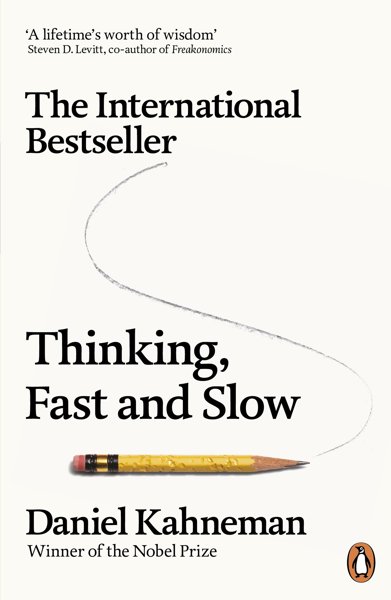
Thinking, Fast and Slow, Daniel Kahneman’s 2011 book on how we think and decide, is a good club pick because every chapter hands your group a puzzle about its own minds. Kahneman won the Nobel Prize in Economics in 2002 for research he did largely with Amos Tversky, and the book gathers it into five parts and thirty-eight chapters. It is dense and nearly two hundred thousand words long, so most groups discuss it part by part.
Below are fourteen discussion questions and an applying-it section with habits your group can try. Our review scores the book four out of five, with ideas and impact at five and readability at three and a half.
The Book In Five Parts
It helps to have a map. Part one introduces System one, fast and automatic, and System two, slow and effortful. Part two covers heuristics and biases such as anchoring and availability. Part three is about overconfidence and the planning fallacy. Part four is about prospect theory, the work behind the Nobel Prize, including loss aversion. Part five separates the experiencing self from the remembering self.
Discussion Questions
- The bat and ball puzzle: a bat and a ball cost one dollar and ten cents, and the bat costs a dollar more. Your gut says the ball costs ten cents, but it costs five. What did you feel when you realized you were wrong?
- Kahneman says System one runs the show most of the time and is wrong in predictable ways. Which of your own daily decisions do you think System one makes?
- “What you see is all there is” means your mind builds the best story from the information in front of it and does not notice what is missing. Describe a time you judged a situation without asking what you did not know.
- In the wheel of fortune experiment, guesses were pulled toward a number that had been rigged to stop at ten or sixty-five. Where have you seen anchoring in prices, salaries or negotiations?
- Availability means we judge how common something is by how easily examples come to mind. What fears in your group might be the product of vivid examples rather than probability?
- The Linda problem shows a vivid story beating basic probability. Did you fall for it, and did knowing about it help you the second time?
- Kahneman’s textbook team expected the project to take about two years, while an expert said similar projects took seven to ten years and many failed. Why do smart groups ignore the outside view?
- Prospect theory says people judge outcomes as gains and losses from a reference point, and losses hurt about one and a half to two and a half times as much as gains please. Where does loss aversion show up in your life?
- The same choice can feel different depending on how it is framed. Try restating one real decision both ways. Did your answer change?
- In the study of painful medical procedures, patients remembered the peak and the end more than the length. Which would you choose, the better memory or the better experience?
- Kahneman describes the focusing illusion: nothing in life is as important as you think it is when you are thinking about it. What did you recently overvalue while it was on your mind?
- Kahneman admits he makes the same mistakes even after a lifetime of studying them. Does that make his argument more or less persuasive?
- Some studies in the book, especially on priming, have been challenged by replication efforts, while the core ideas on heuristics and loss aversion are more solid. How should a reader treat a landmark book whose research has been questioned?
- Our review says the book is stronger on diagnosis than on cures, because knowing about biases does not fix them. Do you agree? What would a cure look like?
Applying It
Pick one habit and try it before your next meeting, then report back. Kahneman and our lessons guide suggest six. Slow down for big decisions, sleep on them and write down your reasons. Ask what is missing and who you have not asked. Watch for anchors, and decide your own number before a negotiation. Use the outside view: look up how similar projects actually went. Frame a decision both ways. Keep notes during important events, so your memory does not edit the story. If you only try one, make it the outside view.
What To Read Next
If your group wants more, our books-like-it list covers six follow-ups, including Nudge, Predictably Irrational, Misbehaving, The Black Swan, Noise and Blink. For a quick overview before you begin, start with the review, and use the summary and lessons pages to refresh the key ideas.