The Short Version
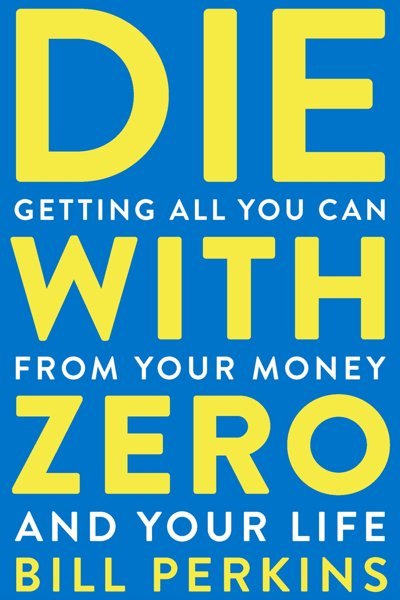
Bill Perkins’s Die With Zero, published in 2020, argues that money is a tool for creating experiences, and offers nine rules for spending, giving and planning your life so you do not die with a fortune you never enjoyed. Perkins is a former Wall Street trainee and energy trader. It makes a good club pick because it is short, story-driven and likely to split the room between savers and spenders.
Below are thirteen discussion questions plus a section on applying the book. The book scores four out of five in our review. This guide is a book discussion, not financial advice.
Discussion Questions
- The book opens with the fable of the ant and the grasshopper and asks the question the fable skips: when does the ant ever get to play? Which one are you, and which one were you raised to be?
- Perkins says your real resource is life energy and money is a tool for turning it into experiences. Before a big purchase, do you think about the hours of work it costs?
- Rule one opens with a friend, Erin, whose husband John was diagnosed with a rare cancer in his thirties, and the family stopped everything to spend time together. Does that story make the argument stronger or only more emotional?
- Rule two introduces the memory dividend, the idea that a good experience keeps paying you back every time you remember it. What is one experience that has paid you a dividend?
- Perkins remembers a roommate who borrowed money to backpack across Europe while he stayed home to save. Which choice would you have made at that age?
- Rule three says aim to die with zero, which does not mean spending your last dollar on your last day. In the conclusion he admits it is an impossible task. Does that admission help or hurt the argument?
- Rule four uses the income annuity: life insurance protects your family if you die too young, and an annuity protects you from living so long you run out. Did this change how you think about longevity risk?
- Rule five argues that waiting until you die to give is too late. In a poll of more than three thousand five hundred people, over half chose ages twenty-six to thirty-five as the best time to receive an inheritance. Would you give earlier, and how would you decide how much?
- Rule seven is time bucketing, with a story about a movie his daughters loved until the day his daughter was too old for it. Which experiences in your life have a window that is closing?
- Rule eight says the best time for your net worth to peak is somewhere between forty-five and sixty. Does that match what you expected, and how does it feel?
- Our review notes the book is aimed at people who already have enough, and the author says that if you are struggling to make ends meet it will not help much. Who is the audience, and is it fair to criticize it for that?
- Perkins is known for expensive poker games and a glamorous life. Did his examples feel far from your reality?
- Our review says the book is more cheerful about risk than a careful planner would be, since nobody knows how long they will live. Where did you feel it glossed over uncertainty?
Applying It Together
Do the time bucket exercise as a group: each person writes three experiences they want in each decade of life, then shares the ones with a closing window. Try the memory fund idea, setting aside a small amount each month for experiences the way you would for retirement. Ask each member for one gift or experience they would give earlier than they planned. Close by naming what basics need to be in place first, since the book assumes a safety net of emergency savings, insurance and retirement. A conversation with a real planner is worth having for anything bigger.
About The Book
Rule six comes from a boss who told the young Perkins he was being an idiot for saving almost everything, because his salary was going to grow. Rule nine, take your biggest risks when you have little to lose, uses Mark Cuban as an example of someone who started businesses young. The book opens with a fable, has nine chapters for nine rules and is short enough to read in an afternoon or two.
What To Read Next
If your group wants to decide first, start with our review. Our summary goes through the nine rules, our lessons page turns the ideas into practical steps, and our books-like-it list covers six picks including The Psychology of Money, Four Thousand Weeks and Your Money or Your Life.