The Short Version
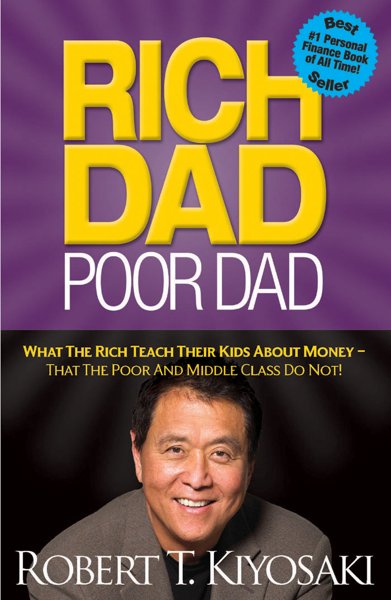
Robert Kiyosaki’s Rich Dad Poor Dad is a personal finance book told as a story, and that mix is what makes it good for a club. Two father figures in 1950s Hawaii give a boy opposite advice about money: his highly educated “poor dad” says study hard and find a safe job, while his friend Mike’s father, “rich dad,” says learn how money works and make it work for you. Almost everyone has a strong reaction to one side or the other.
It is also a book with big claims and few sources, which gives a group plenty to test. It is short, easy to finish in a weekend, and our review gives it three and a half out of five. This guide is a set of discussion questions about a book, not financial advice.
Discussion Questions
- Robert’s real dad has a doctorate and a steady government career, and Mike’s dad never finished school and builds a business empire. Which father did you identify with, and did your answer change as you read?
- At nine, Robert works at Rich Dad’s store for ten cents an hour, then for nothing. Why would a teacher set up a lesson like that, and did it feel fair or manipulative?
- Rich Dad keeps raising his offer, up to five dollars an hour, to see whether the boys will cave. What does the scene say about how fear and desire push people around?
- The first lesson says the rich do not work for money. Where in your own life has income from something other than a paycheck mattered, or not mattered?
- An asset puts money in your pocket and a liability takes money out. Does that rule make you look at your spending differently, or does it oversimplify?
- The book calls your house a liability and admits that most accountants and financial professionals disagree. What would you want to check before accepting or rejecting that claim?
- Instead of saying “I can’t afford it,” the book suggests asking “how can I afford it?” Is that a useful habit or a slogan?
- Schools rarely teach money, the book argues, so most people learn it from their parents. What did you learn at home, and was it closer to Poor Dad or Rich Dad?
- Rich Dad says, “If you’re going to go broke, go big.” Is that a fun line, a plan, or a risk? Who could afford to follow it?
- The book lists the obstacles as fear, cynicism, laziness, bad habits and arrogance. Which one is hardest for you?
- Rich Dad is never named in the book, and critics have asked whether he was a real person. Does it matter if the dialogue is a parable, as long as the lessons stand on their own?
- The success stories, such as turning a small down payment into rental income, come from real estate markets decades ago and are told without outside checking. How much weight should anecdotes like these carry?
- Our review notes that the book plugs the author’s own courses, tapes and board game. Does that change how you read the advice?
Applying It
Pick one lesson to test this month. For example, write down where your cash goes each month using the asset and liability rule, or list the skills you would like to learn in order to work to learn rather than just to earn. Then bring one claim from the book, about taxes, houses or business failure rates, and check it against an independent source with nothing to sell.
What Holds Up And What Doesn’t
Our fact check graded the six lessons. The mindset lessons held up best: lesson one on assets and lesson six on learning broad skills were graded green. The house, McDonald’s and business failure claims were graded amber, and the lesson on taxes and the Phoenix foreclosure plan were graded red. The pattern is that the more specific the claim about taxes, deals or numbers, the more you need to verify it.
What To Read Next
Our review lays out the six lessons and the criticisms, including the question of whether rich dad was real. Our fact check page grades each lesson in more detail. For a more grounded follow-up, the review suggests The Psychology of Money by Morgan Housel, The Millionaire Next Door, The Little Book of Common Sense Investing and The Richest Man in Babylon.