The Grading Key
Today I’m grading one very famous money book, a lesson at a time.
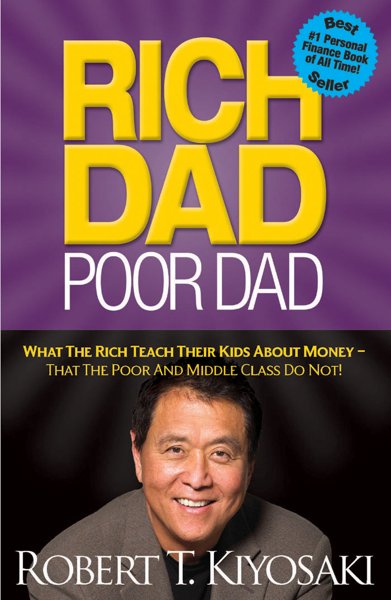
Rich Dad Poor Dad, by Robert Kiyosaki, says the rich teach their kids something school doesn’t. Is that still true? Some of it is solid. Some of it is disputed. And a few parts are risky or out of date. Green means solid, amber means disputed or needs context, and red means risky or outdated.
One clear note first. This is a book review and a fact check, not financial advice. I’m not a financial adviser, and nothing here is a recommendation to buy, sell or invest in anything. The grades are my opinion.
The Book In One Minute
Rich Dad Poor Dad is a money book told as a story. Robert grows up in Hawaii with two father figures. His real dad, Poor Dad, has a doctorate and a steady career. His friend Mike’s dad, Rich Dad, never finished the eighth grade, according to the book, and builds a business empire.
I read the twenty eleven edition. The book says the lessons were taught over thirty years, and boils them down to six. The rich don’t work for money. Financial literacy. Mind your own business. Taxes and corporations. The rich invent money. And work to learn.
Then come chapters on obstacles and getting started. I’ll grade each lesson, and then we’ll tackle the question everyone asks: was Rich Dad real?
Lesson One
Lesson one says the poor and the middle class work for money, and the rich have money work for them. It adds that the government takes its share first, a point we will come back to. The story behind it is the best part of the book. At nine years old, Robert works at Rich Dad’s store for ten cents an hour. Later the boys run a comic book lending library from a basement, and the book says it averaged nine dollars and fifty cents a week.
My grade: green. The core idea, that income from assets is different from a paycheck, is standard and sound. Two cautions. The book gives you the mindset but little on how to build assets safely. And working for money is not a sin. Everyone starts there, including the boys.
Lesson Two
Lesson two is the famous one. An asset puts money in your pocket, a liability takes money out, and your house, says the book, is a liability. It also admits that most accountants and financial professionals do not agree with its definitions.
The case against the house is about cash flow. The mortgage, taxes and repairs come out of your pocket every month, and houses do not always go up in value. Both of those are true.
What holds up: looking at your monthly cash flow is a useful lens. And the book is right that payroll taxes are bigger than they look. The IRS says employees and employers each pay six point two percent for Social Security, plus one point four five percent for Medicare. The book also says it is not telling you never to buy a house.
What is disputed: the Federal Reserve’s twenty twenty two Survey of Consumer Finances reports median net worth of about three hundred ninety six thousand dollars for homeowners, and about ten thousand for renters. That is a correlation, not proof, since owners also tend to earn more. But it shows why many households count a home as wealth. My grade: amber.
Lesson Three
Lesson three is mind your own business: build your asset column, and keep your day job. The book tells a story of McDonald’s founder Ray Kroc telling an MBA class that his business is real estate. A friend of the author, unnamed, supposedly heard it. The book then says McDonald’s is the largest single owner of real estate in the world, with no source. Elsewhere it lists what it counts as real assets: businesses, stocks, bonds, income producing real estate, notes and royalties.
The real estate model at McDonald’s is well documented and usually credited to Harry Sonneborn. But I could not trace Kroc’s exact quote to a primary source, and I can’t verify the largest owner claim.
The book also says nine out of ten companies fail within five years. The Bureau of Labor Statistics puts five year survival of new businesses at roughly fifty to fifty seven percent, depending on the starting year. So the warning is fair, but overstated. My grade: amber.
Lesson Four
Lesson four is where it falls apart for me. The book says the rich are not really taxed. It also says a corporation is merely a file folder of legal papers, and that owning one lets you pay for things with pre-tax dollars, even vacations as board meetings in Hawaii. The book also says it is not its purpose to go into the specifics of owning a corporation, and points readers to other books for the details.
Now, here is what the sources say. IRS data for twenty twenty two, compiled by the Tax Foundation, shows the top one percent of filers paid about forty percent of federal income tax. That doesn’t settle what is fair, but it cuts against the claim. The tax code says no deduction is allowed for personal, living or family expenses, unless another rule allows it. And the critic John T. Reed accuses Kiyosaki of recommending tax fraud.
To be fair, the history is roughly right. National Archives records show the first federal income tax came in eighteen sixty two, to fund the Civil War, and the Sixteenth Amendment followed in nineteen thirteen. And the IRS confirms that a like kind exchange can defer tax on a real estate swap, though since twenty eighteen only for real property. My grade: red. Tax rules change, so ask a licensed tax professional.
Lesson Five
Lesson five says the rich invent money. The main example is a nineteen nineties Phoenix foreclosure plan. Buy a house for twenty thousand dollars or less, put down two thousand borrowed from a friend, then resell it for sixty thousand, with the buyer paying you back through a note. The book calls the return infinite, because you end with no money in. It also says the market changed and the deals became rare. And it adds that the plan may not work in your area.
Even the book hedges. It says, quote, I do not recommend anything that I do. And it calls its pre IPO stock plays extremely high risk and absolutely not recommended.
My grade: red. As a how to, this is one author’s story from one market thirty years ago, with no documents. The grain of truth is that you should learn to analyze a deal before you buy. Everything else here is an anecdote, not a plan.
Lesson Six And The Rest
Lesson six says work to learn, not to earn. Build broad skills, especially sales and management, rather than only one narrow one. My grade: green. It’s the safest advice in the book. The line that job stands for just over broke is a punchy joke, not a fact, and the book itself says job security matters.
The obstacles chapter says the enemies are fear, cynicism, laziness, bad habits and arrogance. Asking how can I afford it, instead of saying I can’t, is a genuinely good habit. The ten steps also include pay yourself first, which is common sense whenever you can manage it. And Kiyosaki says he only plays with money he can afford to lose. That is a line worth keeping.
Some of the book has aged well. It says Social Security is in trouble. The twenty twenty six Trustees report projects the retirement fund runs out of reserves in late twenty thirty two, though income would still cover part of the benefits. And it says schools don’t teach money. The Council for Economic Education counted thirty five states requiring a personal finance course in twenty twenty four, so that has changed.
Was Rich Dad Real
The book never names Rich Dad, only his son Mike. The introduction says he became one of the richest men in Hawaii. Critics are skeptical. Slate, in June twenty oh two, said Kiyosaki’s claims were hard to verify, and noted that John T. Reed questions whether Rich Dad exists. In twenty fifteen Reed wrote that he leans toward believing there never was one. And Smart Money, in February twenty oh three, reported that Kiyosaki avoided the question for years.
Now the other side. The Honolulu Advertiser, on February first, twenty oh nine, ran the obituary of Richard Kimi, a Hilo hotel pioneer who died at eighty three. It says Kiyosaki was one of his students, and that he based his original rich dad on Kimi, as Kimi’s son Alan said.
In my view, a real mentor probably inspired the character. But the evidence is a son’s statement, the dialogue is reconstructed, and the book’s stores and wealth are the author’s telling. Treat it as a parable, and judge the lessons on their merits.
The Scorecard
Here is my scorecard, and again, these grades are my opinion. Lesson one, green. Lesson two, amber. Lesson three, amber. Lesson four, red. Lesson five, red. Lesson six, green.
That’s two green, two amber and two red. Those grades are about the claims, not about whether the author is a good person. The pattern is simple. The mindset lessons hold up best. The more specific the claim about taxes, deals or numbers, the more you need to check it.
Who Should Read It
Read it if you want a short, punchy push to learn how money works. Treat it as vocabulary and motivation, then check every number and every tax claim against primary sources, like the IRS, before you act on it. That’s a reading tip, not financial advice.
Which lesson would you grade differently from me? Tell me in the comments. If you like honest book checks, subscribe and tap like, and I’ll see you in the next one.